Architecting Large Language Models
Transformer Architecture Fundamentals
The Transformer Blueprint
At the heart of nearly every modern Large Language Model (LLM) is an architecture called the Transformer. Before its arrival, models processed language sequentially, like reading a sentence one word at a time. This worked, but it was slow and struggled to connect words that were far apart.
The Transformer changed everything by processing all words in a sentence simultaneously. This parallel approach unlocked massive performance gains and allowed models to understand the relationships between all words at once, no matter their position. This is the key innovation that made today's powerful LLMs possible.
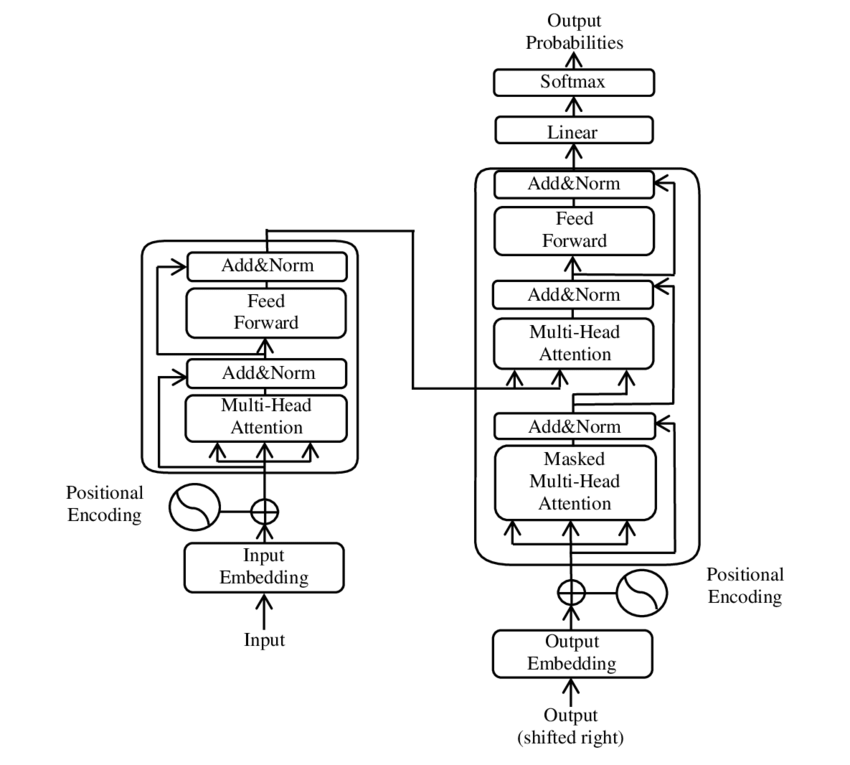
The original Transformer has two main parts: an encoder and a decoder. Think of them as two specialists who collaborate on a translation task. The encoder's job is to read and understand the input text in its entirety. It processes the sentence and condenses its meaning into a set of numerical representations, capturing the context of each word.
The decoder's job is to take that condensed meaning and generate the output text, one word at a time. For example, in a translation task from English to French, the encoder would read the entire English sentence. The decoder would then receive the encoder's understanding and begin generating the French translation, word by word, always aware of the full context provided by the encoder.
Each encoder and decoder is not a single unit but a stack of identical layers. Stacking these layers allows the model to learn progressively more complex patterns in the data. A word's representation gets refined each time it passes through a layer, enriching its meaning with deeper contextual information from the rest of the sentence.
Inside a Transformer Block
Each block in the encoder and decoder stack contains two main sub-layers. The first is an attention mechanism, which we'll cover later. The second is a simple, fully connected (FFN). This FFN processes each word's representation independently, transforming it into a more useful format for the next layer.
The width of the FFN's inner layer is often called the model's hidden dimension. A larger hidden dimension gives the model more capacity to learn, but also makes it slower and more expensive to train.
A crucial detail for making these deep stacks work is the use of and layer normalization. Imagine information flowing up a tall skyscraper. As it goes from floor to floor (or layer to layer), some details could get lost or distorted.
Residual connections act like express elevators. They take the original input to a layer and add it directly to the layer's output. This makes it easier for the model to learn by ensuring that the signal from the original input is never lost, even dozens of layers deep. It helps prevent the infamous "vanishing gradient" problem that can plague deep networks.
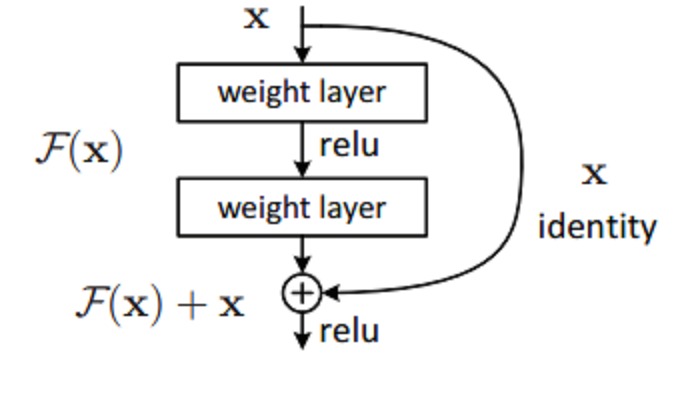
Immediately after the residual connection, is applied. This technique rescales the numbers within each representation to have a consistent mean and variance. Think of it as a quality control step. It ensures that the numbers don't grow too large or small as they pass through layers, which keeps the training process stable and efficient. Without it, training a model with dozens of layers would be incredibly difficult.
Together, these components—the encoder-decoder structure, the stacked layers, the feed-forward networks, and the stabilizing duo of residual connections and layer normalization—form the fundamental architecture of the Transformer. They create a powerful and efficient system for processing language in parallel, setting the stage for the attention mechanism to work its magic.
What was the key innovation of the Transformer architecture compared to earlier sequential models like RNNs?
In the original Transformer model, what is the primary function of the encoder?