Architecting Intelligence and Practical AI Applications
Model Selection Trade-offs
The Right Tool for the Job
Choosing an AI model is like picking a tool from a toolbox. You wouldn't use a sledgehammer to hang a picture frame. Similarly, the biggest, most powerful AI model isn't always the right choice. The best model architecture depends entirely on the problem you're trying to solve, the data you have, and the resources you can spare.
Three main factors guide this decision: the learning strategy, the model's size and specialization, and the practical constraints of performance and cost. Getting this balance right is the difference between a successful AI application and an expensive, inefficient one.
Learning Strategies
As you know, machine learning models learn from data in different ways. The choice between supervised, unsupervised, and reinforcement learning hinges on what you want the model to do and what kind of data is available.
Supervised learning is your go-to when you need high precision and have a dataset with clear, labeled examples. Think of it as learning with an answer key. It's perfect for tasks like classifying emails as spam or not spam, or identifying cancerous cells in medical images. The major trade-off? Creating that high-quality labeled data can be time-consuming and expensive.
Unsupervised learning is for exploration. When you have a mountain of raw, unlabeled data and want to discover hidden structures, this is the right approach. It’s used for grouping customers into marketing segments or detecting unusual activity in a network. The challenge here is that you don't direct what the model finds. The patterns it uncovers might be surprising, but they can also be harder to interpret and may not always align with your business goals.
Reinforcement learning shines in dynamic environments where a model must make a sequence of decisions to maximize a long-term reward. It learns through trial and error, like a person learning to ride a bike. This is the powerhouse behind game-playing AI, robotic control systems, and optimizing logistics supply chains. Its main drawback is complexity. Designing a suitable environment and a clear reward signal is a significant engineering challenge, and training can require vast amounts of simulation.
| Learning Type | Best For | Key Trade-off |
|---|---|---|
| Supervised | High-precision classification & prediction | Requires expensive, high-quality labeled data |
| Unsupervised | Discovering hidden patterns in raw data | Results can be hard to interpret and may not be actionable |
| Reinforcement | Optimizing for long-term rewards in dynamic systems | High setup complexity and long training times |
Size and Specialization
A major decision in modern AI is choosing between a massive, general-purpose Large Language Model (LLM) like GPT-4, and a smaller, more focused model. These are often called Small Language Models (SLMs) or simply specialized models.
LLMs are incredibly versatile. Their vast training on internet-scale data gives them a broad understanding of language, context, and reasoning. This makes them excellent at open-ended, creative, and zero-shot tasks where you provide a prompt without prior specific training. However, this power comes at a cost. They are slow, computationally expensive to run, and can be overkill for a narrow problem.
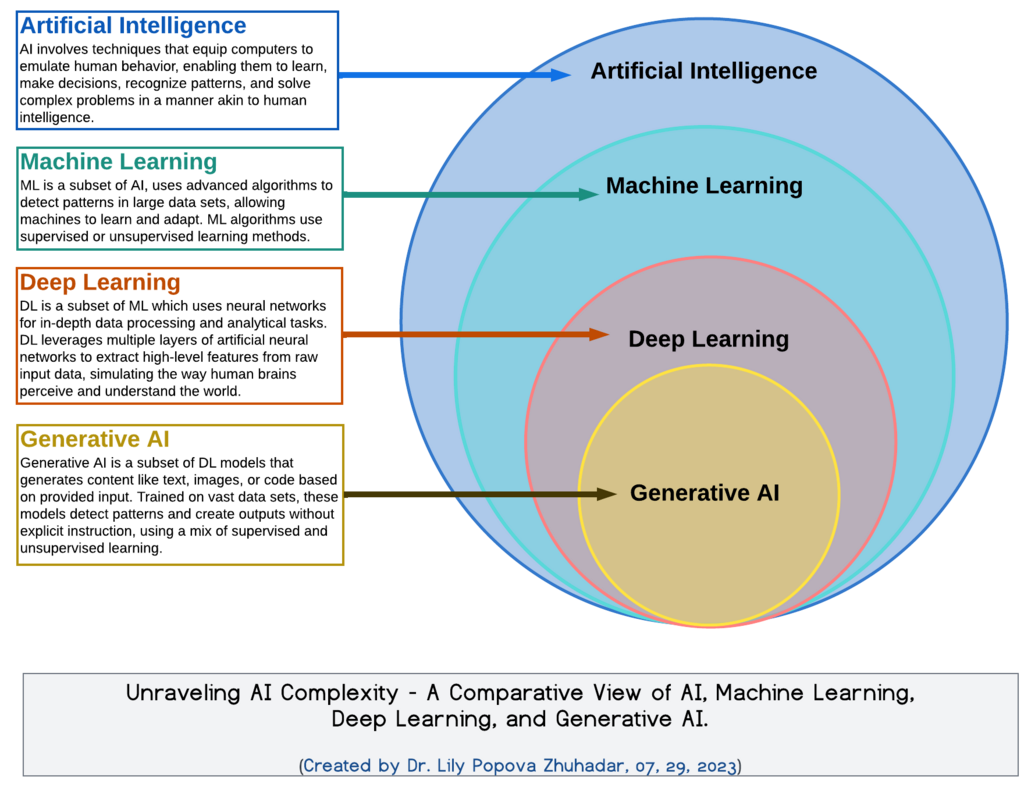
Specialized models, including SLMs, are the opposite. They are smaller, faster, and designed for one thing. Think of a model built only to summarize medical records or another that exclusively analyzes financial sentiment. By sacrificing broad knowledge, they gain efficiency. They can run on edge devices like your phone, respond almost instantly, and cost a fraction of an LLM to operate for each task (a concept known as inference cost).
When choosing between Small Language Models (SLMs) and Large Language Models (LLMs), as well as among various GPT models, it's important to consider the specific needs of your project in terms of complexity, computational resources, and efficiency.
Performance, Cost, and Data
Beyond the model type, real-world constraints often dictate the final choice. Latency, or the time it takes for a model to return a response, is critical. For a customer service chatbot, a two-second delay might be acceptable. For an AI detecting obstacles for a self-driving car, it must be instantaneous. An SLM's low latency makes it the only viable choice for many real-time applications.
Inference cost is another major factor. Every time you ask a model a question, it costs computing power, which translates to money. An LLM might cost several cents per query, while a specialized model could be a tiny fraction of a cent. For an application serving millions of users, this difference adds up quickly, making the more efficient model the only economical option.
Finally, resource constraints and compute requirements are a hard reality. Training a foundational LLM from scratch requires a budget in the millions of dollars and access to massive clusters of specialized hardware. Running them for inference is also demanding. In contrast, many smaller, specialized models can be trained and run on a single powerful computer. This accessibility allows smaller companies and individual developers to build and deploy custom AI solutions without needing the resources of a tech giant.
Ultimately, there is no single "best" model. The choice is a strategic one, balancing the power of generalist models against the speed, cost, and precision of specialists.
What is the primary advantage of using a Large Language Model (LLM) compared to a smaller, specialized model?
A financial services company wants to build an AI feature for its mobile app that provides instantaneous fraud detection on transactions. Which factor is the most critical constraint when choosing a model?