Architecting Computer Networks
Layered Interaction Logic
The Data Journey
When you send an email or load a webpage, the data doesn't just teleport across the internet. It undertakes a structured journey, passing through several layers of abstraction. Each layer has a specific job and wraps the data in a new envelope of information before passing it down to the layer below. This process is called encapsulation.
Think of it like sending a package. You put your item (data) in a box, the post office adds a shipping label (Transport layer header), a logistics company puts that box in a container with other packages going to the same city (Network layer header), and finally, a local delivery truck gets a manifest for its specific route (Data Link layer header).
On the receiving end, the process happens in reverse. Each layer unwraps its envelope, reads the instructions meant for it, and passes the contents up to the next layer. This is decapsulation. This layered approach, formalised by models like OSI and TCP/IP, ensures that a complex process is broken down into manageable, standardised steps.
While the OSI model is a detailed, seven-layer conceptual framework, the TCP/IP model is a more practical, four-layer model that the internet is actually built on. For our purposes, the key interactions happen between the Transport, Network (or Internet), and Data Link (part of Network Access) layers.
From Segments to Frames
The process begins at the Transport Layer (Layer 4). It receives data from an application, like your web browser. If the data is large, the Transport layer's protocol, typically the Transmission Control Protocol (TCP), breaks it into smaller, manageable chunks called segments.
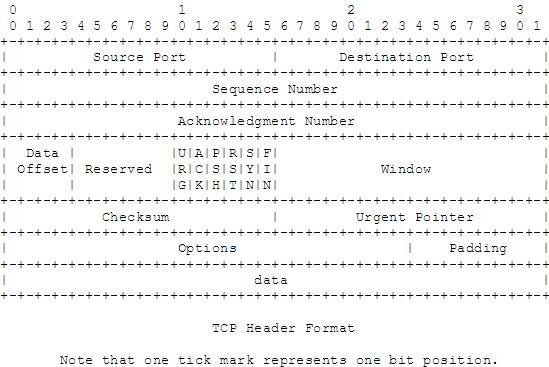
To each segment, TCP adds a header. This isn't just a label; it's a vital set of instructions containing source and destination port numbers (to identify the specific applications communicating), sequence numbers (to reassemble the chunks in the correct order), and acknowledgment numbers for flow control and reliability.
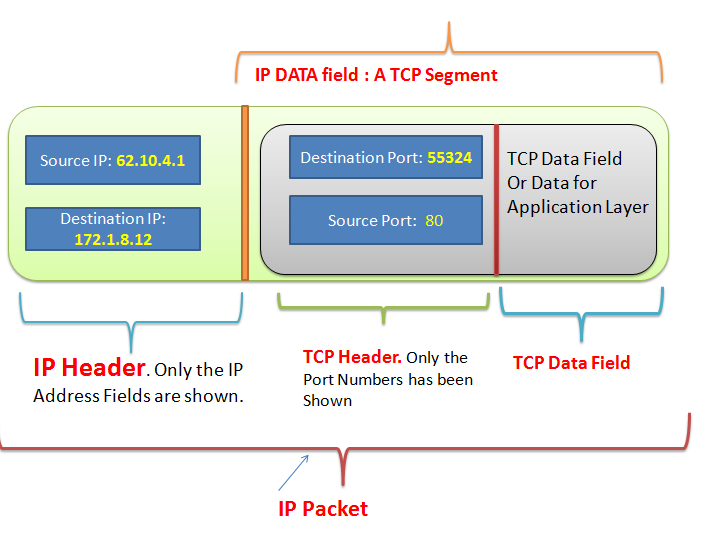
Once a segment is ready, the Transport layer passes it down to the Network Layer (Layer 3). Here, the entire TCP segment (header and data) becomes the payload. Layer 3 encapsulates this payload by adding its own header, creating what's known as a packet. The most common Layer 3 protocol is the Internet Protocol (IP).
The IP header contains, most importantly, the source and destination IP addresses. These are the logical addresses that routers across the internet use to forward the packet towards its final destination, much like a full street address on a letter.
The packet is then handed off to the Data Link Layer (Layer 2). This layer's job is to manage the physical transmission between devices on the same local network. It takes the IP packet and encapsulates it into a frame.
The frame header includes the source and destination (Media Access Control). Unlike IP addresses, which can change depending on the network, a MAC address is a unique, permanent hardware identifier for a network interface card. Routers use this address to deliver the frame to the next-hop device on the local network segment.
Finally, the Data Link Layer hands the frame to the Physical Layer (Layer 1), which converts the ones and zeros into electrical signals, light pulses, or radio waves for transmission over the physical medium.
On the receiving computer, this entire process unfolds in reverse. The Physical layer receives the signal and turns it back into a frame. The Data Link layer checks the MAC address, strips off the frame header, and passes the packet up to the Network layer. The Network layer checks the IP address, removes the IP header, and hands the segment to the Transport layer. The Transport layer reassembles the segments using sequence numbers, removes the TCP header, and delivers the complete, correct data to the receiving application.
What is the process of adding a header to data at each layer as it moves down the network stack called?
Which layer is responsible for taking IP packets and encapsulating them into frames for transmission on a local network?
This elegant system of encapsulation and decapsulation allows different layers to focus on their specific tasks without needing to know the details of the layers above or below, forming the logical backbone of all network communication.