Archeology of Alicante
Introduction to Archaeology
What Is Archaeology?
Archaeology is the study of the human past using the physical things people left behind. These items, called artifacts or material culture, can be anything from a massive pyramid to a tiny stone arrowhead. They are the tangible evidence of how people lived, worked, ate, and thought, long before written records existed.
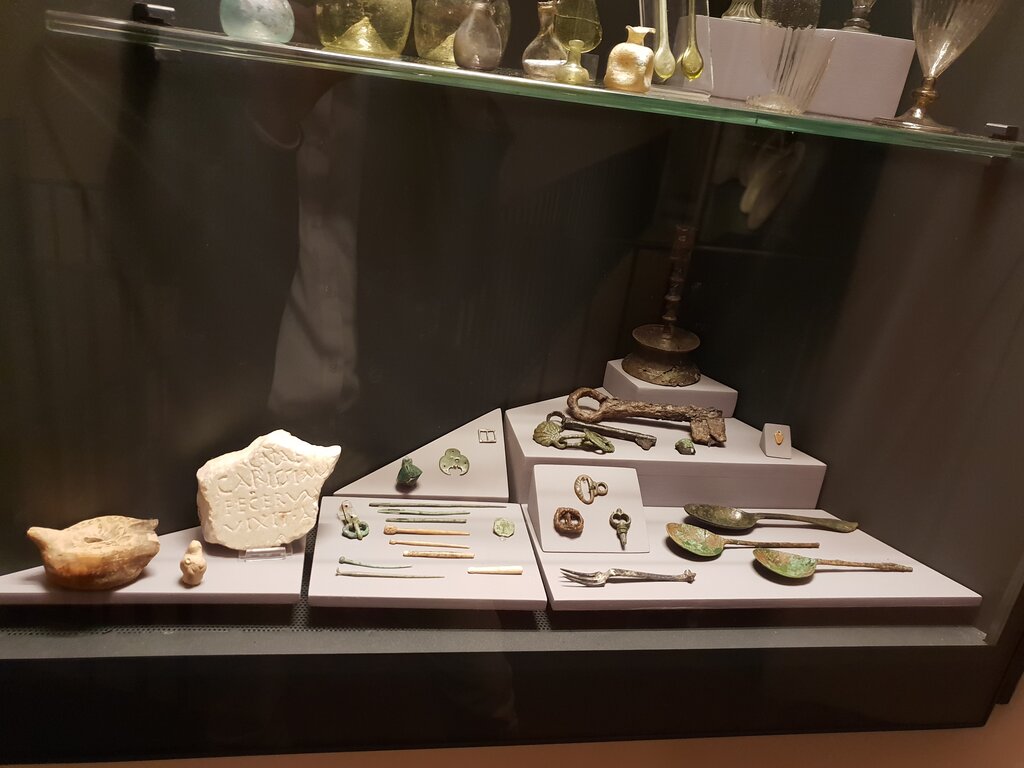
While historians primarily use documents, archaeologists dig into the ground to uncover their sources. This allows them to study societies that had no writing system, a time known as prehistory. Even for historical periods, archaeology provides a unique perspective. A tax record might tell you a city existed, but excavating its houses reveals what people ate for dinner and what goods they traded.
It’s a common mix-up, but archaeologists don't study dinosaurs. That's the job of paleontologists. Archaeology is exclusively about the human story.
A Brief History of the Field
The discipline didn't start as a science. For centuries, it was more of a treasure hunt. Wealthy collectors, known as antiquarians, gathered ancient objects for their private collections, often with little regard for the context in which they were found.
In the 19th century, this began to change. Researchers realized that an object's location, especially its vertical position in the ground, was critically important. This led to the development of stratigraphy, a foundational concept in archaeology.
Stratigraphy is the study of layers of soil and rock (strata). The basic principle, known as the Law of Superposition, states that in an undisturbed sequence, the deepest layers are the oldest, and the layers closest to the surface are the youngest.
Think of it like a laundry basket. The clothes you wore on Monday are at the bottom, while the clothes from Friday are on top. By digging down, you travel back in time.
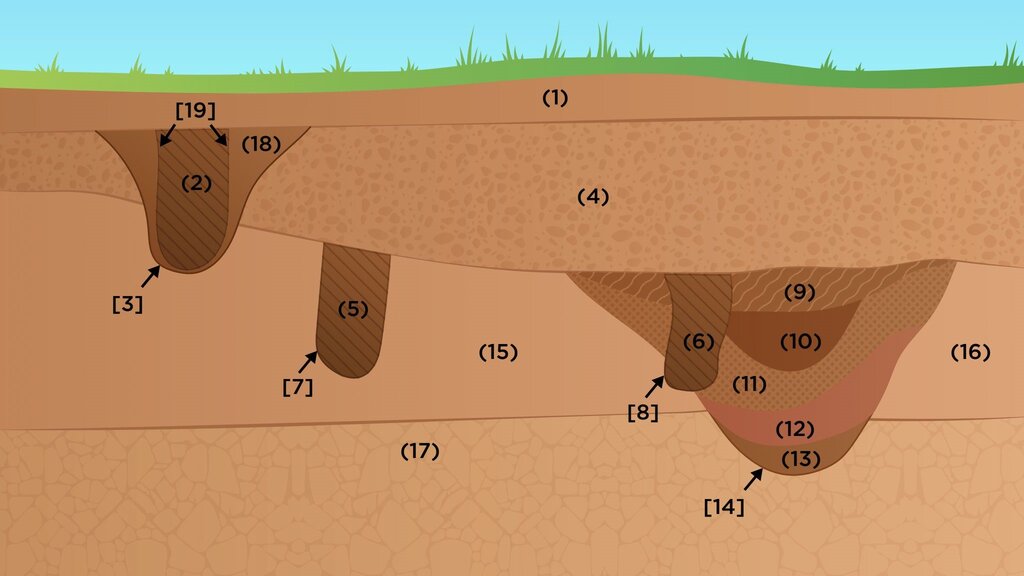
This shift turned archaeology from a hobby into a systematic discipline. Today, archaeologists use a wide range of scientific techniques, from chemistry to genetics, to analyze the past.
The Archaeologist's Toolkit
An archaeological investigation is a meticulous process with several key stages.
First comes the survey. Before digging, archaeologists need to find and map sites. They might do this by systematically walking across fields looking for artifacts on the surface. They also use technology like aerial photography, satellite imagery, and ground-penetrating radar, which can reveal buried structures without moving any dirt.
Once a site is identified, excavation may begin. This is the careful, destructive process of unearthing remains. It’s destructive because once a layer of soil is removed, it can never be put back exactly as it was. Archaeologists use tools ranging from shovels to small trowels, brushes, and even dental picks.
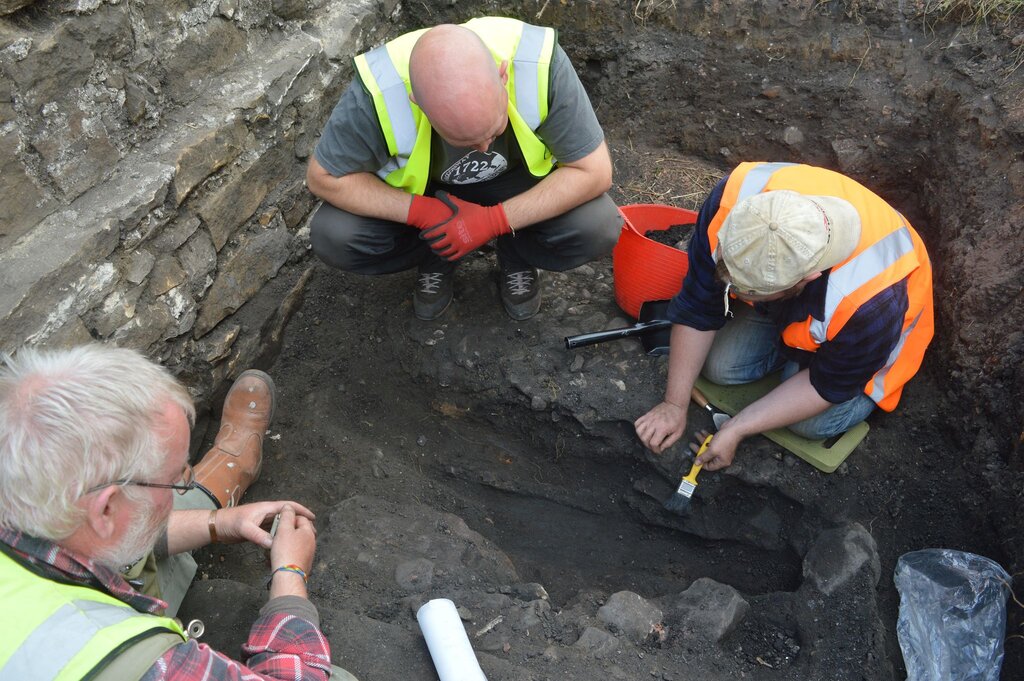
Because excavation is destructive, recording is the most crucial step. Every artifact, soil feature, and piece of data is meticulously documented. The exact three-dimensional location of every significant find is measured and mapped. Detailed notes, drawings, and photographs preserve the context of the discoveries.
Finally, the work moves to the lab for analysis. Artifacts are cleaned, conserved, and cataloged. Specialists analyze the objects to learn about their material, function, and origin. This post-excavation work can take years, far longer than the dig itself.
How Old Is It?
Determining the age of an artifact or site is fundamental. Archaeologists use two main types of dating methods.
Relative dating tells you if something is older or younger than something else, but not its specific age in years. Stratigraphy is the classic example. If a pot is found in a layer below another pot, you know it's older.
Absolute dating provides a calendar age or a range of dates. There are many techniques, but one of the most famous is radiocarbon dating. All living organisms absorb carbon from the atmosphere, including a tiny amount of a radioactive isotope, carbon-14. When an organism dies, it stops absorbing carbon, and the carbon-14 begins to decay at a known rate. By measuring the remaining carbon-14 in organic materials like bone, wood, or charcoal, scientists can calculate how long ago the organism died. This method is effective for materials up to about 50,000 years old.
Ethical Responsibilities
Archaeology is not just about the past; it has significant responsibilities in the present. Archaeologists must consider the ethical implications of their work. This includes respecting the descendants of the people they study, collaborating with local communities, and ensuring that artifacts are properly cared for.
The archaeological record is a finite and fragile resource. A major ethical imperative is to protect sites from looting and destruction. Archaeologists work to preserve this shared human heritage for future generations.
Archeology outreach is a legal and an ethical responsibility for all archeologists.
Sharing findings with the public is also a key part of the job, ensuring that the stories uncovered from the past are accessible to everyone.