Archaeology of Ancient Troy
Hisarlik Stratigraphy
The Hill of Many Cities
The city of Troy from Homer's epic wasn't just one place. It was a whole series of cities, built one on top of the other over thousands of years. The archaeological site, located in modern-day Turkey, is a man-made hill called Hisarlik. This type of mound is known as a tell and is common throughout the Near East and Anatolia.
Archaeologists have identified nine major layers, labelled Troy I to Troy IX, representing more than 3,000 years of history. When a city was destroyed by fire, earthquake, or war, the survivors or new settlers would simply level the ruins and build on top. This process, repeated over centuries, created the mound we see today. The earliest settlement, Troy I, dates back to the Early Bronze Age around 3000 BCE. The latest, Troy IX, was a Roman city called Ilium that flourished until around 500 CE. Understanding this stratigraphy is crucial. The famous 'Treasure of Priam' discovered by Heinrich Schliemann was found in the Troy II layer, from the Early Bronze Age. That's about 1,000 years before the likely era of the Trojan War.
A Strategic Prize
The long history of settlement at Hisarlik isn't an accident. The city was located in a region known as the , occupying a commanding position at the entrance to the strait. This narrow waterway connects the Aegean Sea to the Sea of Marmara, and from there to the Black Sea.
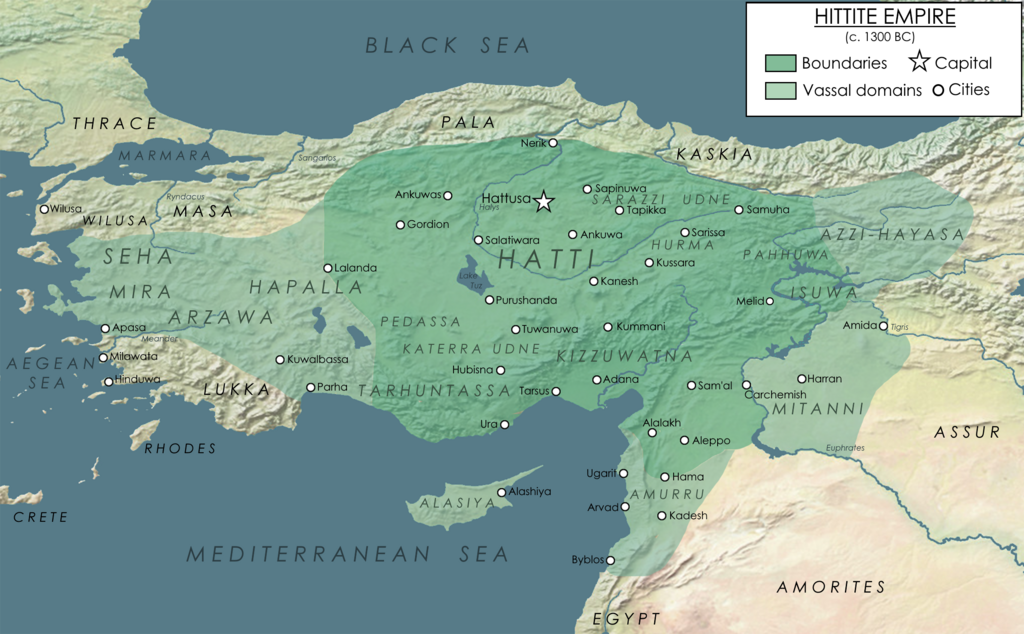
Controlling this passage meant controlling all maritime trade and movement. Any ship wanting to pass through would have been at the mercy of the power that held the coast. This likely made Troy exceptionally wealthy and influential, a fact supported by the archaeological evidence of strong fortifications and rich goods found in its various layers. The city served as a vital gatekeeper between two worlds.
Finding Homer's Troy
So, if Troy II is too early, which layer corresponds to the city described by Homer? Scholars focus on the Late Bronze Age, the period when a conflict like the Trojan War would have plausibly occurred. This narrows the search to two primary candidates: Troy VI and Troy VIIa.
Troy VI was a magnificent city. It lasted from around 1750 to 1300 BCE and boasted formidable, sloping limestone walls, impressive towers, and large, well-constructed houses within its citadel. The city was clearly the capital of a strong and prosperous kingdom. Its layout, with a fortified upper citadel and a suspected lower town for the general population, fits well with descriptions of a major regional power. However, Troy VI appears to have been destroyed by a massive earthquake, not a war.
Immediately after the earthquake, the inhabitants rebuilt. This new settlement is known as Troy VIIa. It was built on the ruins of its predecessor, often reusing the old walls but subdividing the grand houses into smaller, more cramped dwellings. The population seemed to be crowding inside the fortifications.
Troy VIIa existed for a relatively short time, from about 1300 to 1180 BCE. Crucially, its life ended in a fiery destruction. Evidence of widespread burning and skeletons found in the streets point towards a violent end, consistent with a city being sacked in a war. For many archaeologists, the evidence of a siege and conquest makes Troy VIIa the most likely candidate for the historical city that inspired the legends of the Trojan War.
While we may never know for certain, the layers of Hisarlik provide a tangible link to the past. They show us not one Troy, but a succession of them, each with its own story. The search for Homer's city is a process of carefully peeling back these layers of time.