Arabic Script Essentials
Arabic Alphabet
Meet the Arabic Alphabet
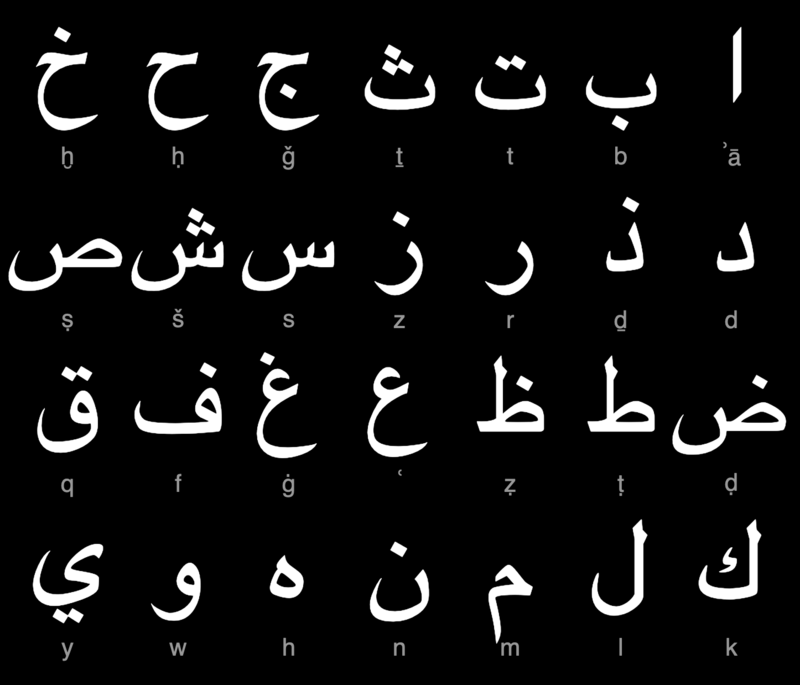
The Arabic script is the foundation of the language. It has 28 letters, and unlike English, it's written from right to left. Think of it as a continuous, flowing line of text, because Arabic is almost always written in a cursive, or connected, style.
Letters Change Shape
Here’s the most important thing to know about Arabic letters: they change shape. A letter will look different depending on where it sits in a word. This isn't as tricky as it sounds. It happens because the letters need to connect to each other smoothly.
Each letter has up to four forms:
- Isolated: When the letter stands by itself.
- Initial: When it's at the beginning of a word.
- Medial: When it's in the middle of a word.
- Final: When it's at the end of a word.
Imagine you're writing in cursive English. The way you write an 's' at the start of 'sun' is slightly different from how you'd connect it in the middle of 'also'. Arabic takes this idea a bit further.
Let's look at a few examples to see this in action. Notice how the letter 'ayn (ع) transforms completely, while the letter bā’ (ب) just adapts its connections.
| Letter | Isolated | Initial | Medial | Final |
|---|---|---|---|---|
| Bā’ (ب) | ب | بـ | ـبـ | ـب |
| Hā’ (ه) | ه | هـ | ـهـ | ـه |
| ‘Ayn (ع) | ع | عـ | ـعـ | ـع |
Most letters connect from both the right and the left. However, six letters are a bit stubborn. They only connect to the letter that comes before them (to their right). They never connect to the letter that comes after.
These six letters are:
ا (alif), د (dāl), ذ (dhāl), ر (rā’), ز (zāy), and و (wāw).
When one of these letters appears in a word, it creates a small gap before the next letter. The word is still one unit, but the cursive flow is broken.
The Letters and Their Sounds
Now, let's go through all 28 letters. The table below lists each letter's name and its approximate sound. Some sounds don't exist in English, so the closest approximation is given. Pay close attention to the pronunciation notes.
| Letter | Name | Pronunciation Guide |
|---|---|---|
| ا | Alif | Like 'a' in 'car'. |
| ب | Bā’ | Like 'b' in 'bed'. |
| ت | Tā’ | Like 't' in 'top'. |
| ث | Thā’ | Like 'th' in 'three'. |
| ج | Jīm | Like 'j' in 'jam'. |
| ح | Ḥā’ | A sharp, breathy 'h' from the back of the throat. No English equivalent. |
| خ | Khā’ | Like the 'ch' in the Scottish 'loch'. |
| د | Dāl | Like 'd' in 'dog'. |
| ذ | Dhāl | Like 'th' in 'this'. |
| ر | Rā’ | A rolled 'r', like in Spanish 'pero'. |
| ز | Zāy | Like 'z' in 'zoo'. |
| س | Sīn | Like 's' in 'see'. |
| ش | Shīn | Like 'sh' in 'she'. |
| ص | Ṣād | A heavy 's' sound, made with the back of the tongue raised. |
| ض | Ḍād | A heavy 'd' sound. No English equivalent. |
| ط | Ṭā’ | A heavy 't' sound. |
| ظ | Ẓā’ | A heavy 'dh' sound, similar to 'th' in 'this' but thicker. |
| ع | ‘Ayn | A deep guttural sound from the back of the throat. No English equivalent. |
| غ | Ghayn | A guttural sound like the French 'r' in 'Paris'. |
| ف | Fā’ | Like 'f' in 'fish'. |
| ق | Qāf | A 'k' sound made much further back in the throat. |
| ك | Kāf | Like 'k' in 'kite'. |
| ل | Lām | Like 'l' in 'love'. |
| م | Mīm | Like 'm' in 'man'. |
| ن | Nūn | Like 'n' in 'no'. |
| ه | Hā’ | Like 'h' in 'hat'. |
| و | Wāw | Like 'w' in 'water'. |
| ي | Yā’ | Like 'y' in 'yes'. |
Learning these letters and their forms is the first and most important step. Let's see what you've picked up.
In which direction is the Arabic script typically written?
Why do most Arabic letters change their shape?
With these building blocks, you're on your way to reading and writing Arabic.