Arabic Mathematics Unveiled
Introduction to Arabic Mathematics
A Golden Age of Numbers
From roughly the 8th to the 14th centuries, the Islamic world experienced a remarkable period of intellectual and cultural growth. This era, often called the Islamic Golden Age, wasn't just about preserving ancient knowledge. It was a time of intense innovation, where scholars, thinkers, and artists made groundbreaking discoveries in fields ranging from medicine to astronomy.
At the heart of this flourishing was a vast and diverse civilization stretching from Spain to India. This immense region became a melting pot of cultures and ideas. Cities like Baghdad, Cairo, and Córdoba became vibrant centers of learning, drawing scholars from different backgrounds who shared a common language: Arabic.
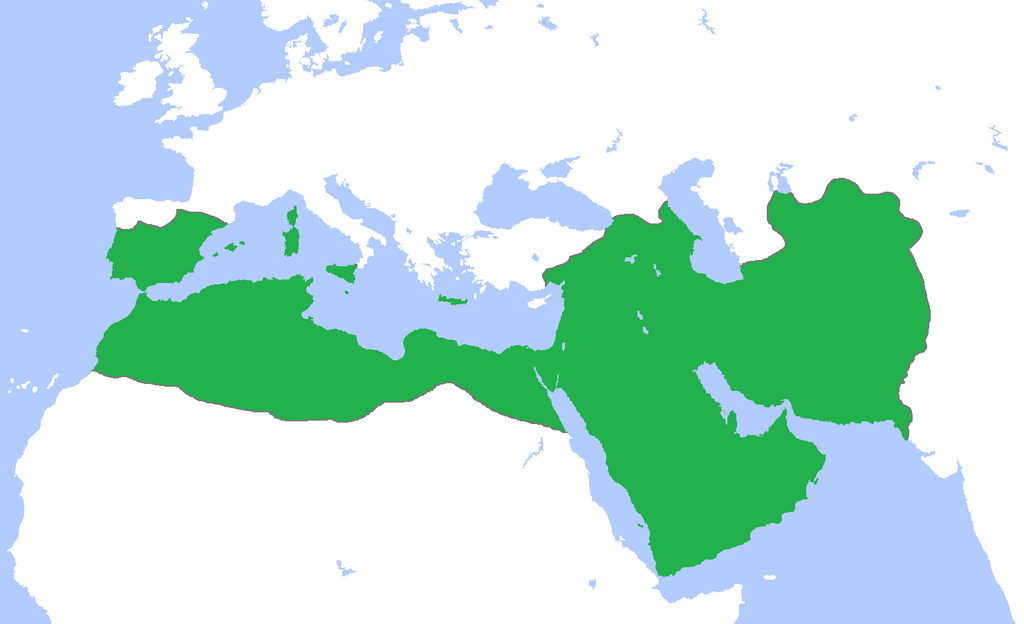
A key institution was the House of Wisdom in Baghdad, established in the 9th century. It was more than a library; it was a translation center and academy where the great works of other cultures were collected, translated into Arabic, and studied. This effort laid the groundwork for a new wave of scientific and mathematical thought.
Building on the Work of Giants
Arabic mathematics didn't emerge from a vacuum. Scholars actively sought out and built upon the traditions of the great civilizations that came before them.
They synthesized three major streams of thought:
- Greek logic and geometry: From thinkers like Euclid, they inherited a tradition of rigorous proof and systematic reasoning. The focus was on abstract shapes and logical deduction.
- Indian numerals and computation: From India came a revolutionary system of numbers. This included the concept of zero and the decimal place-value system we use today, which made calculations vastly simpler.
- Persian astronomy and trigonometry: Persian scholars had a long history of practical mathematics applied to observing the stars and measuring the land, contributing heavily to trigonometry and algebra.
The fusion of these traditions was powerful. Imagine combining the logical structure of Greek geometry with the computational power of Indian numerals. This allowed mathematicians to not only solve old problems more efficiently but also to ask entirely new kinds of questions.
The Birth of New Ideas
This synthesis wasn't just a simple copy-and-paste job. Scholars in the Arabic-speaking world critically engaged with these older texts, correcting them, expanding upon them, and ultimately creating new fields of mathematics. They united the abstract world of Greek geometry with the practical world of numbers.
algebra
noun
A branch of mathematics in which letters and other general symbols are used to represent numbers and quantities in formulae and equations.
One of the most significant results was the development of algebra as a discipline in its own right. Instead of just solving specific arithmetic problems, they developed general methods for solving entire classes of equations. This was a monumental shift in thinking. Geometry also flourished, not just for theoretical proofs but for practical applications in art, architecture, and instrument-making.
The contributions from this era formed a crucial bridge, transmitting and expanding upon ancient knowledge that would later fuel the Renaissance in Europe. The mathematics developed during the Islamic Golden Age set the stage for centuries of discovery to come.