Arabic for Absolute Beginners
Arabic Alphabet
The Arabic Alphabet
The Arabic script is the foundation of the language, and it’s a bit different from the Latin alphabet used for English. For starters, it’s written from right to left. It's also an abjad, which means each of its 28 letters primarily represents a consonant sound. Vowels are handled differently, but we'll get to that later. For now, let's focus on the letters themselves.
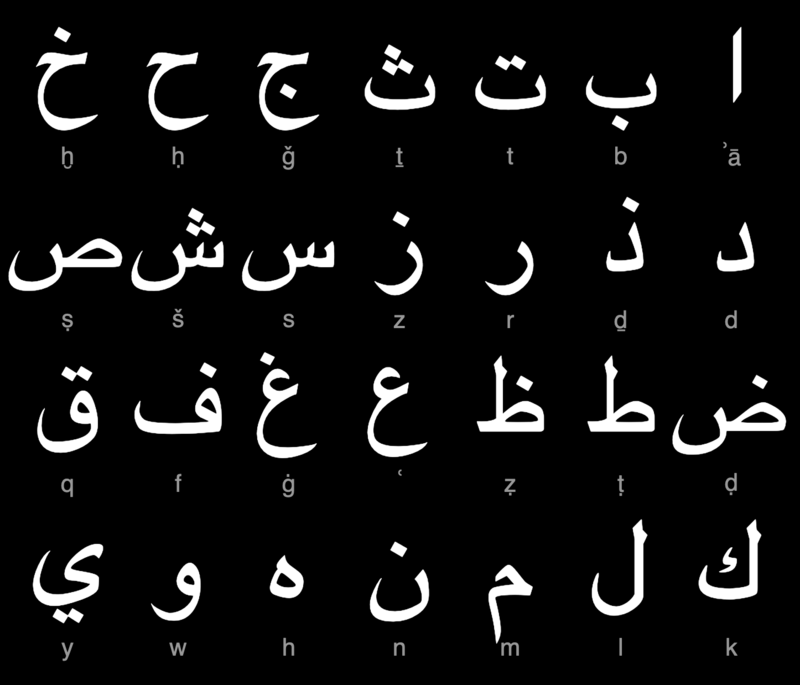
Each letter has a name and a distinct sound. Some sounds will be familiar to English speakers, while others are unique to Arabic and will take a bit of practice. The table below lists all 28 letters, their names, and a close approximation of their sound.
| Letter | Name | Pronunciation |
|---|---|---|
| ا | Alif | A long 'a' sound, as in 'father' |
| ب | Bā' | 'b' as in 'bed' |
| ت | Tā' | 't' as in 'top' |
| ث | Thā' | 'th' as in 'three' |
| ج | Jīm | 'j' as in 'jam' |
| ح | Ḥā' | A breathy 'h' sound from the throat |
| خ | Khā' | A raspy 'kh' sound, like the 'ch' in 'loch' |
| د | Dāl | 'd' as in 'dog' |
| ذ | Dhāl | 'th' as in 'this' |
| ر | Rā' | A rolled 'r' sound |
| ز | Zāy | 'z' as in 'zoo' |
| س | Sīn | 's' as in 'sun' |
| ش | Shīn | 'sh' as in 'shoe' |
| ص | Ṣād | An emphatic, heavier 's' sound |
| ض | Ḍād | An emphatic, deeper 'd' sound |
| ط | Ṭā' | An emphatic, heavier 't' sound |
| ظ | Ẓā' | An emphatic 'th' sound, like in 'this' |
| ع | 'Ayn | A deep, guttural sound with no English equivalent |
| غ | Ghayn | A gargling sound, similar to the French 'r' |
| ف | Fā' | 'f' as in 'fan' |
| ق | Qāf | A 'k' sound made from the back of the throat |
| ك | Kāf | 'k' as in 'key' |
| ل | Lām | 'l' as in 'light' |
| م | Mīm | 'm' as in 'man' |
| ن | Nūn | 'n' as in 'no' |
| ه | Hā' | 'h' as in 'hello' |
| و | Wāw | 'w' as in 'water' |
| ي | Yā' | 'y' as in 'yes' |
Shape-Shifting Letters
Here's where Arabic gets interesting. The shape of a letter changes depending on where it appears in a word. Think of it like cursive writing, where letters connect to each other. A letter can have up to four different forms: an isolated form (when it's by itself), an initial form (at the start of a word), a medial form (in the middle), and a final form (at the end).
Most letters connect from both the right and the left. This allows the script to flow continuously, linking letters into a single, elegant stroke.
Let's look at the letter Bā' (ب) as an example. When it's by itself, it looks like this: ب. But when it's at the beginning of a word, it connects to the next letter, like this: بـ. In the middle, it connects from both sides: ـبـ. And at the end, it connects from the right and finishes with its final tail: ـب.
This might seem like a lot to remember, but you'll notice patterns. The core shape of the letter usually stays the same; only the connections change. The table below shows all four forms for each letter.
| Letter | Isolated | Initial | Medial | Final |
|---|---|---|---|---|
| Alif (ا) | ا | ا | ـا | ـا |
| Bā' (ب) | ب | بـ | ـبـ | ـب |
| Tā' (ت) | ت | تـ | ـتـ | ـت |
| Thā' (ث) | ث | ثـ | ـثـ | ـث |
| Jīm (ج) | ج | جـ | ـجـ | ـج |
| Ḥā' (ح) | ح | حـ | ـحـ | ـح |
| Khā' (خ) | خ | خـ | ـخـ | ـخ |
| Dāl (د) | د | د | ـد | ـد |
| Dhāl (ذ) | ذ | ذ | ـذ | ـذ |
| Rā' (ر) | ر | ر | ـر | ـر |
| Zāy (ز) | ز | ز | ـز | ـز |
| Sīn (س) | س | سـ | ـسـ | ـس |
| Shīn (ش) | ش | شـ | ـشـ | ـش |
| Ṣād (ص) | ص | صـ | ـصـ | ـص |
| Ḍād (ض) | ض | ضـ | ـضـ | ـض |
| Ṭā' (ط) | ط | طـ | ـطـ | ـط |
| Ẓā' (ظ) | ظ | ظـ | ـظـ | ـظ |
| 'Ayn (ع) | ع | عـ | ـعـ | ـع |
| Ghayn (غ) | غ | غـ | ـغـ | ـغ |
| Fā' (ف) | ف | فـ | ـفـ | ـف |
| Qāf (ق) | ق | قـ | ـقـ | ـق |
| Kāf (ك) | ك | كـ | ـكـ | ـك |
| Lām (ل) | ل | لـ | ـلـ | ـل |
| Mīm (م) | م | مـ | ـمـ | ـم |
| Nūn (ن) | ن | نـ | ـنـ | ـن |
| Hā' (ه) | ه | هـ | ـهـ | ـه |
| Wāw (و) | و | و | ـو | ـو |
| Yā' (ي) | ي | يـ | ـيـ | ـي |
Connectors and Non-Connectors
Looking at the table, you might notice something odd. Six letters don't seem to follow the rules. These letters are often called "non-connectors" or "right-joining" letters. They will connect to a letter on their right, but never to a letter on their left.
These six letters are:
- Alif (ا)
- Dāl (د)
- Dhāl (ذ)
- Rā' (ر)
- Zāy (ز)
- Wāw (و)
When one of these six letters appears in a word, it creates a break in the connection. The next letter in the word must start with its initial form.
Let's see this in action with the word 'bab' (باب), which means 'door'.
The first letter is Bā' (ب). Since it's at the start, it uses its initial form: بـ The second letter is the non-connector Alif (ا). It connects to the Bā' on its right, so it uses its final form: ـا Because Alif is a non-connector, it doesn't link to the next letter. This means the last letter, another Bā', must use its isolated form (since there's nothing on its right to connect to): ب
Putting it all together, we get: ب + ا + ب = باب
Ready to test your knowledge? This quiz will help you practice identifying the letters and their different forms.
The Arabic writing system is known as an 'abjad'. What does this mean?
Why do most Arabic letters change their shape?
Understanding these core concepts—the 28 letters, their four forms, and the six non-connectors—is the first major step to reading and writing Arabic. With practice, recognizing and connecting these shapes will become second nature.