Applied Stock Market Fundamentals
Trade Execution Mechanics
From Theory to Trade
Knowing what stock you want to buy is only half the battle. The other half is execution: how you actually buy or sell it. The instructions you give your broker are called orders, and the type of order you use can dramatically affect the price you pay.
The two most fundamental order types are market orders and limit orders. A market order is the simplest. It tells your broker to buy or sell a stock immediately at the best available price. It prioritizes speed over price. If you want to get in or out of a position right now, a market order is your tool. The trade is virtually guaranteed to execute as long as there are buyers and sellers.
A limit order, on the other hand, prioritizes price over speed. It instructs your broker to buy or sell a stock only at a specific price or better. For a buy limit order, you set a maximum price you're willing to pay. For a sell limit order, you set a minimum price you're willing to accept. Your order will only execute if the market reaches your limit price. This protects you from paying more than you intended, but there's no guarantee the trade will happen.
| Order Type | Priority | Execution Guarantee | Price Control |
|---|---|---|---|
| Market Order | Speed | Almost certain | None; you get the current best price |
| Limit Order | Price | Not guaranteed | Full control; executes at your price or better |
The Price of Immediacy
When you place a market order, what price do you actually get? It depends on the bid-ask spread, which is the difference between the highest price a buyer is willing to pay (the bid) and the lowest price a seller is willing to accept (the ask). This spread is the fundamental cost of trading.
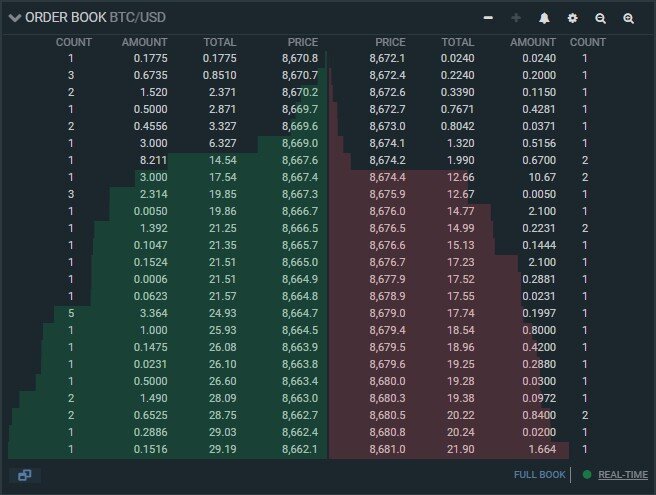
A standard Level 1 price quote shows you three key pieces of information:
- Bid: The highest price someone is currently willing to pay for the stock.
- Ask: The lowest price someone is currently willing to sell the stock for.
- Last: The price at which the most recent trade occurred.
When you place a market order to buy, you'll typically pay the ask price. When you sell, you'll get the bid price. The difference between them goes to the market makers who facilitate the trade. In a market with high —meaning lots of buyers and sellers—the bid-ask spread is usually very tight, often just a penny. In less liquid markets, the spread can be much wider, making it more expensive to trade.
Automating Your Exits
Beyond entering a trade, orders can also help you manage risk by automatically exiting a position. A stop-loss order is a crucial tool for this. It's an order to sell a stock if its price falls to a specific level, known as the stop price. For example, if you buy a stock at $50, you might place a stop-loss order at $45. If the price drops to $45, your stop-loss is triggered and it becomes a market order to sell immediately. This helps protect you from larger losses if the stock continues to fall.
The primary goal of a stop-loss order is not to save money, but to preserve capital by preventing a small loss from turning into a big one.
A related order is the stop-limit. Like a stop-loss, it's triggered at a specific stop price. However, instead of becoming a market order, it becomes a limit order. This means you also set a limit price, which is the worst price at which you are willing to sell. For instance, you could set a stop price of $45 and a limit price of $44.90. If the stock hits $45, your sell order becomes active, but it will only execute at $44.90 or higher. This protects you from in a fast-moving market, but it comes with a risk: if the price gaps down past your limit price, your order may never execute, and you could be stuck in a losing position.
How Long Does Your Order Last?
Finally, you need to decide how long your order should remain active. This is called the 'time-in-force'. The two most common options are:
- Day Order: The order is only active for the current trading day. If it's not filled by the market close, it's automatically canceled.
- (GTC): The order remains active until you either cancel it or it gets filled. This is useful for setting a limit price on a stock you're willing to wait for, or for a long-term stop-loss.
Most brokers default to Day orders, so you usually have to specify if you want an order to be GTC.
| Time-in-Force | Duration | Use Case |
|---|---|---|
| Day | One trading session | Most common; for trades you want to execute today. |
| GTC | Until filled or canceled (up to ~90 days) | Setting a target price you're willing to wait for. |
Now that you understand the key mechanics, let's test your knowledge.
What is the primary advantage of a market order compared to a limit order?
You want to buy a stock, but only if the price drops to $100 or less. The stock is currently trading at $102. Which order should you use?
Mastering these order types gives you precise control over your trades. By choosing the right order for the situation, you can protect your capital, avoid overpaying, and execute your strategy with confidence.