Applied Statistics for Data Science and Machine Learning
Introduction to Applied Statistics
Putting Data to Work
Statistics is the science of collecting, analyzing, and interpreting data. Applied statistics takes this a step further. It's about rolling up our sleeves and using statistical methods to solve practical problems in the real world. Think of it as the bridge between raw numbers and smart decisions.
statistics
noun
The practice or science of collecting and analyzing numerical data in large quantities, especially for the purpose of inferring proportions in a whole from those in a representative sample.
Every day, we're surrounded by data. From the number of steps you take to the stock market's performance, data describes the world around us. But on its own, data is just a collection of facts and figures. It doesn't tell us what to do.
Imagine you own a small coffee shop. You want to add a new pastry to the menu, but you're not sure which one will be most popular. You could just guess. Or, you could collect some data. You might run a poll with your regular customers for a week, asking them to choose between a croissant, a muffin, or a scone. At the end of the week, you have data. Analyzing that data helps you make an informed choice, increasing the odds that your new pastry will be a hit.
Applied statistics transforms raw data into meaningful insights that guide action.
A Roadmap for Analysis
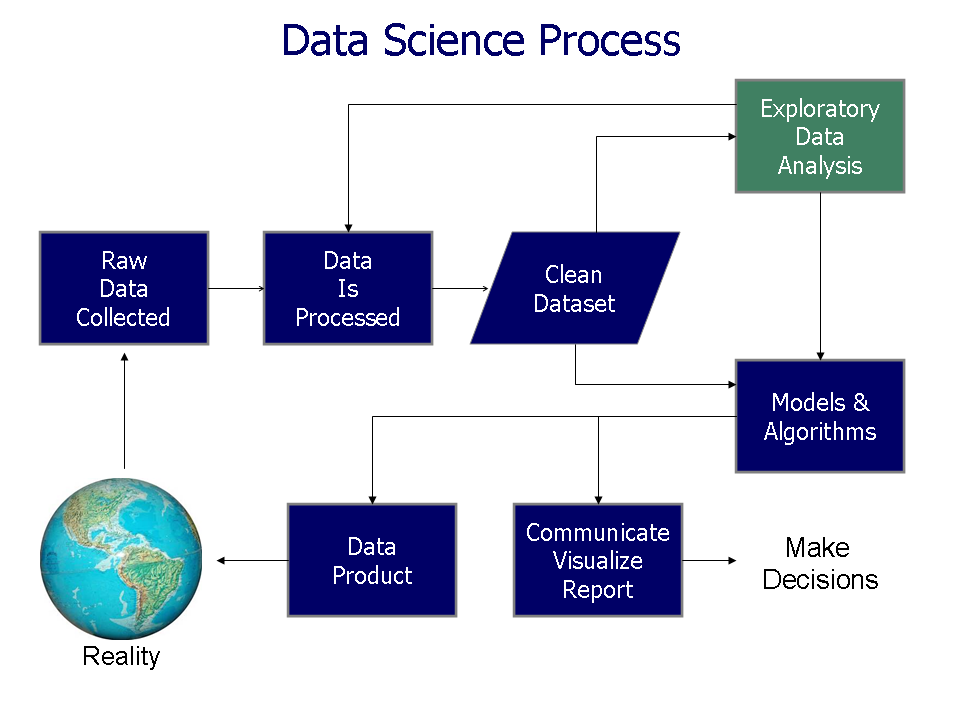
While the specific tools can get complex, the overall process of statistical analysis is straightforward. It provides a structured way to get from a question to an answer.
This process starts with curiosity. You need a clear, specific question you want to answer. Then, you figure out the best way to gather relevant information. Once you have the data, you use statistical techniques to organize it, find patterns, and summarize it. The final, and most important, step is to interpret what those patterns mean in the context of your original question. This often leads to new questions, starting the cycle all over again.
Statistics in Action
This framework is used in nearly every field imaginable. It helps people make better, evidence-based decisions.
In healthcare, doctors and researchers use statistics to determine if a new drug is safe and effective. They conduct clinical trials where one group of patients receives the new drug and another receives a placebo. By statistically analyzing the outcomes, they can see if the drug produced a significant improvement compared to the placebo.
In finance, banks use statistical models to assess loan applications. They analyze data from past borrowers, looking at factors like income, credit history, and debt. This helps them predict the likelihood that a new applicant will repay their loan, informing who gets approved and at what interest rate.
In the social sciences, researchers use statistics to understand societal trends. To gauge public opinion on a political issue, it's impossible to ask everyone in the country. Instead, they survey a smaller, representative sample of the population. Inferential statistics then allows them to use the results from this sample to make a reliable estimate about the opinion of the entire population.
By applying statistical techniques, data scientists can make informed decisions and draw conclusions based on sample data, ultimately advancing knowledge in their respective fields.
Whether it's improving a product, setting public policy, or making a scientific discovery, applied statistics provides the tools to navigate uncertainty and find clarity in a complex world.
What is the primary goal of applied statistics?
A clinical trial is conducted to test a new drug. One group receives the drug, and another receives a placebo. Researchers then analyze the outcomes to see if the drug caused a significant improvement. This is an application of applied statistics in which field?