Applied Microeconomic Principles
Advanced Price Elasticity
Elasticity and Total Revenue
You already know that price elasticity of demand (PED) measures how much the quantity demanded of a good responds to a change in its price. But for a business, the real question is: how does this affect the bottom line? The answer lies in the relationship between elasticity and total revenue.
The relationship is a tug-of-war. When a firm raises its price, it gets more revenue per unit sold, but it sells fewer units. When it lowers the price, it sells more units but gets less for each one. Elasticity tells you which effect will win.
- If demand is inelastic (|PED| < 1): The drop in quantity demanded is proportionally smaller than the increase in price. So, raising the price will increase total revenue. Think of life-saving medicines or petrol. People need them, so even if the price goes up, they'll still buy almost the same amount.
- If demand is elastic (|PED| > 1): The drop in quantity demanded is proportionally larger than the increase in price. Raising the price will cause a sharp fall in sales, decreasing total revenue. The smart move here is often to lower the price. A small discount can lead to a big jump in quantity sold, boosting overall revenue. This is common for things with many substitutes, like a specific brand of fizzy drink or a particular fashion label.
- If demand is unit elastic (|PED| = 1): The change in quantity demanded is exactly proportional to the change in price. A price change won't affect total revenue at all. This is the point where total revenue is maximised.
For elastic goods, volume is king. For inelastic goods, price is power.
Beyond Price: Other Elasticities
Elasticity isn't just about a product's own price. Two other key types of elasticity help businesses and governments understand consumer behaviour more deeply: Income Elasticity and Cross-Price Elasticity.
Income Elasticity of Demand (YED) measures how the quantity demanded of a good changes when a consumer's real income changes.
- Normal Goods (YED > 0): As income rises, people demand more of these. Most goods fall into this category, from holidays to new cars. A luxury good is a type of normal good with a YED greater than 1, meaning demand for it grows faster than income.
- Inferior Goods (YED < 0): As income rises, people demand less of these. Consumers substitute away from them towards better alternatives. Classic examples include supermarket own-brand products or bus travel, which people might swap for branded goods or a car as their income increases.
Cross-Price Elasticity of Demand (XED) measures how the quantity demanded of one good changes when the price of another good changes. This is all about relationships between products.
- Substitutes (XED > 0): If the price of Good A goes up, the demand for Good B increases. They are rivals. For example, if the price of Coca-Cola increases, the demand for Pepsi is likely to rise as people switch brands.
- Complements (XED < 0): If the price of Good A goes up, the demand for Good B decreases. These goods are used together. If the price of petrol rises, the demand for large, fuel-inefficient cars might fall. Likewise, a drop in the price of games consoles often boosts the demand for video games.
Elasticity in the Real World
These concepts aren't just theoretical. They are powerful tools used to make major strategic decisions in both business and government policy. Consider dynamic pricing used by ride-sharing apps like Uber and Lyft. During periods of high demand, like after a concert or on a rainy Friday evening, demand becomes more inelastic. People are willing to pay more to get a ride home. The apps' algorithms detect this, raising prices (surge pricing) to maximise revenue and encourage more drivers to get on the road.
Governments also rely heavily on elasticity when designing tax policies, especially with so-called '' on products like tobacco, alcohol, and sugary drinks. Demand for these goods is typically inelastic. Because of addiction or strong habits, consumers don't reduce their consumption much even when the price goes up due to a tax. This has two effects: it raises significant tax revenue for the government and, while consumption does fall slightly, the main burden of the tax is passed on to the consumer through higher prices.
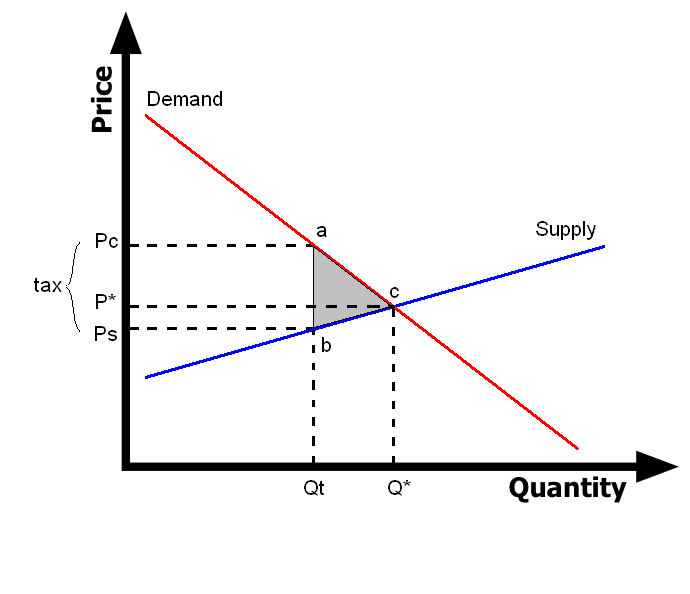
Understanding elasticity is crucial for predicting who will ultimately bear the burden of a tax and how much revenue it will generate. For goods with elastic demand, a tax can cause such a large drop in sales that it fails to raise much revenue at all and can harm producers significantly. This makes elasticity a cornerstone of fiscal policy and a key predictor of human economic behaviour.