Applied Machine Learning and Model Strategy
Algorithm Paradigms and Trade-offs
Choosing your path
You know that machine learning models learn from data, using features to understand patterns and make predictions. But how do you choose the right way for them to learn? It's not about picking the fanciest algorithm. It's about matching your strategy to your data and your goal.
The three main learning paradigms—Supervised, Unsupervised, and Reinforcement Learning—each offer a different path. Your choice depends on one critical question: what does your data look like, and what do you want to achieve?
Supervised Learning: The roadmap
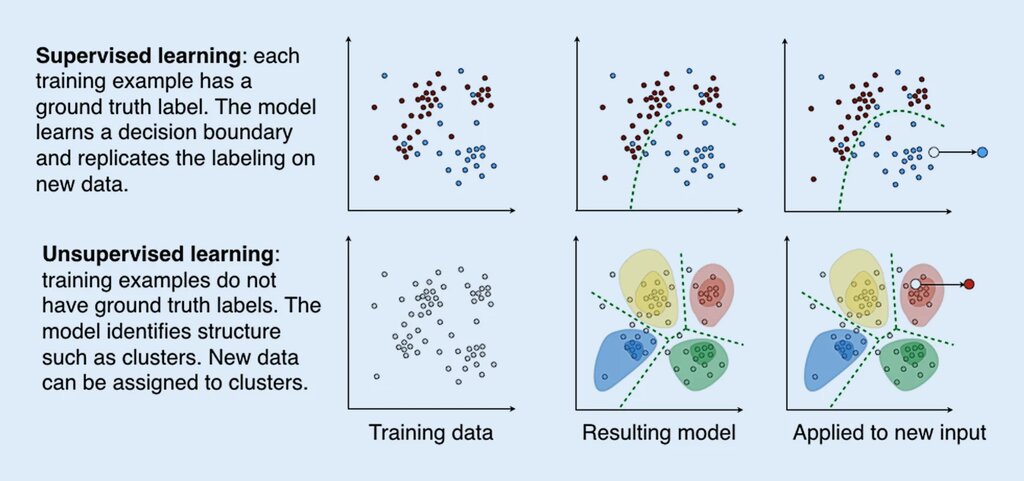
Supervised learning is like learning with an answer key. You provide the model with a dataset where every input (features) is paired with a known, correct output (the label). The model's job is to learn the mapping function between the two.
This approach is perfect for problems where you have historical data with clear outcomes. Think of it as predicting a future event based on a rich history of past events. The goal is either to assign a category (classification) or predict a continuous value (regression).
The main trade-off? Data. While supervised models can be incredibly accurate, they are hungry for high-quality, labelled data. Acquiring and labelling this data can be a major bottleneck. It often requires significant time, money, and human effort. If your historical data is incomplete, biased, or just plain wrong, your model will inherit those flaws.
Use Supervised Learning when you have a clear, specific question and a reliable, labelled dataset to answer it.
Unsupervised Learning: The explorer
What if you don't have an answer key? Unsupervised learning is designed for this exact scenario. It works with unlabelled data, tasking the model with finding hidden patterns, structures, or relationships on its own. Instead of predicting a known outcome, it discovers the underlying structure of the data.
This makes it ideal for tasks like customer segmentation, where you want to group similar customers together without any preconceived notions of what those groups should be. It's also used for anomaly detection, like spotting unusual transactions in a sea of normal financial activity.
The challenge here is interpretation. The model might find interesting clusters in your data, but it can't tell you what they mean. That part requires human expertise. The results are less about right or wrong answers and more about discovering insights that can inform your strategy.
| Paradigm | Data Requirement | Goal | Common Use Cases |
|---|---|---|---|
| Supervised | Labelled data (features + correct outputs) | Predict an outcome (classification/regression) | Spam detection, house price prediction, image recognition |
| Unsupervised | Unlabelled data (features only) | Discover hidden structure (clustering/association) | Customer segmentation, anomaly detection, topic modelling |
| Reinforcement | No initial dataset; agent learns by doing | Maximise a cumulative reward | Game playing, robotics, dynamic pricing, resource management |
Reinforcement Learning: The learner
Reinforcement Learning (RL) takes a completely different approach. It's not about learning from a static dataset. Instead, it’s about learning through action. An RL system is built around an agent that operates within an environment.
The agent takes actions, and the environment responds by changing its state and providing feedback in the form of a reward (or penalty). The agent's sole purpose is to learn a sequence of actions—a policy—that maximises its total reward over time. Think of training a dog: it tries different actions, and you give it a treat (reward) when it does the right thing.
Reinforcement Learning (RL) differs from supervised and unsupervised learning in that it involves an agent interacting with an environment to maximize a reward.
This learning process introduces a unique challenge: the exploration-exploitation dilemma. The agent must balance exploiting actions it already knows will yield good rewards with exploring new, untried actions that might lead to even better rewards in the long run.
Spend too much time exploiting, and you might miss out on the best possible strategy. Spend too much time exploring, and you might perform poorly by constantly trying suboptimal actions. Managing this trade-off is central to building an effective RL system.
RL is best suited for dynamic, complex problems where the optimal path isn't obvious and decisions have long-term consequences. It shines in domains like game AI (AlphaGo), robotic control, and optimising supply chains, where an agent can safely learn through trial and error.
Matching paradigm to problem
So, how do you choose?
-
Start with your goal. Are you trying to predict a specific value or classify something based on past examples? If you have the data, supervised learning is your best bet.
-
Examine your data. Do you have labels? If not, is acquiring them feasible? If you have a large dataset but no labels and want to understand its structure, start with unsupervised learning.
-
Consider the environment. Is your problem a sequential decision-making task where an agent needs to learn through interaction? Is there a clear reward signal you can optimise? If so, reinforcement learning is the way to go.
Often, real-world systems use a mix. An unsupervised model might first be used to cluster data, with the resulting clusters then used as features for a supervised model. The key is to see these paradigms not as rigid silos, but as powerful tools in your problem-solving toolkit.
A company wants to predict future house prices based on historical sales data that includes features like square footage, number of bedrooms, and the final sale price. Which machine learning paradigm is most suitable for this task?
What is the primary challenge or trade-off associated with Unsupervised Learning?
Understanding these core trade-offs is the first step toward moving from theory to practice.