Applied Ethics and Decision Frameworks
Applying Deontological Rigour
Beyond Simple Rules
Deontology isn't just a list of commandments. It's a system for navigating difficult choices, especially in professional life where duties often pull in different directions. The core idea is that some actions are inherently right or wrong, regardless of their outcomes. To apply this rigorously, we need more than a simple rulebook; we need a filter for our decision-making. This is where Immanuel Kant's philosophy becomes a practical tool.
Kant proposed the as the ultimate test for any moral action. It isn't a specific rule like "don't lie." Instead, it's a principle from which all other duties can be derived. It has two main formulations that act as powerful checks on our professional conduct.
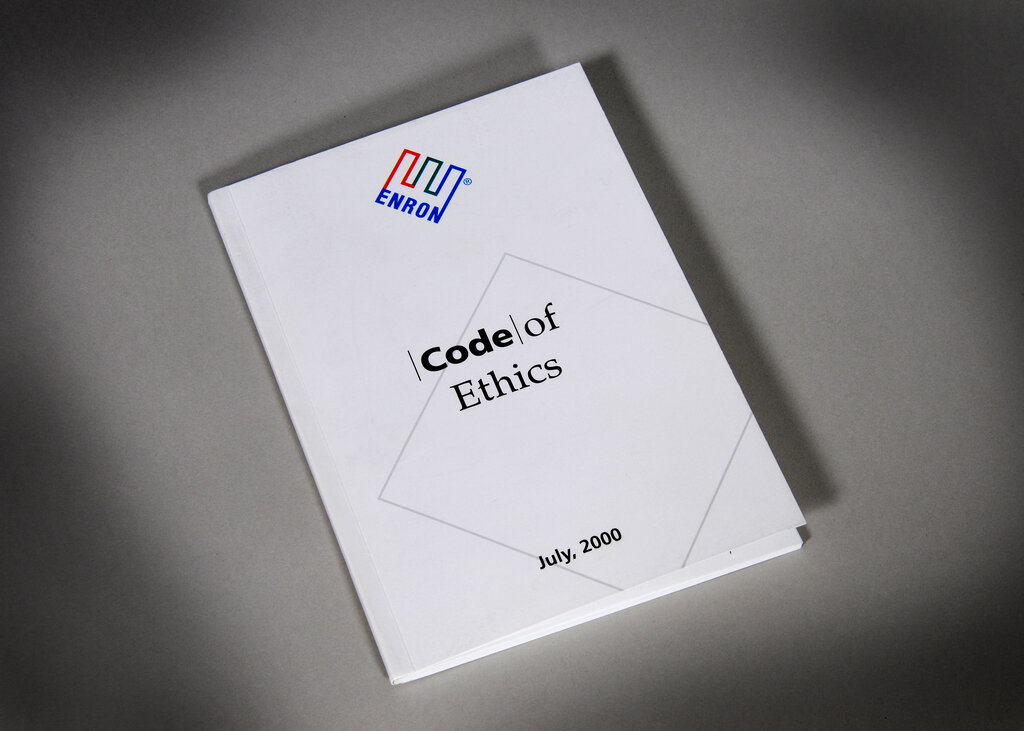
Consider a corporate lawyer who discovers her company is misleading shareholders. A consequentialist might weigh the good of keeping the company afloat (and people employed) against the harm of the lie. A deontologist, using the Categorical Imperative, has a clearer path.
Could she will that all lawyers mislead shareholders when it suits their company? No. The entire system of corporate governance, which relies on trust and transparency, would collapse. The maxim fails the universalisation test. Furthermore, by lying to shareholders, she would be using them as a means to the end of protecting the company, violating their dignity and right to make informed decisions. The duty to be truthful is absolute.
When Duties Collide
Kant's framework is powerful but rigid. What happens when two absolute duties clash? A doctor has a duty to tell the truth to a patient but also a duty to prevent harm. What if a truthful diagnosis would cause a fragile patient devastating psychological harm? Kant offers little room for manoeuvre.
This is where the 20th-century philosopher W.D. Ross provides a valuable refinement. Ross argued that our duties are not absolute but are, in fact, ''.
A prima facie duty is a binding moral obligation, unless it is overridden or outweighed by another, stronger duty.
Ross's approach allows for a more nuanced ethical calculus. When duties conflict, we must use our professional judgment to determine our actual duty in that specific context. This doesn't mean the overridden duty disappears; it's still relevant and may even create a residual duty, like a duty of reparation if we had to break a promise.
| Prima Facie Duty | Description |
|---|---|
| Fidelity | The duty to keep promises and be truthful. |
| Reparation | The duty to make amends for a wrong one has done. |
| Gratitude | The duty to return favours or services that others have done for us. |
| Justice | The duty to ensure fair distribution of goods and rewards. |
| Beneficence | The duty to improve the condition of others. |
| Self-Improvement | The duty to improve one's own virtue or intelligence. |
| Non-maleficence | The duty not to injure others (often seen as the strongest duty). |
Deontology in Practice
Professional codes of conduct are filled with —rules that forbid certain actions, even if they might produce a good outcome. For example, a lawyer's duty to maintain client confidentiality is a near-absolute rule derived from the duty of fidelity. It cannot be broken simply because revealing a secret would help win a case for another client.
However, these codes also recognise the reality of conflicting duties. A lawyer's duty of confidentiality is not absolute. It can be overridden if a client reveals intent to commit a serious crime, like murder. Here, the duty of non-maleficence (preventing harm to others) outweighs the duty of fidelity to the client. This is a practical application of Ross's framework: one prima facie duty yields to a more compelling one.
In medicine, the principle of informed consent is purely deontological. It respects the patient's autonomy as an end in itself, even if a doctor believes they could make a better decision for the patient. The doctor is constrained from acting on their own judgment without the patient's permission. Applying these frameworks requires rigorous thinking, but it moves ethical decision-making from a vague feeling to a structured process of reasoning.
Utilizing established ethical theories, such as deontology, virtue ethics, or consequentialism, helps people to evaluate potential courses of action.
Time to test your understanding of these decision-making frameworks.
What is the fundamental principle of deontology?
According to Immanuel Kant, what is the 'Categorical Imperative'?
Navigating professional ethics is rarely simple. By using the rigorous filters of Kant's Categorical Imperative and the situational awareness of Ross's Prima Facie Duties, you can move beyond instinct to make principled, justifiable decisions when faced with a conflict of interest.