Applied Emotional Intelligence Mastery
Neurobiology of Regulation
The Brain’s Stress Circuit
When you face a high-stakes professional situation, like a critical presentation or a tough negotiation, your body’s ancient survival wiring kicks in. This response is orchestrated by the Hypothalamic-Pituitary-Adrenal (HPA) axis, a complex communication network between your brain and your adrenal glands.
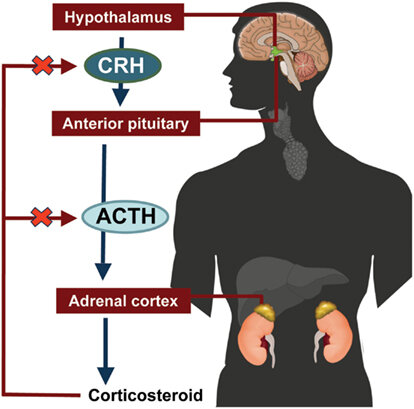
When your brain perceives a threat, the hypothalamus releases a hormone that signals the pituitary gland. The pituitary, in turn, releases another hormone into the bloodstream, which travels down to the adrenal glands located on top of your kidneys. This final step triggers the release of cortisol, the primary stress hormone.
Cortisol isn't inherently bad. In short bursts, it sharpens your focus and mobilizes energy reserves, preparing you to handle the challenge. However, in a modern workplace where stressors are often psychological and chronic rather than physical and fleeting, the HPA axis can become persistently activated. This leads to elevated cortisol levels, which can impair cognitive function, disrupt decision-making, and wear down your resilience over time. Understanding this cascade is the first step to managing it.
The Executive and the Alarm Bell
At the heart of emotional regulation is a constant negotiation between two key brain regions: the prefrontal cortex (PFC) and the limbic system, particularly the amygdala.
The PFC, located behind your forehead, is your brain's executive suite. It's responsible for rational thought, long-term planning, and impulse control. The amygdala, a small, almond-shaped structure deep in the brain, acts as an emotional alarm bell, constantly scanning for threats and triggering rapid, instinctual responses.
In calm situations, the PFC is in charge. It processes information thoughtfully and keeps the amygdala's reactivity in check. But under intense stress, the amygdala can overwhelm the PFC in a phenomenon known as an . The flow of information effectively bypasses the rational brain, leading to impulsive, emotionally-driven actions you might later regret. This is why you might snap at a colleague or make a rash decision under pressure, even when you know better.
Recognising the physical precursors of this hijack, like a racing heart or tense muscles, gives you a crucial window to intervene. By consciously engaging your PFC through cognitive techniques, you can regain control before the alarm bell takes over completely.
Rewiring Your Emotional Habits
Your brain isn't static. Every time you react to a situation, you strengthen the neural pathways involved in that response. This is the principle of . If your go-to reaction to stress is frustration or panic, you're essentially paving a neural super-highway for that response, making it more likely to happen again in the future. These become your default emotional habits.
However, neuroplasticity works both ways. You can consciously forge new pathways. One of the most powerful tools for this is cognitive reappraisal. This involves changing your interpretation of a stressful situation to alter its emotional impact. Instead of seeing a difficult project as a threat, you might reframe it as an opportunity to showcase your problem-solving skills. By repeatedly practising this reframing, you weaken the old, reactive pathways and build new, more resilient ones.
Over time, this deliberate practice makes regulated responses your new default, requiring less conscious effort. You're not just 'staying calm'; you're fundamentally altering your brain's architecture for the better.
Activating Your Body's Brakes
While cognitive strategies work from the top down, you can also regulate your emotions from the bottom up by influencing your body's physiology. A key player here is the vagus nerve, the main component of the parasympathetic nervous system, which acts as your body’s braking system.
When stimulated, the vagus nerve slows your heart rate, lowers blood pressure, and sends calming signals back to your brain, effectively counteracting the fight-or-flight response. You can intentionally stimulate it through simple physiological interventions. One powerful technique is extending your exhalation. Breathing in for a count of four and out for a count of six or eight directly activates the vagus nerve, providing a rapid de-escalation effect that can pull you back from the edge of an amygdala hijack.
This bottom-up control is enhanced by developing your . This is your ability to sense the internal state of your body, from subtle shifts in heart rate to the feeling of tension in your gut. The better you become at noticing these signals, the more data you have about your emotional state. This heightened awareness allows for what researchers call 'emotional granularity', the ability to identify and label your feelings with precision, like distinguishing between frustration, disappointment, and anxiety.
Leaders with high emotional granularity are better regulators. They can catch a stress response when it's just a faint signal, allowing them to apply the right strategy—be it cognitive reappraisal or a vagal breathing technique—long before the emotion becomes overwhelming.
What is the primary role of cortisol when released in short bursts during a high-stakes situation?
A phenomenon where the brain's emotional centre overwhelms the rational, executive part of the brain under intense stress is known as an _______.