Applied Cybersecurity and Defense Strategies
Network Security Architecture
Beyond the Perimeter
You already know that firewalls guard the network's edge. But modern security assumes that a determined attacker is already inside. This shifts the focus from a single strong wall to a multi-layered defense, a concept called "defense-in-depth." The goal is no longer just to keep intruders out, but to detect, contain, and stop them once they're in.
This approach is built on a simple but powerful philosophy: never trust, always verify. This is the core of a Zero-Trust Architecture. Instead of assuming that any device or user inside the network is safe, a zero-trust model requires strict identity verification for every person and device trying to access resources, regardless of where they are.
One of the first steps in a Zero Trust approach is network segmentation.
Think of your network like a submarine. If one compartment floods, sealed bulkheads prevent the entire vessel from sinking. Network segmentation works the same way. It divides a network into smaller, isolated zones. If one zone is compromised, the breach is contained, preventing the attacker from moving laterally to other parts of the network.
Creating Choke Points
Effective segmentation creates strategic "choke points" between zones. These are mandatory gateways where all traffic must pass, allowing for careful inspection. This is where you place your security tools, like Intrusion Detection and Prevention Systems (IDPS) or Web Application Firewalls (WAF).
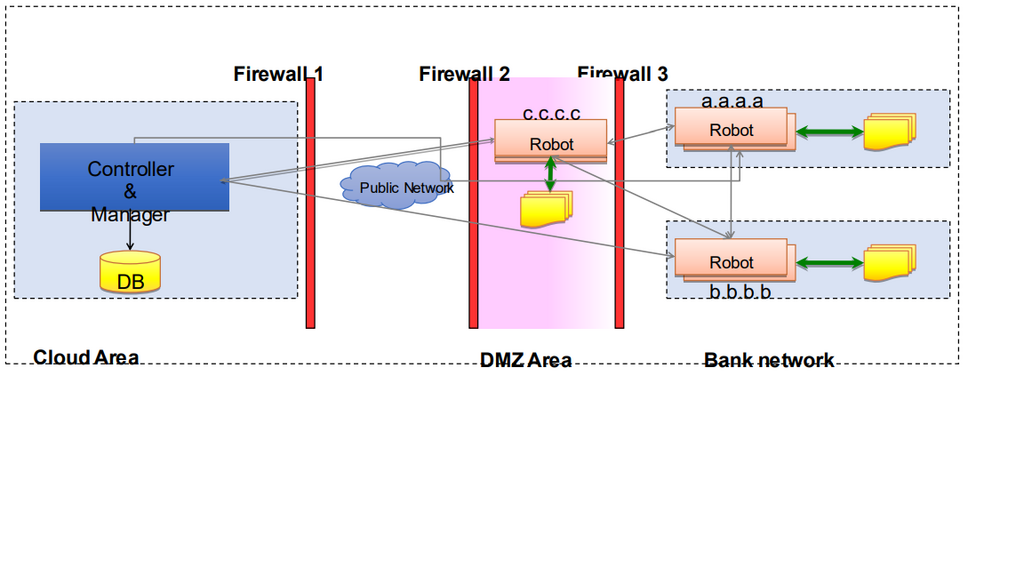
Placing these tools is a game of trade-offs. An IDPS, which monitors for malicious activity, can be placed just inside the main firewall to watch all incoming traffic. A WAF, which protects web applications from specific attacks like SQL injection, sits directly in front of the web servers it's protecting.
The key is to place inspection tools where they can see the most relevant traffic without creating unnecessary bottlenecks.
For even finer control, we use micro-segmentation. Instead of just segmenting large areas of the network (like finance vs. engineering), micro-segmentation can isolate individual workloads or applications. This is often achieved using software-defined security in virtualized environments. It's like giving every single application its own personal bodyguard and secure room.
This granular control is a core tenet of the NIST SP 800-53 framework, specifically within the System and Information Integrity (SI) control family. These controls provide guidelines for monitoring systems for unauthorized changes, identifying malicious code, and ensuring the overall integrity of your network and the information within it. Micro-segmentation directly supports controls like SI-4 (Information System Monitoring) by making it easier to monitor and log traffic between specific components.
Inspecting Encrypted Traffic
A major challenge today is that most network traffic is encrypted using SSL/TLS. This is great for privacy, but it also allows attackers to hide their activities from your security tools. An IDPS can't inspect what it can't read.
To solve this, organizations use SSL/TLS interception, sometimes called SSL inspection. A security appliance, often a next-generation firewall, acts as a 'man-in-the-middle'. It decrypts the traffic, inspects it for threats, and then re-encrypts it before sending it to its destination. This gives you full visibility but comes with significant processing overhead and potential privacy concerns that must be managed carefully.
Building a secure network is about creating layers of defense. By assuming a breach is inevitable and implementing zero-trust principles, micro-segmentation, and traffic inspection, you create an environment where attackers have very little room to maneuver, even if they get past the front door.
Ready to check your understanding of these architectural concepts?
What is the core principle of a Zero-Trust Architecture?
The concept of network segmentation is often compared to a submarine's sealed bulkheads. What is the primary security benefit this analogy illustrates?