Applied Artificial Intelligence Systems
Learning Paradigms Compared
Choosing Your Learning Path
In machine learning, one size does not fit all. The right approach depends entirely on the problem you're trying to solve and the kind of data you have. The three main learning paradigms are supervised, unsupervised, and reinforcement learning. Think of them not just as different techniques, but as different ways of thinking about a problem.
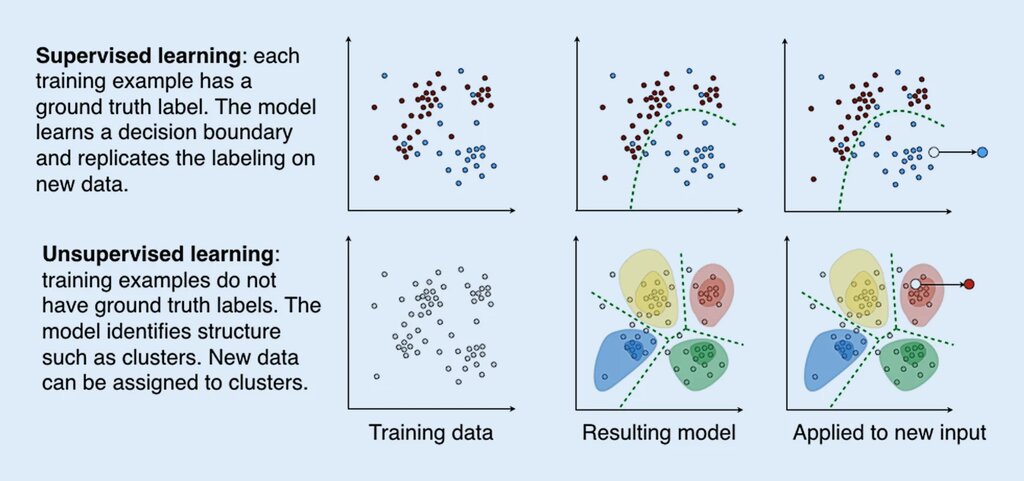
Supervised learning is like learning with a teacher. You provide the model with a dataset where every example is labeled with the correct answer. The goal is for the model to learn the mapping from input to output. For instance, you could feed it thousands of chest X-rays, each labeled as either 'pneumonia' or 'healthy'. The model learns to associate specific visual patterns with a diagnosis. Its success is measured by how accurately it predicts the labels for new, unseen X-rays.
Unsupervised learning is like being thrown into a library with no catalog. The data has no labels. The goal isn't to predict a specific outcome, but to find hidden structures and patterns. For example, a company might use unsupervised learning to analyze customer purchase histories. The model could automatically group customers into segments—like 'frequent bargain hunters' or 'high-spend weekend shoppers'—without being told what to look for beforehand. It discovers the categories on its own.
Reinforcement learning (RL) is different from both. It’s about learning through trial and error, like teaching a dog a new trick with treats. The AI agent operates in an environment and learns to take actions to maximize a cumulative reward. It isn't given correct answers upfront. Instead, it receives feedback—positive or negative—for its actions. DeepMind's AlphaGo, which learned to master the game of Go, is a famous example. It played millions of games against itself, slowly learning which sequences of moves led to a win (a large reward).
The Challenge of Reinforcement Learning
Reinforcement learning presents unique challenges not found in the other paradigms. One of the biggest is the exploration vs. exploitation trade-off. An RL agent must constantly decide whether to exploit what it already knows to get a guaranteed reward, or to explore new, untried actions that might lead to an even better reward. Imagine choosing a restaurant for dinner. You can exploit your knowledge by going to your favorite place, guaranteeing a good meal. Or you can explore by trying a new restaurant, which could be a wonderful discovery or a total disaster. The agent has to balance these two competing needs to learn effectively.
RL has additional challenges like credit assignment and exploration vs. exploitation, comparing with supervised learning.
Another major hurdle is the . In a long sequence of actions, how do you assign credit or blame to any single action for the final outcome? If AlphaGo wins a game after 200 moves, which of those moves was the crucial one? Was it the 5th move that set up a strong position, or the 150th move that trapped the opponent? Figuring this out is computationally difficult but essential for the agent to learn which actions are truly valuable.
Picking the Right Tool for the Job
Choosing the right paradigm is a critical first step in any machine learning project. The decision hinges on the feedback available and the nature of your goal.
| Paradigm | Data Requirement | Goal | Example Use Case |
|---|---|---|---|
| Supervised | Labeled Data (Input-Output Pairs) | Predict an output based on input | Spam email detection |
| Unsupervised | Unlabeled Data | Discover hidden structure or patterns | Customer market segmentation |
| Reinforcement | An Environment with a Reward Signal | Learn a policy to maximize a long-term reward | Training a robot to walk |
Let's consider a few business cases. If you want to build a system to predict customer churn, you likely have historical data of customers who have left (labeled 'churn') and those who have stayed (labeled 'no churn'). This is a perfect fit for . Your goal is a clear prediction, and you have the labeled data to train a model.
Now, imagine you want to optimize the layout of a warehouse with robots. You don't have a 'correct' layout pre-defined. Instead, you can define a reward: efficiency. Actions are the robots' movements. A system that moves goods from shelf to shipping quickly gets a high reward. This problem is best suited for Reinforcement Learning, where an agent can explore different movement strategies to learn the most efficient 'policy' over time.
A company wants to build a model to predict whether a customer will renew their subscription. They have a large historical dataset where each customer is labeled as either 'renewed' or 'did not renew'. Which machine learning paradigm is the most suitable for this task?
What is the primary goal of unsupervised learning?