Applied Aircraft Flight Operations
Ground Control Operations
The Balancing Act
Before an aircraft moves an inch, its flight is already being shaped by a critical set of calculations. Every flight begins with a careful balancing act to ensure the aircraft's center of gravity, or CG, is within a specific, safe range. Think of the CG as the point where the entire weight of the aircraft is concentrated. If it's too far forward or too far back, the aircraft can become unstable and difficult, or even impossible, to control.
Pilots and loadmasters use a formula to determine the CG. It involves multiplying the weight of each item on board (passengers, cargo, fuel) by its distance from a reference point called the datum. This distance is known as the arm. The results, called moments, are summed up and then divided by the total weight of the aircraft. The final number gives the precise location of the CG.
This calculated CG must fall within the aircraft's approved CG envelope, a range specified by the manufacturer. Operating outside this envelope compromises the aircraft’s longitudinal stability. An aircraft with a CG too far aft will be “tail-heavy,” making it want to pitch up and potentially stall. A CG that is too far forward makes the aircraft “nose-heavy,” requiring excessive back pressure on the controls, especially during landing flare.
Moving on the Ground
Once properly loaded, the aircraft is ready to move under its own power. This is called taxiing. An aircraft isn't a car; its size, weight, and control mechanisms demand unique techniques for ground maneuvering. The landing gear configuration is a major factor in how an aircraft handles on the ground.
| Configuration | Description | Taxiing Characteristics |
|---|---|---|
| Tricycle Gear | Two main wheels under the wings and a steerable nosewheel. | Inherently stable on the ground. Good forward visibility. Less susceptible to ground looping. |
| Tailwheel | Two main wheels forward of the CG and a small tailwheel. | Inherently unstable. Requires active rudder input to maintain a straight line. Prone to ground looping if mishandled. |
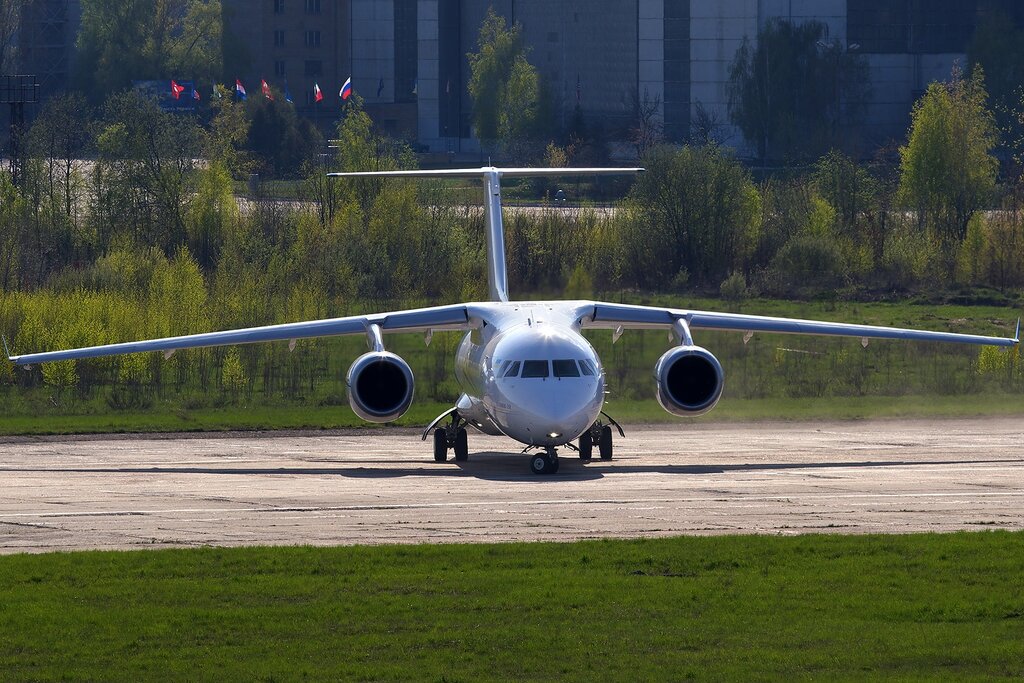
Most modern aircraft use a tricycle gear setup. The nosewheel is typically linked to the rudder pedals, allowing the pilot to steer. For tighter turns, pilots use differential braking—applying the brake on one main wheel to pivot the aircraft around that wheel. This technique is essential for navigating tight taxiways and crowded aprons.
Tailwheel aircraft, often called “taildraggers,” are a different beast. With the CG located behind the main wheels, they have a natural tendency to swap ends, a dangerous situation known as a ground loop. Pilots must be constantly “on the rudder” to maintain directional control, using small, precise movements to keep the aircraft tracking straight. While more challenging, this configuration is often favored for its ability to handle rough, unimproved landing strips.
Friction and Skids
The interaction between the tires and the pavement is governed by friction. But what happens when that friction disappears? Water on the runway can lead to hydroplaning, a condition where a layer of water builds up between the tires and the runway surface. This causes a dramatic loss of braking effectiveness and directional control, as the tires are no longer in contact with the ground.
An aircraft can begin to hydroplane at a speed as low as 8 to 9 times the square root of its tire pressure in PSI. For a jet with tire pressures around 200 PSI, that's roughly 120 knots.
There are three types of hydroplaning. Dynamic hydroplaning occurs when there's standing water. Viscous hydroplaning happens on a thin film of moisture, like on a painted runway marker. Reverted rubber hydroplaning is the most severe; it occurs during a locked-wheel skid, where the tire's friction instantly heats and boils the water, creating a pocket of steam that lifts the tire off the surface.
Pilots avoid hydroplaning by landing at the slowest safe airspeed and by using firm braking initially to break through the water layer. On takeoff, if hydroplaning is a risk, pilots may use a rolling takeoff technique to prevent slush and water from being thrown into the engines.
Weight and balance in pilot training is a fundamental concept that affects aircraft performance, handling, and safety.
Understanding the physics of an aircraft on the ground is just as vital as knowing how it flies. From the initial weight and balance calculations to the final turn onto the runway, these procedures ensure the aircraft transitions from a static vehicle into a dynamic one, poised and ready for flight.
Ready to check your understanding? Let's see what you've learned about ground control.
In aircraft weight and balance, what is a "moment"?
An aircraft with its Center of Gravity (CG) too far aft is considered "tail-heavy." What is the primary flight characteristic of this condition?