Application Development Fundamentals
Introduction to Software Development
What Is Software Development?
At its heart, software development is the process of creating computer programs. Think of it like building a house. You don't just start hammering nails into wood. First, you need a blueprint (the design), then you gather materials (the code), and finally, you construct the house and inspect it (testing). It’s a creative and logical process that turns an idea into a functional application.
Software development is the process of conceiving, specifying, designing, programming, documenting, testing, and bug fixing involved in creating and maintaining applications, frameworks, or other software components.
This process isn't just about writing code. It involves understanding a problem, planning a solution, managing the project, and ensuring the final product works correctly and is easy for people to use. From the app you use to order coffee to the complex systems that manage air traffic control, software is built through this deliberate, multi-step process.
Why Software Matters
Software is woven into the fabric of modern life. It runs our phones, cars, and homes. It powers the global economy, from online banking to international shipping. Businesses use software to manage their operations, connect with customers, and analyze data to make better decisions.
For individuals, software provides tools for communication, entertainment, education, and creativity. It connects us with friends and family across the globe, helps us learn new skills, and allows us to express our ideas in new ways. Without software, our world would look very different.
A Blueprint for Building
To build reliable and effective software, developers follow a structured process known as the Software Development Life Cycle, or SDLC. This is the roadmap that guides a project from an initial idea all the way to a finished product and beyond. It provides a framework for planning, building, and maintaining high-quality software, ensuring that nothing important gets missed.
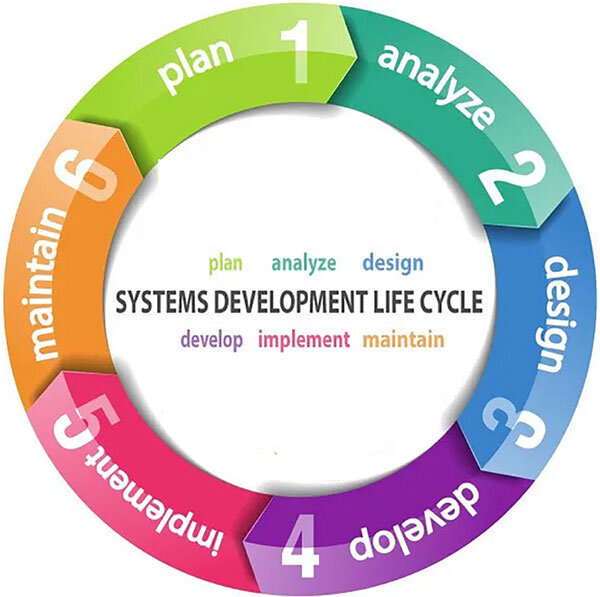
While there are many different models, the SDLC generally involves a few core stages. It starts with planning and defining what the software needs to do. Next comes the design phase, where developers map out the structure and look of the application. Then, the actual coding and building happen. After that, the software is rigorously tested to find and fix any bugs.
Finally, the software is released for people to use. But the cycle doesn't end there. The final stage involves maintaining the software, which includes fixing issues that arise and adding new features over time.
The SDLC is a continuous loop of planning, creating, and improving, ensuring software evolves to meet changing needs.
Now, let's check your understanding of these core concepts.
The process of software development is often compared to building a house. In this analogy, what does the "blueprint" represent?
Which of the following is NOT considered a core stage of the Software Development Life Cycle (SDLC)?
Understanding these fundamentals provides a solid base for exploring the more detailed aspects of how great software is made.