Apple's Journey Through Time
Founding and Early Products
The Garage Startup
It’s one of the most famous origin stories in business. In 1976, two friends, Steve Jobs and Steve Wozniak, decided to start a computer company. Jobs was the visionary with a knack for marketing, while Wozniak was the brilliant engineer who could turn complex ideas into reality. They were joined by a third co-founder, Ronald Wayne, who designed the company's first logo and wrote the partnership agreement.
College dropouts Steve Jobs and Steve Wozniak founded Apple Computers, Inc. on April 1, 1976 with a vision of changing the way people viewed computers.
Working out of Jobs's family garage in Cupertino, California, they set out to build their first product. Wayne, however, grew nervous about the financial risks. He sold his 10% stake in the new company back to Jobs and Wozniak for just $800, a decision that would have cost him billions.
The First Apple
The company's first product was the Apple Computer 1, later known as the Apple I. Designed and hand-built by Wozniak, it wasn't a complete computer as we know it today. It was essentially a motherboard that came with a MOS 6502 processor and 4 kilobytes of memory. Buyers had to add their own case, power supply, keyboard, and display.
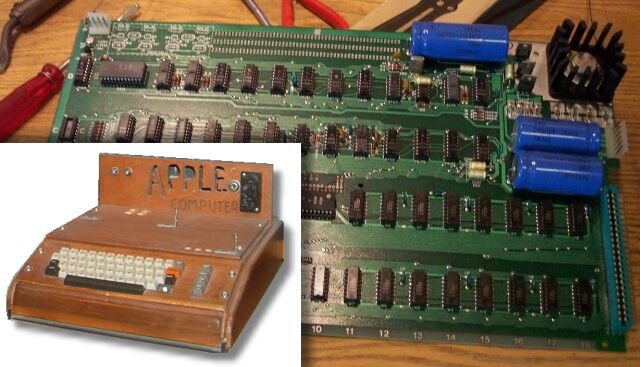
This do-it-yourself approach was common for the time, targeting electronics hobbyists who enjoyed assembling their own systems. Jobs secured their first major order from the Byte Shop, a local computer store, for 50 units. The Apple I went on sale in July 1976 for the quirky price of $666.66. It was a modest success, proving there was a market for personal computers, but its appeal was limited.
A Computer for Everyone
Wozniak was already working on a much bigger idea. He wanted to build a computer that was accessible to everyone, not just hobbyists. The result was the Apple II, introduced in 1977. It was a revolutionary machine.
Unlike the Apple I, the Apple II was a complete, ready-to-use system. It came in a sleek, user-friendly plastic case with an integrated keyboard. Crucially, it was one of the first personal computers to support color graphics. It also featured an open architecture with eight expansion slots, allowing users to add new hardware and capabilities.
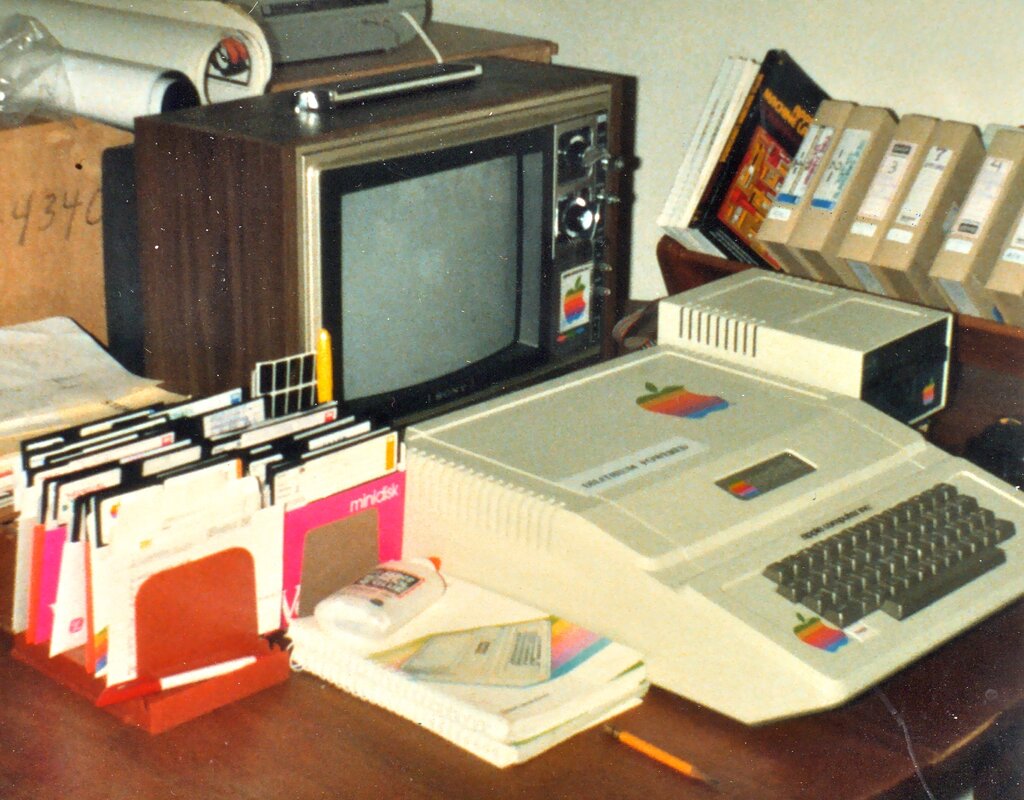
The Apple II was an immediate and massive success. It was the product that truly launched Apple as a major company. Its popularity exploded with the release of VisiCalc, the first spreadsheet program. This “killer app” turned the Apple II from a hobbyist's toy into a serious business tool, driving sales in offices and schools across the country.
The Apple II is the computer that made Apple a driving force in a new industry.
This success provided the financial foundation and reputation that would allow Apple to grow and innovate for decades to come. The principles established with the Apple II—user-friendly design, integrated hardware and software, and a focus on expanding capabilities—became cornerstones of the company's philosophy.