APIs and RESTful API Design
Introduction to APIs
What Is an API?
Imagine you're at a restaurant. You want to order food, but you don't go into the kitchen to cook it yourself. Instead, you give your order to a waiter, who communicates it to the kitchen. The kitchen prepares the food, and the waiter brings it back to your table. In this scenario, the waiter is an API.
API stands for Application Programming Interface. Let's break that down:
- Application: A software program with a distinct function, like a weather app or a social media platform.
- Programming: The instructions that make the application work.
- Interface: A point where two systems meet and interact.
An API is a set of rules and protocols that allows different software applications to communicate with each other. It acts as an intermediary, taking requests from one application and delivering a response from another, without either needing to know the complex inner workings of the other.
An API is a bridge that allows two software applications to talk to each other without you needing to know what’s happening behind the scenes.
This communication is based on a contract. The API defines the specific ways a developer can request information or functionality from another program. This standardization is what makes APIs so powerful and reliable.
Why APIs Matter
APIs are the backbone of modern software. They allow developers to build new applications by leveraging the functionality of existing services, rather than building everything from scratch. This saves an enormous amount of time and effort.
Think of a weather app on your phone. The developers of that app probably didn't launch their own network of weather satellites. Instead, they use an API from a meteorological service to fetch weather data and display it in their app.
This principle applies everywhere. When you book a vacation on a travel website, the site uses multiple APIs to pull in information simultaneously. It uses one API to get flight data from airlines, another for hotel availability, and a third to process your payment securely.
By enabling this kind of integration, APIs allow for the creation of rich, seamless user experiences that combine features from many different sources.
Basic Components of an API
API communication works through a simple cycle of requests and responses.
A request is a message sent from an application (the client) to a server to ask for some information or to perform an action. Following our restaurant analogy, this is you telling the waiter what you want to order.
A response is the message sent back from the server to the client. It contains the information the client asked for or a confirmation that the requested action was completed. This is the waiter bringing your food.
This data is exchanged in a structured format that computers can easily understand. One of the most common formats is JSON (JavaScript Object Notation). It uses key-value pairs to organize data in a human-readable way.
// A conceptual example of an API response in JSON format
{
  "status": "success",
  "data": {
    "user": {
      "id": 123,
      "name": "Alex Doe",
      "email": "alex.doe@example.com"
    }
  }
}
Here, keys like "status" and "name" are paired with values like "success" and "Alex Doe". This predictable structure makes it easy for the requesting application to parse and use the data.
APIs in Action
You interact with APIs every day, often without realizing it. Here are a few common use cases:
Social Logins: When a website or app gives you the option to "Log in with Google" or "Sign in with Facebook," it's using an API. The application requests verification from Google or Facebook's server to confirm your identity, so you don't have to create a new password.
Embedded Content: A company's contact page showing its location on an interactive map is using a service like the Google Maps API. The website sends a request with an address, and the API responds with the map data to display.
E-commerce Payments: When you enter your credit card information to buy something online, the merchant's website uses a payment gateway's API (like Stripe or PayPal). This allows for secure processing of your payment without the merchant ever handling your sensitive card details directly.
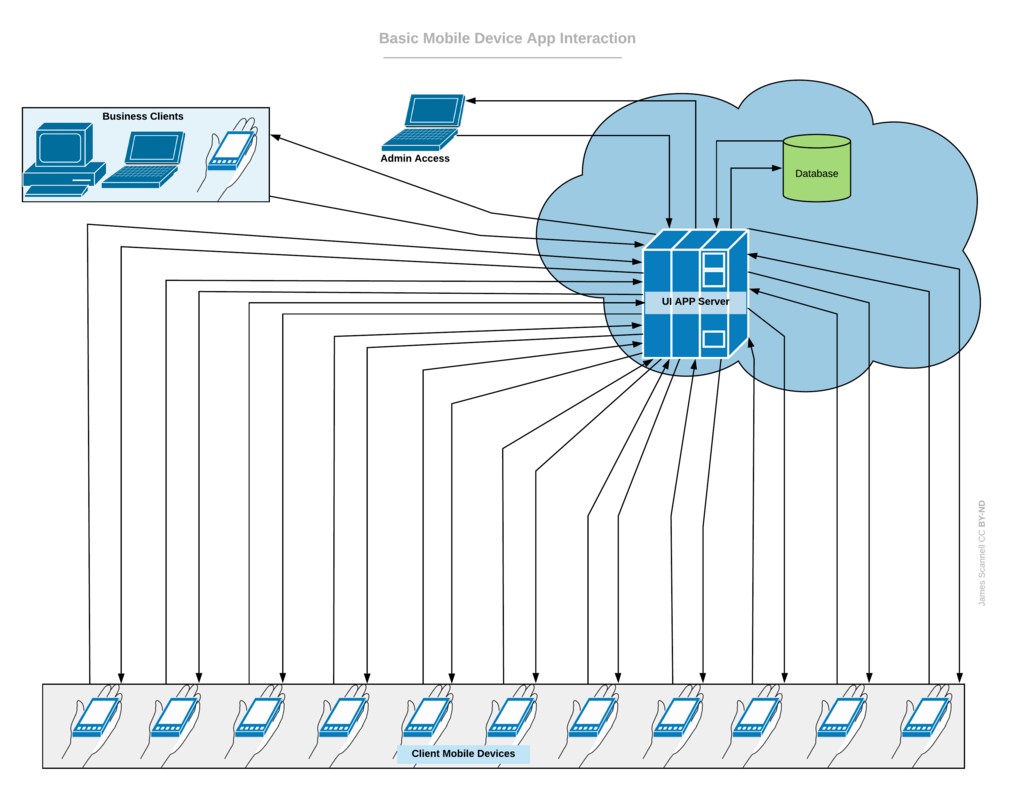
These examples show how APIs act as essential connectors, allowing different systems to share data and functionality securely and efficiently.
Ready to check your understanding?
In the provided restaurant analogy, what does the waiter represent?
What is the primary role of an API in software development?
APIs are the fundamental building blocks that allow the apps and services we rely on to work together. By providing a standard way for programs to communicate, they power a vast, interconnected digital world.