API Mastery for Developers
API Architectural Styles
Choosing Your API's Blueprint
Just as buildings follow architectural styles like Art Deco or Modernism, APIs are built using specific architectural styles. These styles aren't rigid rules but guiding principles that define how the API structures data, handles requests, and communicates. The choice of style fundamentally shapes how developers will interact with your API and impacts its performance, scalability, and flexibility.
We'll explore the three dominant styles: REST, SOAP, and GraphQL. Each has its own philosophy, strengths, and ideal use cases.
REST: The Language of the Web
Representational State Transfer, or REST, isn't a strict protocol but an architectural style that uses the existing principles of the web. It leverages standard HTTP methods like GET, POST, PUT, and DELETE to perform operations on resources. A "resource" is any piece of information, like a user profile or a product listing, identified by a unique URL.
Think of it this way: In a RESTful system, you're not calling a remote function. Instead, you're interacting directly with a resource using the web's native verbs. You
GETa resource to read it,POSTto create a new one,PUTto update it, andDELETEto remove it.
To be considered truly RESTful, an API must adhere to several key constraints:
| Constraint | Description |
|---|---|
| Client-Server | The client (front-end) and server (back-end) are separate. This separation of concerns allows them to evolve independently. |
| Stateless | Each request from a client to the server must contain all the information needed to understand and complete the request. The server doesn't store any client state between requests. |
| Cacheable | Responses must define themselves as cacheable or not. This helps improve performance by allowing clients or intermediaries to reuse old data. |
| Uniform Interface | This is the core of REST. It simplifies the architecture by requiring a consistent way to interact with resources, primarily through standard HTTP methods and URIs. |
| Layered System | A client cannot ordinarily tell whether it is connected directly to the end server or to an intermediary along the way. This allows for load balancers, caches, and security layers. |
REST is popular because it's simple, scalable, and built on the foundation of the web itself. However, it can lead to problems of over-fetching (getting more data than you need) or under-fetching (having to make multiple requests to get all the data you need).
SOAP: The Formal Contract
Before REST became dominant, SOAP (Simple Object Access Protocol) was the go-to standard, especially in enterprise environments. Unlike REST's architectural style, SOAP is a highly structured, official protocol. It relies exclusively on XML for its message format and defines a strict set of rules for communication.
XML
noun
Extensible Markup Language. A markup language that defines a set of rules for encoding documents in a format that is both human-readable and machine-readable.
A SOAP message is often described as an envelope containing a letter. It has a defined structure:
Because it's a rigid protocol, SOAP has built-in standards for security (WS-Security) and transactions, which makes it a strong choice for financial services, payment gateways, and other high-security enterprise applications. However, this rigidity also makes it more complex and verbose than REST, often leading to slower performance.
GraphQL: The Flexible Query
GraphQL is the newest of the three. Developed by Facebook in 2012 and open-sourced in 2015, it's not an architectural style but a query language for APIs. Its main goal is to solve the over-fetching and under-fetching problems common with REST.
With GraphQL, the client specifies exactly what data it needs in a single request, and the server returns a JSON object with precisely that data—nothing more, nothing less.
Instead of having many endpoints for different resources (like /users/1 and /users/1/posts), a GraphQL API typically has a single endpoint. The client sends a query document to this endpoint that describes the data requirements.
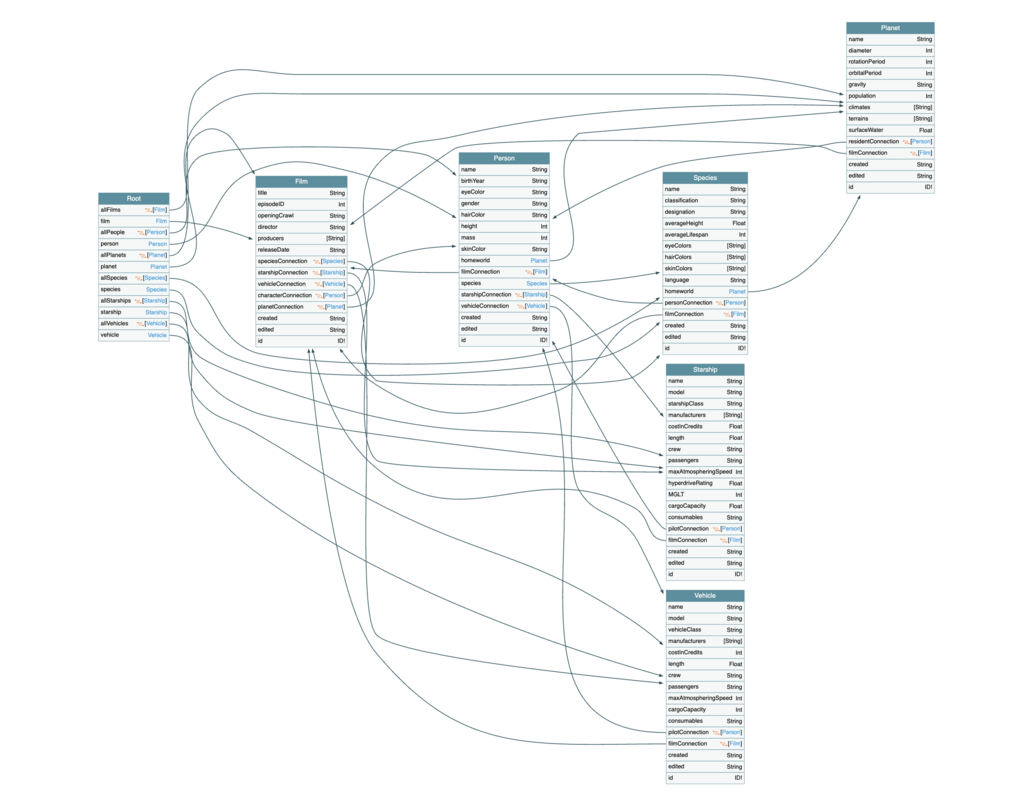
Here’s how a client might ask for a specific user's name and their three most recent posts:
query GetUserWithPosts {
  user(id: "101") {
    name
    posts(last: 3) {
      title
      date
    }
  }
}
The server would then respond with a JSON object that mirrors the query's structure. This approach gives front-end developers immense power and flexibility, allowing them to evolve applications without needing back-end changes for every new data requirement. The trade-off is increased complexity on the server-side, and HTTP caching becomes more difficult than with REST.
Which Style Is Right?
Choosing an API architecture is a critical decision that depends entirely on the specific needs of your project.
| Style | Best For | Key Trade-off |
|---|---|---|
| REST | Public APIs, resource-oriented services, and applications where caching is important. It's the default for most web services. | Can lead to inefficient data fetching (over/under-fetching) as applications become more complex. |
| SOAP | Enterprise applications, financial services, and systems requiring high security, formal contracts, and stateful operations. | High complexity and verbosity (XML), which can result in slower performance compared to REST. |
| GraphQL | Mobile applications, complex front-ends, and scenarios where clients need to fetch flexible and nested data in a single call. | Moves complexity to the server side; caching is more complex to implement than with REST's resource-based model. |
There's no single "best" style. A well-rounded architect understands the trade-offs of each and chooses the right tool for the job. Some systems even use a hybrid approach, leveraging GraphQL for a flexible public-facing API while using REST for internal microservices.
What primary problem was GraphQL specifically designed to address?
You are designing an API for a bank's internal systems that requires high security, transactional integrity, and a formal contract between services. Which style would be the most appropriate choice?
Understanding these architectural styles is the first step toward designing APIs that are not just functional, but also efficient, scalable, and easy for other developers to use.