API Mastery
API Design Principles
Crafting a Clear Contract
An API is a contract between a service and its clients. Like any good contract, it should be clear, predictable, and easy to understand. This starts with naming. Inconsistent or confusing names for your endpoints can make your API frustrating to use, slowing down development for anyone trying to build on it.
The first rule is to be consistent. If you choose a naming pattern, stick with it everywhere. A common and highly recommended convention is to use plural nouns to refer to collections of resources. For example, to get a list of all users, the endpoint should be /users, not /user or /getUsers.
To retrieve a specific user, you would append its unique identifier to the collection's path:
/users/123
This structure is logical and predictable. It creates a clear hierarchy that developers can easily guess and remember. For multi-word resource names, use lowercase letters and separate words with hyphens (kebab-case), as in /order-items or /user-profiles. This practice enhances readability in URLs.
Good API design is about making the developer experience intuitive. A developer should be able to predict endpoint names and structures without constantly referring to the documentation.
The Power of Statelessness
One of the most important constraints of a scalable API is statelessness. This means that every request from a client to the server must contain all the information the server needs to fulfill that request. The server doesn't store any information about the client's session between requests.
Think of it like a vending machine. Each time you interact with it, you insert money and make a selection. The machine doesn't remember your previous purchase. It treats every transaction as a brand-new, self-contained event. This is a stateless interaction.
The opposite would be a conversation where you have to remember what was said before to understand the current context. That's a stateful interaction. While useful for human chat, it's a burden for servers.
Statelessness makes an API much more scalable and reliable. Since no session data is stored on the server, any server can handle any request. This makes it easy to add more servers to handle increased traffic (load balancing) or recover from server failures without disrupting the user.
All application state required to process the request, such as authentication tokens or user preferences, should be sent by the client with each call.
Embracing RESTful Principles
Representational State Transfer (REST) isn't a strict protocol but an architectural style that provides a set of guiding principles for creating scalable web services. We've already covered two of its main constraints: client-server architecture and statelessness. Another core principle is the uniform interface, which simplifies and decouples the architecture.
This is primarily achieved by using standard HTTP methods to perform actions on resources. Instead of creating custom endpoint names like /createNewUser or /deleteUserById, you use the standard verbs that are part of the HTTP specification.
| Method | Action | Example Usage |
|---|---|---|
| GET | Retrieve a resource or a collection of resources. | GET /users/123 |
| POST | Create a new resource. | POST /users |
| PUT | Update an existing resource completely. | PUT /users/123 |
| PATCH | Partially update an existing resource. | PATCH /users/123 |
| DELETE | Remove a resource. | DELETE /users/123 |
Using these standard methods makes your API predictable. When a developer sees a DELETE method, they know exactly what it's for. This approach, combined with a logical resource-based URL structure, forms the foundation of a well-designed RESTful API.
Another part of this is using standard HTTP status codes to signal the outcome of a request. A 200 OK means success, a 201 Created indicates a new resource was made, a 404 Not Found means the resource doesn't exist, and a 400 Bad Request indicates a client-side error.
A well-designed API is the backbone of modern software development, particularly in a landscape dominated by microservices, cloud computing, and distributed systems.
Managing Change with Versioning
APIs evolve. You'll add new features, change data structures, or remove old functionality. However, you can't just make these changes without warning, as it could break applications that rely on your API. This is where versioning comes in.
By versioning your API, you can roll out changes safely while allowing existing clients to continue using the older, stable version. This gives developers time to update their code to support the new version. There are a few common strategies for versioning.
# 1. URI Path Versioning (Most common)
# The version is included directly in the URL path.
https://api.example.com/v1/users
https://api.example.com/v2/users

# 2. Query Parameter Versioning
# The version is specified as a query parameter.
https://api.example.com/users?version=1
https://api.example.com/users?api-version=2

# 3. Custom Header Versioning
# The version is sent in a custom HTTP header.
GET /users HTTP/1.1
Host: api.example.com
Accept: application/vnd.example.v1+json
URI path versioning is the most straightforward and popular method because it's explicit and makes endpoint URLs easy to browse. Whichever method you choose, the key is to be consistent and plan for versioning from the very beginning.
Never design an API without planning versioning.
Documentation Isn't an Afterthought
An API is only as good as its documentation. If developers can't figure out how to use your API, they won't. Comprehensive, clear, and up-to-date documentation is not a nice-to-have; it's a core part of the product.
Good documentation should include:
- A list of all available endpoints.
- The HTTP methods supported for each endpoint.
- Details on required parameters and request bodies.
- Example requests and responses for each endpoint.
- Information on authentication and error codes.
Tools like Swagger (OpenAPI Specification) have revolutionized API documentation. They allow you to define your API's structure in a standardized format, which can then be used to automatically generate interactive documentation where developers can try out API calls directly in their browser.
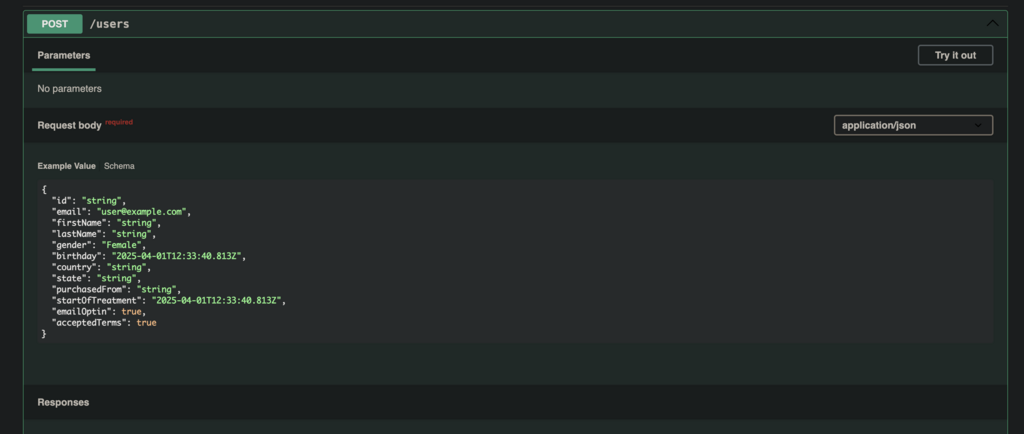
Treating documentation as a first-class citizen in the development process ensures that it stays current and accurate, which ultimately leads to higher adoption and fewer support requests.
Consider documentation as part of the API design process from the beginning.
Time to review what we've covered.
Let's check your understanding of these principles.
Which of the following is the recommended RESTful convention for an endpoint that retrieves a collection of user profiles?
True or False: In a stateless API, the server maintains a session for each client to remember their previous requests.
By following these core principles—clear naming, statelessness, RESTful conventions, versioning, and thorough documentation—you create APIs that are not just functional but are also a pleasure for developers to work with.