API Fundamentals and Practical Application
Introduction to APIs
What Is an API?
Think of an Application Programming Interface (API) as a waiter in a restaurant. You, the customer, don't need to know how the kitchen works. You just need a menu to see what's available. You give your order to the waiter, who takes it to the kitchen. The kitchen prepares your food, and the waiter brings it back to you.
In this analogy, you're a software application (like a weather app on your phone), the kitchen is another software system (a server with weather data), and the waiter is the API. The API acts as an intermediary, allowing two applications to communicate without needing to know the complex inner workings of each other. It provides a set of defined rules and protocols for how to make requests and what to expect in return.
An API (Application Programming Interface) is a set of rules, protocols, and tools that allows different software applications to communicate, share data, and interact with each other.
Essentially, an API is a contract. It specifies how a developer can request information or functionality from another piece of software. This contract ensures that communication is predictable and reliable, forming the backbone of most modern applications.
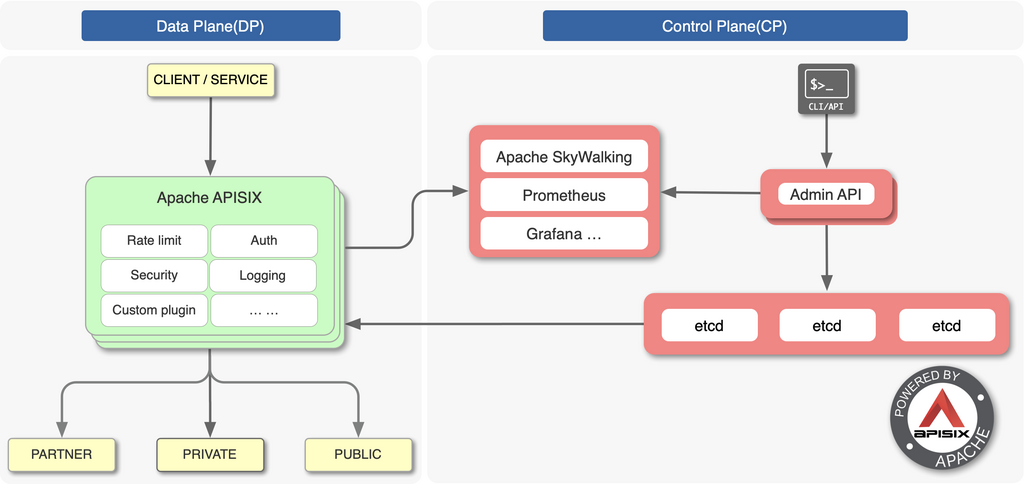
How APIs Facilitate Communication
API communication works through a simple request-response cycle. An application, known as the client, sends a request to an API endpoint, which is a specific URL where the API can be accessed. This request contains information about what the client wants.
The server hosting the API receives and processes the request. It performs the necessary actions, such as retrieving data from a database or executing a function. Once complete, the server sends a response back to the client. This response typically includes the requested data (often in a format like JSON) and a status code indicating whether the request was successful.
For example, when you use a ride-sharing app, your phone (the client) sends your location and destination to the company's server via an API. The server's API processes this request, finds nearby drivers, and sends that information back to your phone as a response. All of this happens seamlessly behind the scenes.
Benefits and Common Types
Using APIs offers significant advantages in software development. They promote efficiency by allowing developers to leverage existing functionality instead of building everything from scratch. Integrating a payment gateway via its API is much faster than creating a new payment processing system.
APIs also enable integration and innovation. They allow different services to connect, creating richer user experiences. A travel app might use one API to book flights, another for hotel reservations, and a third from Google Maps to display locations, all within a single interface.
While there are many kinds of APIs, a few common types stand out:
| API Type | Description | Example |
|---|---|---|
| Web APIs | Accessed over the internet using standard web protocols like HTTP. This is the most common type. | A social media API that lets an app post updates on your behalf. |
| Library APIs | A set of functions or classes provided by a programming library. | Using the functions in a math library to perform complex calculations in your code. |
| OS APIs | Allows applications to interact with the underlying operating system. | An app using the device's camera or accessing the file system. |
Understanding these basic principles is the first step. APIs are the fundamental connectors that make our interconnected digital world possible.
In the restaurant analogy, where an API is the waiter, what does the kitchen represent?
What is the primary function of an Application Programming Interface (API)?