Apartment Buying Essentials
Assess Financial Readiness
Check Your Financial Health
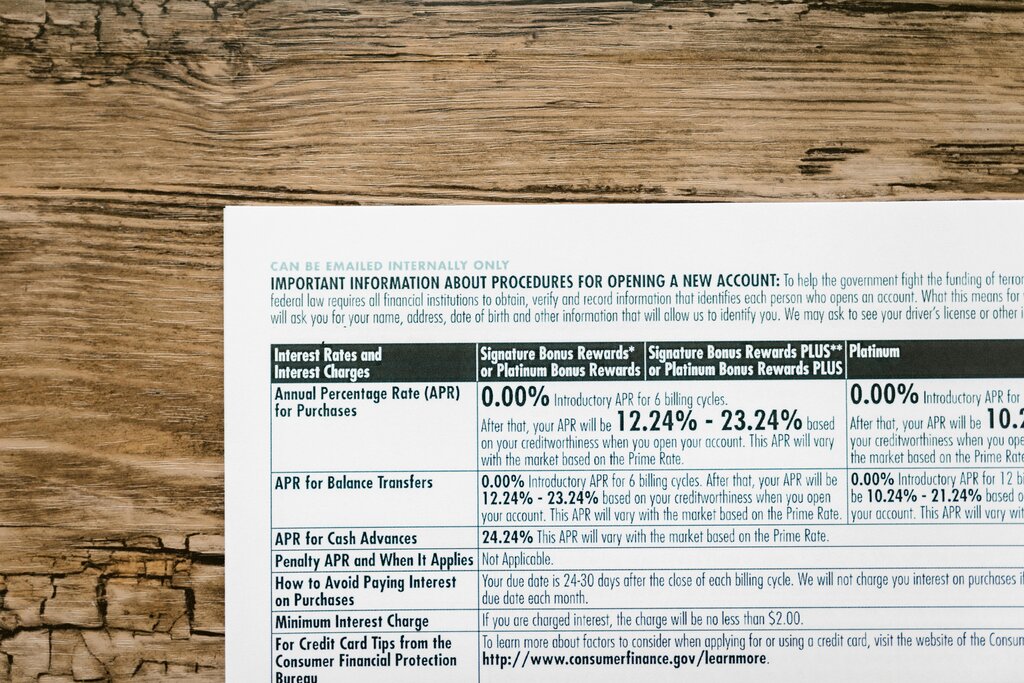
Before you start browsing apartment listings, take a look at your own finances. Knowing where you stand financially is the most important first step. Lenders will look closely at your financial history to decide if you're a good candidate for a loan, and how much they're willing to lend you. The two main numbers they focus on are your credit score and your debt-to-income ratio.
Your credit score is a number that summarizes your credit risk. Think of it as a financial report card. Lenders use it to predict how likely you are to repay a loan on time. A higher score means you're seen as less risky, which can unlock better interest rates. Scores generally range from 300 to 850.
A good credit score can save you thousands of dollars over the life of your mortgage through a lower interest rate.
You're entitled to a free credit report from each of the three major credit bureaus—Equifax, Experian, and TransUnion—every year. It's a good idea to review them. Look for any errors, like accounts you don't recognize or incorrect payment histories. Disputing and fixing mistakes can give your score a boost.
Know Your Debt-to-Income Ratio
Next up is your debt-to-income ratio, or DTI. This number compares how much you owe each month to how much you earn. Lenders use it to gauge your ability to manage monthly payments and repay debts. If your DTI is too high, they might worry that you're overextended and won't approve you for a new loan.
Debt-to-Income Ratio (DTI)
noun
The percentage of your gross monthly income that goes toward paying your monthly debt payments.
To find your DTI, you add up all your monthly debt payments and divide them by your gross monthly income (your income before taxes and other deductions are taken out). Then, you multiply that number by 100 to get a percentage.
For example, let's say your gross monthly income is $5,000. Your monthly debts are a $400 car payment and a $100 student loan payment, for a total of $500. Your DTI would be 10%. ($500 / $5,000 = 0.10, and 0.10 x 100 = 10%).
Most lenders look for a DTI ratio of 43% or less, including your potential new mortgage payment. A lower DTI is always better.
Set a Realistic Budget
Once you know your credit score and DTI, you can figure out what you can realistically afford. Your budget is more than just the mortgage payment. You need to account for all the costs of homeownership.
Start your budget by listing all income sources and categorizing essential expenses, such as rent or mortgage, utilities, and groceries.
Besides the principal and interest on your loan, your monthly housing payment will likely include property taxes and homeowners insurance. If you're buying a condo or an apartment in a co-op building, you'll also have monthly association or maintenance fees. Don't forget utilities, potential repairs, and saving for emergencies.
Looking at these numbers will help you set a maximum purchase price you're comfortable with. Online mortgage calculators can help you estimate monthly payments for different loan amounts, interest rates, and loan terms.
Explore Your Options
With a budget in mind, you can start exploring mortgage options. There isn't a one-size-fits-all loan. The right one for you depends on your financial situation, how long you plan to stay in the apartment, and your risk tolerance.
| Loan Type | Best For... | Key Feature |
|---|---|---|
| Conventional | Borrowers with good credit and a stable income. | Not insured by the federal government. Often requires a higher down payment. |
| FHA Loan | First-time homebuyers or those with lower credit scores. | Insured by the Federal Housing Administration. Allows for down payments as low as 3.5%. |
| VA Loan | Eligible veterans, service members, and surviving spouses. | Backed by the Department of Veterans Affairs. Often requires no down payment. |
| Fixed-Rate | Buyers who want predictable monthly payments. | The interest rate stays the same for the entire life of the loan. |
| Adjustable-Rate | Buyers who don't plan to stay long-term or expect their income to rise. | The interest rate is fixed for an initial period, then adjusts periodically. |
Saving for a down payment is often the biggest hurdle. A common myth is that you need to put down 20% of the purchase price. While a 20% down payment helps you avoid paying private mortgage insurance (PMI), many loan programs allow for much smaller down payments.
Look into down payment assistance (DPA) programs offered by state and local governments or nonprofit organizations. These can come in the form of grants (which don't need to be repaid) or low-interest loans that can significantly reduce the upfront cash you need to buy a home.
According to lenders, what are the two most important financial metrics they consider when evaluating a loan application?
Your gross monthly income is 500 car payment, a 100 credit card payment. What is your debt-to-income (DTI) ratio?
By taking the time to assess your finances, you put yourself in a strong position to make a smart, sustainable purchase.