Apache Kafka Fundamentals
Introduction to Apache Kafka
What Is Apache Kafka?
Think of a massive, shared to-do list that multiple teams can read from and add to simultaneously. One team might add a task like "User #54 logged in," while another team reads that update to personalize the user's experience, and a third team reads it to check for security risks. Everyone is working off the same, ordered list, and the list itself keeps a history of every task added.
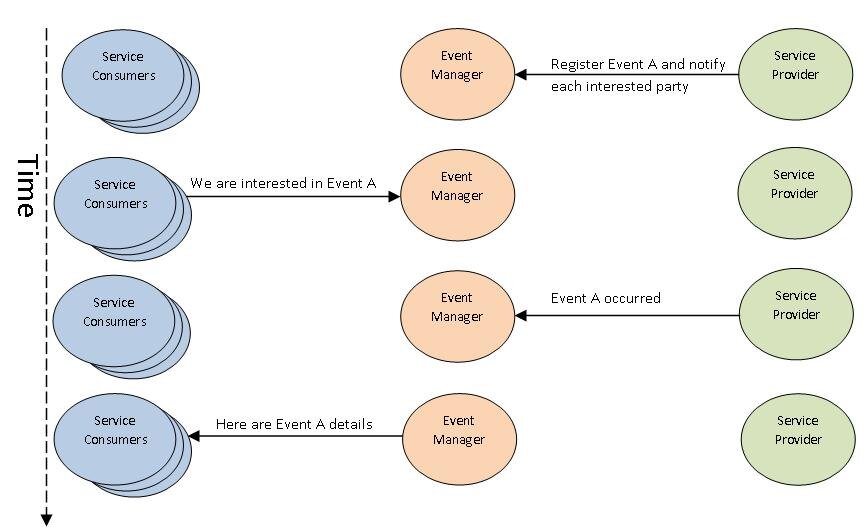
This is the core idea behind Apache Kafka. It's a platform for handling continuous streams of data, often called events, in real time. An event is just a record of something that happened: a click on a website, a payment being processed, a sensor reading from a factory machine, or an order placed on a delivery app.
Apache Kafka is an open source distributed event-streaming platform or a distributed commit log.
Instead of sending data from point A to point B directly, systems send their events to Kafka. Kafka then organizes these events into streams and stores them reliably. Other systems can then tap into these streams whenever they need, reading the data at their own pace. This decoupling makes complex systems more flexible and resilient. If one application goes down, the data isn't lost; it's waiting safely in Kafka for when the application comes back online.
Beyond Traditional Messaging
Before platforms like Kafka, many systems used traditional message queues. These work like a simple mail service. A sender puts a letter (a message) in the mailbox, and the receiver picks it up. Once delivered, the letter is gone. This is great for simple tasks, but it hits a limit with modern data needs.
What if multiple departments need to read the same letter? What if you need a record of all letters sent over the past week? Traditional systems often struggle with these demands, especially when dealing with millions of messages per second.
Kafka was built to solve these problems. It's not just a mail service; it's a library of every message ever sent, neatly cataloged. This fundamental difference enables powerful new capabilities.
| Feature | Traditional Messaging | Apache Kafka |
|---|---|---|
| Data Model | Queue (message deleted after read) | Log (message persists after read) |
| Data Access | One consumer per message | Multiple consumers can read the same message |
| Throughput | Moderate to High | Extremely High |
| Primary Use | Task distribution, simple notifications | Real-time data pipelines, analytics, event sourcing |
The key takeaway is persistence. By storing streams of events, Kafka allows data to be re-read and processed for different purposes. A single event, like a customer's purchase, can be used instantly for fraud detection, later for updating a sales dashboard, and again for training a machine learning model, all without affecting other systems.
Common Use Cases
Because Kafka is so good at moving large amounts of data quickly and reliably, it has become a cornerstone of modern data architecture in many industries.
Real-Time Analytics: Companies like Netflix use Kafka to process user activity—clicks, plays, searches—in real time. This firehose of data feeds into systems that recommend what you should watch next, monitor service quality, and detect viewing trends.
Financial Services: Banks and trading firms use Kafka to stream market data, process millions of transactions per second, and run fraud detection algorithms. The system needs to be fast enough to catch a fraudulent credit card swipe before the transaction is even approved.
Internet of Things (IoT): A smart home, a connected car, or a factory floor can have thousands of sensors generating data constantly. Kafka acts as the central nervous system, collecting all this data so it can be monitored for anomalies, analyzed for efficiency improvements, or used to trigger alerts.
E-commerce and Retail: When you add an item to your cart, that's an event. When you check out, that's another. Kafka helps manage these event streams to keep inventory levels updated across all systems, track shipments, and personalize marketing offers in real time.
Essentially, if a business needs to react to things as they happen, Kafka is often the engine making it possible.
Ready to check your understanding of Kafka's core purpose?
What is a key difference between Apache Kafka and a traditional message queue?
In Kafka, an 'event' is a record of something that happened. Which of the following is NOT an example of an event that would be handled by Kafka, based on the text?
Kafka's role as a distributed event streaming platform makes it a powerful tool for building responsive, data-intensive applications.