Apache Kafka Fundamentals
Introduction to Apache Kafka
What is Apache Kafka?
Imagine a company's data is like a river. In the past, you might have built a small dam to collect some water (data) for one specific purpose. If another team needed water, they’d have to build their own dam or pipeline. This gets messy and inefficient fast.
Apache Kafka offers a better way. It acts like a massive, central river system for all the data flowing through a company. Instead of building countless point-to-point connections, different applications can simply tap into the main river or add their own streams to it.
Apache Kafka is an open source distributed event-streaming platform or a distributed commit log.
Let's break that down. An "event" is simply a record that something happened. A user clicked a button, a sensor reported a temperature, or an order was placed. "Streaming" means these events are processed continuously and in real time. Kafka is designed to handle this constant flow of information from many different sources, making it available to many different destinations.
Beyond Traditional Messaging
Before platforms like Kafka, companies often used traditional messaging systems. Think of these like a postal service. A sender puts a message in a mailbox, and it gets delivered to a specific recipient. This works well for simple, one-to-one tasks.
But what happens when multiple systems need the same information? Or what if a system goes offline and needs to catch up on messages it missed? The postal service model starts to break down. Kafka was built to solve these problems by rethinking how data moves.
| Feature | Traditional Messaging Systems | Apache Kafka |
|---|---|---|
| Model | Point-to-point, request/reply | Publish-subscribe |
| Data Handling | Messages are usually deleted after delivery | Data is stored and can be reread multiple times |
| Throughput | Moderate | Extremely high |
| Scalability | Can be difficult to scale | Designed for horizontal scaling |
The key difference is durability. In many older systems, a message is gone once it's delivered. Kafka, however, stores streams of events in a durable way. This means data can be re-processed by different applications, or a new application can come online and read the entire history of events from the beginning. It's less like a mailbox and more like a library of everything that's ever happened.
Common Use Cases
Because Kafka can handle massive volumes of data in real time, it's become the backbone for many modern applications. It acts as a central nervous system, allowing different parts of an organization to communicate and react to events as they happen.
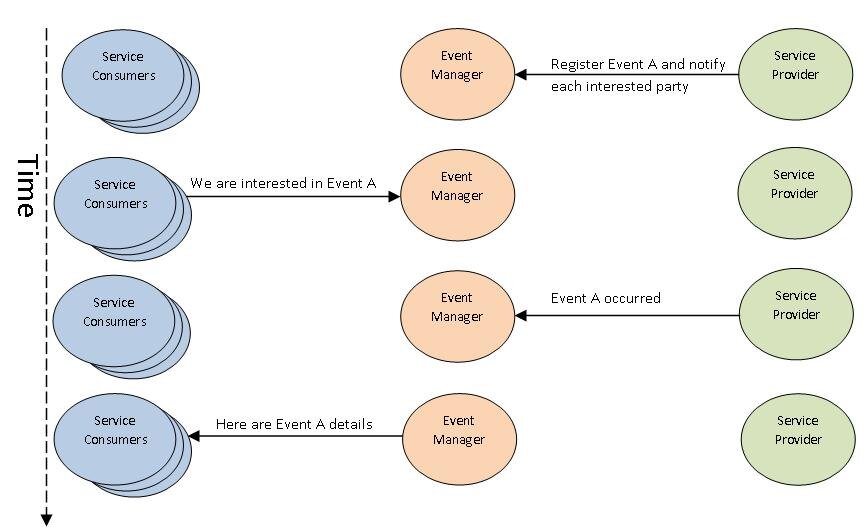
Here are a few places you'll find it:
- Real-time Analytics: A media company tracks every click and scroll on its website, feeding this data into Kafka. Dashboards can then show which articles are trending at this very moment.
- Financial Services: Banks and trading firms use Kafka to process stock trades, detect fraudulent transactions, and calculate risk in real time.
- Internet of Things (IoT): A manufacturer collects data from thousands of sensors on its factory floor. This data stream flows through Kafka to be monitored for anomalies, predicting when a machine might need maintenance.
- Log Aggregation: A large tech company with thousands of servers funnels all its logs into Kafka. This creates a single, central place for engineers to search and analyze logs to debug issues.
Essentially, if a business needs to react to data the instant it's created, Kafka is often the tool for the job.
The provided text uses a river analogy. Before a system like Kafka, how was data management described?
What is the key advantage of Kafka's "durability" compared to many traditional messaging systems?
Kafka provides a powerful foundation for building data-driven applications. By treating data as a continuous stream of events, it unlocks capabilities that were difficult or impossible with older systems.