AP World History Industrialization Spreads
Industrialization Overview
A World Remade
For most of human history, life was slow and local. People made things by hand, powered by their own muscles, animals, or the flow of water. The world was overwhelmingly rural. Then, starting in the mid-1700s, everything began to change. This period of rapid transformation, driven by new machines and new sources of power, is known as the Industrial Revolution.
Industrial Revolution
noun
A period of major industrialization and innovation that took place during the late 18th and early 19th centuries. It marked a shift from agrarian, handicraft economies to economies dominated by industry and machine manufacturing.
This profound shift didn't happen everywhere at once. It began in Great Britain, an island nation with a unique combination of advantages. Britain had vast, easily accessible deposits of coal and iron ore, the essential raw materials for industrial machines and fuel. A stable government and a well-developed banking system provided the security and capital needed for massive investments in factories and infrastructure. Finally, its colonial empire provided both raw materials and captive markets for finished goods.
The Industrial Revolution began in Great Britain around 1750 and gradually spread to other parts of Europe, the United States, and beyond.
Engines of Change
Two key industries drove the first wave of industrialization: textiles and iron. Before the revolution, thread was spun and cloth was woven by hand in people's homes, a slow process known as the 'cottage industry.' A series of inventions completely upended this system.
The spinning jenny and the water frame dramatically increased the speed of spinning yarn. Then, the power loom mechanized the process of weaving cloth. These machines were large, expensive, and required more power than a person could provide. This led to the creation of the first factories, where workers gathered to operate machines often powered by water wheels.
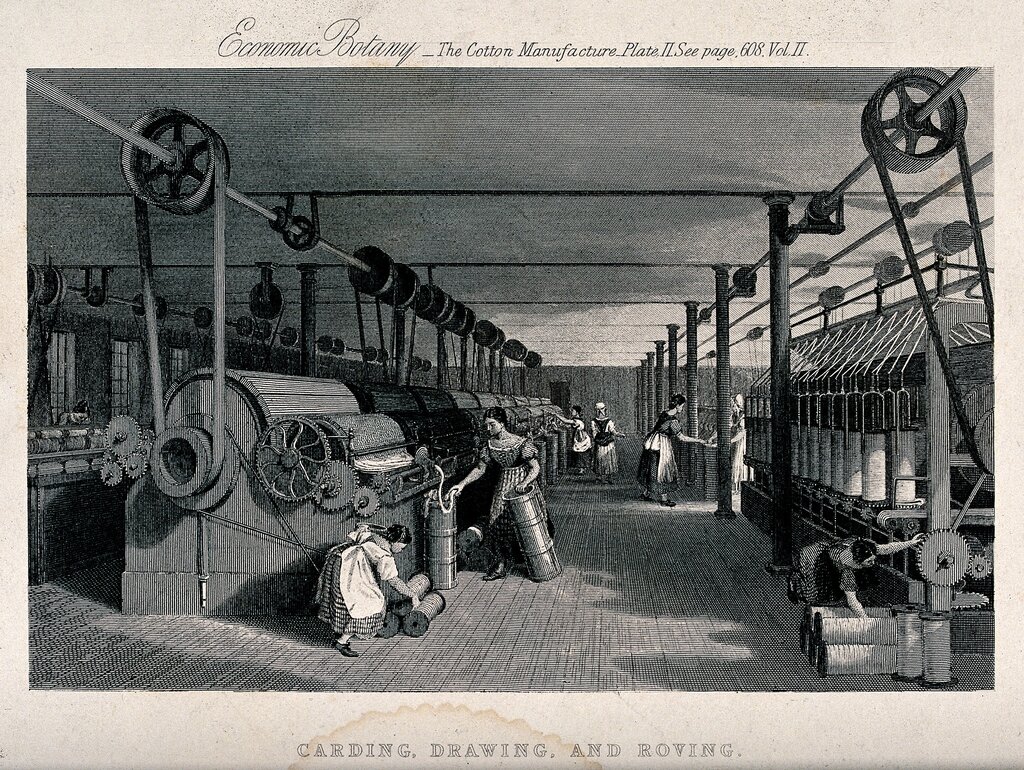
The true game-changer, however, was the steam engine. While early versions existed, it was James Watt's improvements in the 1770s that created an efficient and powerful engine. For the first time, humanity had a reliable power source that wasn't tied to a river or reliant on the wind. Steam power could be put anywhere there was coal to burn.
This innovation was revolutionary. Steam engines powered the textile mills, making them more productive than ever. They were used to pump water out of coal mines, allowing access to deeper, richer seams of fuel. This created a powerful feedback loop: steam engines made it easier to get coal, and cheap coal made it practical to run more steam engines.
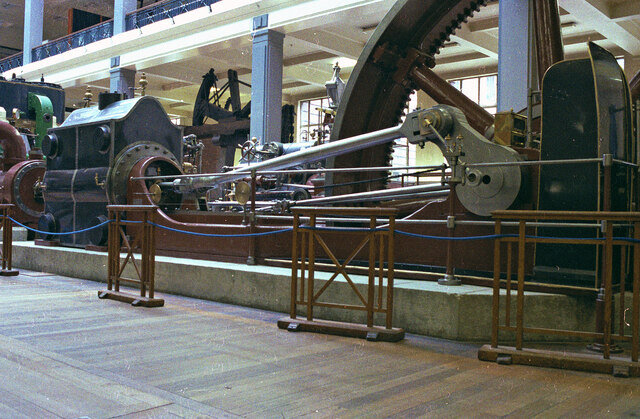
The impact of these technologies was profound. Factory production skyrocketed, making goods cheaper and more widely available. The center of economic life shifted from the countryside to the cities, as people flocked to industrial centers for work. Britain became the world's first industrial nation, its economy and society reshaped by the power of machines.
Which combination of factors uniquely positioned Great Britain to be the starting point of the Industrial Revolution?
What was the system of production that existed before the factory system, where people made goods by hand in their own homes?
This was just the beginning. The innovations born in Britain would soon spread, transforming the globe in ways no one could have imagined.