AP Stats Unit 6 Mastery
Introduction to Statistical Inference
From Sample to Population
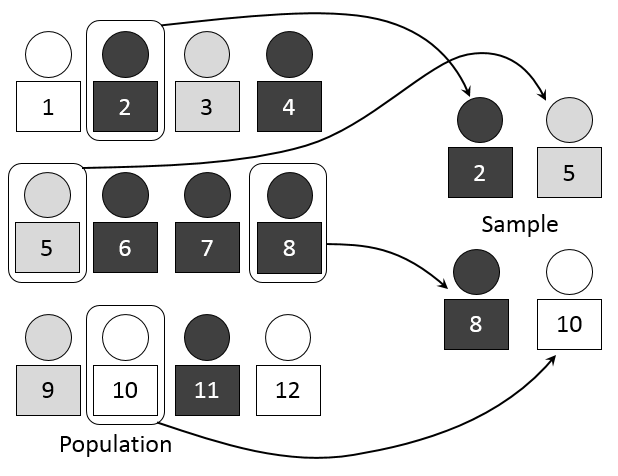
Statistical inference is the process of using data from a small group to draw conclusions about a much larger one. Think of it like tasting a spoonful of soup. You don't need to drink the whole pot to know if it needs more salt. That spoonful is your sample, and the whole pot is the population.
In statistics, we analyze a sample because studying an entire population is often impractical or impossible. Imagine trying to poll every voter in a country or test every battery coming off an assembly line. It's too slow and expensive. By carefully selecting and analyzing a sample, we can make an educated guess, or an inference, about the entire population.
Inferential statistics uses a small sample of data to draw inferences about the larger population that the sample came from.
The Importance of a Good Sample
The quality of your inference depends entirely on the quality of your sample. If your spoonful of soup comes only from the top, you might miss the vegetables that have settled at the bottom. Your taste test would be misleading.
Similarly, a statistical sample must be representative of the entire population. The best way to achieve this is through random sampling. In a simple random sample, every member of the population has an equal chance of being selected. This method helps to avoid bias, ensuring the sample mirrors the population's characteristics as closely as possible.
Bias
noun
A systematic error in sampling or testing that results in a sample that is not representative of its population. This can lead to misleading or inaccurate conclusions.
Probability and Uncertainty
Because we're working with a sample, not the whole population, our inferences are never 100% certain. There's always a chance that our sample, purely by luck, isn't a perfect reflection of the population. This is where probability comes in.
Probability allows us to quantify this uncertainty. Instead of making absolute claims, statistical inference uses the language of probability to state how confident we are in our findings. For example, we might conclude that we are "95% confident" that the true average height of a population falls within a specific range.
This framework of using samples and probability is the foundation for two key tools in statistics: hypothesis testing and confidence intervals. These methods provide a structured way to make decisions and estimate population values from sample data.
Inference isn't about certainty; it's about using probability to make the best possible guess based on limited data.
Let's review the key terms from this section.
Now, check your understanding of these core concepts.
What is the primary purpose of statistical inference?
In statistics, a ______ is a subset of a ______, which is the entire group you want to draw conclusions about.
Understanding inference is the first step toward using data to answer meaningful questions about the world. By using random samples and the tools of probability, we can move from specific observations to broader generalizations.