Antonin Scalia Law at GMU
Founding and Early History
An Independent Start
Every institution has an origin story. For the Antonin Scalia Law School, that story begins not with George Mason University, but with a different entity entirely: the International School of Law (ISL). Founded in 1972, ISL was established as a private, independent law school in Arlington, Virginia. Its founders envisioned a program with a distinct focus, as its name suggests, on international legal studies.
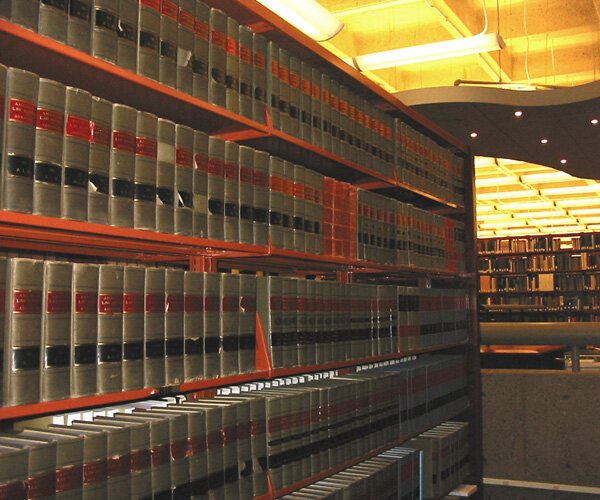
Getting a new school off the ground is a monumental task. For a law school, the challenges include attracting qualified faculty, recruiting students, and building a library—the intellectual heart of any legal institution. For several years, the International School of Law operated on its own, carving out a niche for itself and laying the groundwork for what was to come.
Running an independent professional school, however, requires significant resources and a stable foundation. As the 1970s progressed, the leadership at ISL began looking for a partner that could provide the long-term support needed to grow and thrive.
Joining a University
That partner turned out to be George Mason University, a young and ambitious public university in Virginia. In 1979, the International School of Law officially merged with GMU. This was a pivotal moment. The law school gained the backing and resources of a state university, and George Mason added a professional school to its academic offerings, a key step in its development into a major research university.
The merger transformed the private International School of Law into the George Mason University School of Law.
The transition was not just a name change. It meant integrating into a larger academic community, aligning administrative processes, and preparing for the next crucial step: earning the seal of approval from the national accrediting body for law schools.
Earning Accreditation
For any law school in the United States, accreditation by the American Bar Association (ABA) is essential. It is the gold standard, signifying that a school meets rigorous standards for legal education. Graduates of ABA-accredited schools are eligible to take the bar exam in any state.
After the merger, achieving this status was the new school's top priority. The faculty and administration worked to ensure the curriculum, library, faculty qualifications, and facilities all met the ABA's strict criteria. This process involves a thorough review and a site visit from an ABA evaluation team.
The rule of law is the foundation of a civilized society.
In 1980, their hard work paid off. The American Bar Association granted full accreditation to the George Mason University School of Law. This was the final, critical step in its foundational years. Accreditation solidified the school's legitimacy and opened the door for its graduates to practice law across the country. The independent school started in 1972 had successfully become a fully recognized part of Virginia's public university system.