Anthropology of Fun Music and Sports
Introduction to Anthropology
The Study of Us
What does it mean to be human? It’s a huge question, and anthropology is the field dedicated to answering it. It explores human diversity across time and space, looking at everything from our ancient ancestors to the ways we live in the world today.
Anthropology
noun
The study of human beings and their ancestors through time and space and in relation to physical character, environmental and social relations, and culture.
Unlike other social sciences that might focus on a specific aspect of society like economics or politics, anthropology takes a holistic approach. It aims to understand the whole of the human condition: our biology, our behavior, our beliefs, and our creations.
Anthropology is the comprehensive study of humans, their behavior, culture, and evolution across time and space.
The Four Fields
To cover so much ground, anthropology is divided into four main subfields. Each provides a different lens for viewing humanity, but they often overlap and inform one another.
| Subfield | Focus |
|---|---|
| Cultural Anthropology | The study of living human societies and cultures. |
| Archaeology | The study of past human societies through their material remains. |
| Linguistic Anthropology | The study of language and its relationship to culture. |
| Biological Anthropology | The study of human evolution, genetics, and primate relatives. |
Cultural anthropologists immerse themselves in different communities to understand their customs, beliefs, and social structures. They might study how globalization affects a small village or how family dynamics work in a bustling city.
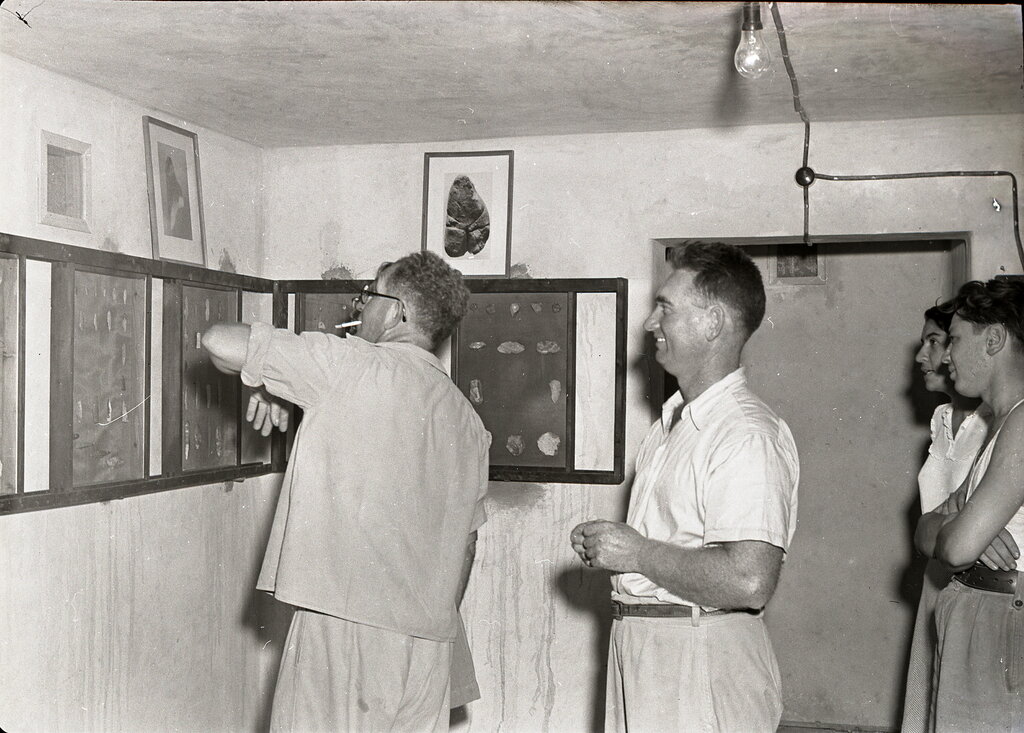
Archaeologists are like detectives of the past. They excavate and analyze artifacts, from simple tools to entire ruined cities, to reconstruct how people lived long ago. Their work gives us a direct, tangible link to our ancestors.
Linguistic anthropologists explore how language shapes our thoughts, identities, and social relationships. They might document an endangered language before it disappears or analyze how people use slang to form social groups.

Finally, biological anthropologists (also called physical anthropologists) study the physical aspects of being human. They look at the fossil record to trace human evolution, investigate how diseases have shaped our biology, and study the behavior of our closest living relatives, the primates.
How Anthropologists Work
Each subfield has its own methods, but the common thread is a commitment to deep, context-rich research. Anthropologists don't just want to know what people do; they want to know why.
The hallmark method of cultural anthropology is ethnography, which involves long-term fieldwork within a community. Researchers participate in daily life, conduct interviews, and observe social interactions to gain an insider's perspective. This is often called participant observation.
Archaeologists use meticulous excavation techniques to recover artifacts and map sites. In the lab, they use methods ranging from chemical analysis to 3D modeling to learn as much as possible from what they find.
Across all fields, the goal is to gather detailed, qualitative data to build a rich understanding of a particular group or problem. This foundation allows us to explore complex human behaviors with nuance and empathy.
What key characteristic distinguishes anthropology from other social sciences like economics or sociology?
An anthropologist excavating an ancient city to learn about its social structure by analyzing pottery, tools, and building foundations is practicing which subfield?