Ant Colony Optimization Explained
Introduction to Optimization
What is Optimization?
Every day, you solve optimization problems without thinking about it. When you choose the fastest route to work, you're optimizing for time. When you pack a suitcase for a trip, you're trying to fit the most useful items into a limited space. You are maximizing utility while staying within a size constraint.
At its core, optimization is about finding the best possible solution from all available options.
Optimization
noun
The process of finding the best possible result under a given set of circumstances.
To frame this more formally, an optimization problem has two main parts:
-
An objective function: This is what you want to maximize or minimize. It could be profit, speed, efficiency, or distance. For your morning commute, the objective function is your travel time, and you want to minimize it.
-
Constraints: These are the rules or limitations you must follow. Your route might be constrained by one-way streets, speed limits, or the amount of fuel in your car. A suitcase is constrained by its volume.
Finding the best solution means achieving your objective without breaking any constraints.
Why Bother Optimizing?
Finding the absolute best solution can be incredibly powerful. In business, it can mean the difference between profit and loss. In science and engineering, it drives innovation.
Consider a delivery company. It needs to plan routes for hundreds of drivers visiting thousands of locations. A small improvement in route efficiency, multiplied across the entire fleet, can save millions of dollars in fuel and labor costs each year. This is a classic optimization problem called the Traveling Salesperson Problem.
The goal is to find the shortest possible route that visits a set of locations and returns to the starting point. Sounds simple, but it's notoriously difficult to solve perfectly as the number of locations grows.
Optimization is everywhere:
- Engineering: Designing a bridge to be as strong as possible using the least amount of material.
- Finance: Creating an investment portfolio that maximizes returns for a given level of risk.
- Manufacturing: Scheduling production to meet demand while minimizing operational costs.
- Artificial Intelligence: Training a machine learning model by adjusting its parameters to minimize prediction errors.
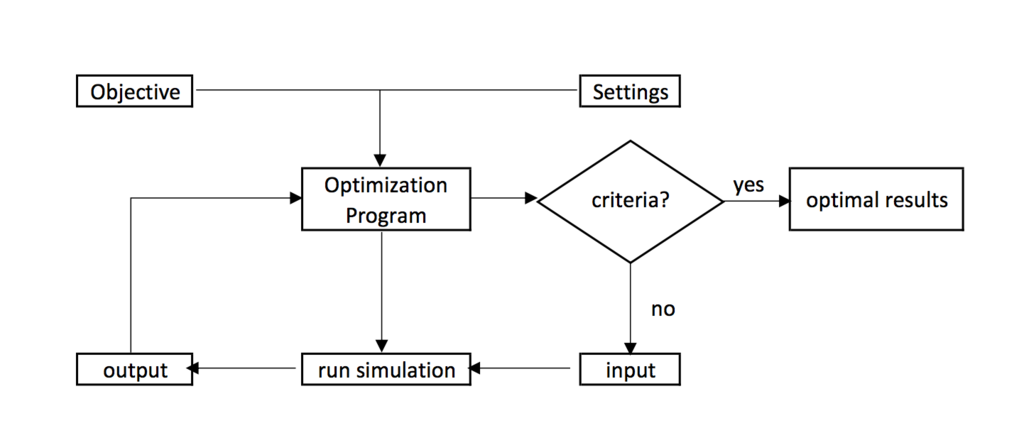
Approaches to Optimization
So how do we find the best solution? There isn't one single method. The right technique depends on the problem. Some problems are simple enough to be solved with straightforward math. Others are so complex that finding the perfect solution is practically impossible.
Broadly, we can group optimization techniques into two categories:
Exact Algorithms: These methods guarantee that they will find the optimal solution. They systematically explore the possibilities to prove that the solution found is the best one. However, for many complex problems, they would take too long to be practical, sometimes even centuries on the fastest computers.
When a problem is too difficult for an exact algorithm, we turn to another approach.
Heuristics and Metaheuristics: These are clever strategies that find very good, but not necessarily perfect, solutions in a reasonable amount of time. They use rules of thumb or nature-inspired processes to intelligently search for high-quality answers. Instead of checking every single option, they make educated guesses to zero in on a great result quickly.
These heuristic methods are the key to solving many of the large-scale optimization challenges we face in the real world, from logistics and scheduling to network design. They provide the tools to find excellent, workable solutions when perfection is out of reach.