Answer Engine Optimization Strategy
AEO Technical Fundamentals
From Link to Source
For two decades, Search Engine Optimization (SEO) was a straightforward game: get your link to the top of the Google results page. Success was measured in clicks and traffic. But the landscape is changing. AI-powered answer engines like ChatGPT, Google's AI Overviews, and Perplexity don't just provide a list of links; they synthesize information and deliver a direct answer. In this new world, the goal isn't just to be ranked—it's to be cited.
AEO is the process of tailoring your content so that AI-powered platforms, like ChatGPT, Perplexity, Microsoft Copilot, and Google’s AI Overviews, can easily understand, trust, and include it in their generated responses.
This shift from traffic-centric to citation-centric optimization is the core of Answer Engine Optimization (AEO). It requires a different technical approach because you're no longer optimizing for a web crawler that indexes pages. You're optimizing for a Large Language Model (LLM) that reads, understands, and synthesizes content. To do this effectively, you need to understand how these AI models actually work.
How AI Finds Answers
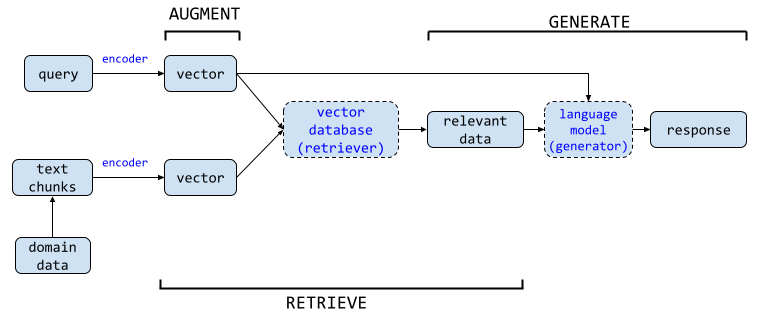
Unlike a traditional search engine that matches keywords to documents, modern answer engines use a process called Retrieval-Augmented Generation (RAG). It’s a two-step process that combines the best of search and generative AI.
First, the retrieval step. When you ask a question, the system doesn't just pull from its pre-trained knowledge. It performs a search across a vast but specific dataset—often a curated index of the web—to find documents and text snippets that are highly relevant to your query. It's like a librarian pulling the most relevant books off the shelf.
Second, the generation step. The AI takes the retrieved information, combines it with its own general knowledge, and generates a new, coherent answer in natural language. The retrieved documents act as a factual grounding, reducing the risk of the AI making things up, a phenomenon known as hallucination. Your goal is to make sure your content is the most authoritative and easily digestible information the AI retrieves.
The RAG model fundamentally changes what it means to create “good” content. It’s not about having the most backlinks or a specific keyword density. It’s about providing clear, factual, and unambiguous answers that an AI can easily parse and trust as a source.
Speaking the LLM's Language
To be selected by the retrieval part of RAG, your content needs to be machine-readable. LLMs don't read text like humans do. Instead, they break it down into smaller units called tokens through a process known as . A token can be a word, a part of a word (like optim- and -ization), or even a single character or punctuation mark.
For example, the phrase "Optimize for AI" might be tokenized into ["Optim", "ize", "for", "AI"]. The LLM then analyzes the statistical relationships between these tokens to understand meaning and context. This has profound implications for AEO.
Content with convoluted sentences, ambiguous phrasing, or dense, unbroken paragraphs is harder for an LLM to tokenize and interpret correctly. In contrast, content that is well-structured, uses clear headings, and provides direct, factual statements is easier to process.
The model isn't looking for clever prose; it's looking for data. Your job is to present your expertise as clean, extractable data points that can be confidently used to answer a user's query. Think less like a novelist and more like a technical writer creating a user manual.
This is the fundamental mindset shift for AEO. You are creating content not just for a human audience, but for a machine that will use your content to serve that human audience. Every piece of content should be a potential citation.