ANNs CNNs and RNNs Explained
Introduction to Neural Networks
The Brain as a Blueprint
At its heart, machine learning is about creating systems that can learn from data. One of the most powerful ways to do this is by mimicking the structure of the human brain. This is the core idea behind artificial neural networks (ANNs), often just called neural networks.
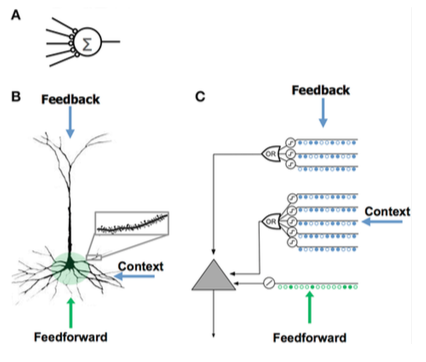
A neural network is made of simple processing units called neurons, organized into layers. Information flows through this network, allowing it to recognize patterns, make predictions, and learn from its mistakes, much like we do. Let's break down how these pieces fit together.
Building Blocks of a Network
Imagine a single neuron. It’s a small computational unit that receives inputs, does a quick calculation, and passes the result along. Each input has a “weight” associated with it, which tells the neuron how important that input is. The neuron sums up all the weighted inputs and then applies a special function to the result.
neuron
noun
A fundamental unit of a neural network that receives weighted inputs, processes them, and produces an output.
These neurons are organized into layers. Every neural network has at least two:
- Input Layer: This is the network's front door. It receives the initial data, like the pixels of an image or the words in a sentence.
- Output Layer: This is the final layer that produces the result, such as a prediction (“cat” or “dog”) or a number.
Most useful networks also have one or more hidden layers sandwiched between the input and output layers. This is where the real magic happens. Hidden layers allow the network to learn complex patterns and relationships in the data that aren't immediately obvious.
After a neuron adds up its weighted inputs, it uses an activation function to decide its output. Think of it as a dimmer switch. It can turn the neuron's signal up or down, or even turn it off completely. This is crucial because it introduces non-linearity, allowing the network to learn much more complex patterns than simple straight lines.
Without activation functions, a neural network, no matter how many layers it has, would behave like a simple linear model.
How a Network Learns
A neural network isn't useful until it's been trained. Training is the process of teaching the network to make accurate predictions. This happens in a three-step loop: forward propagation, loss calculation, and backpropagation.
1. Forward Propagation
This is the prediction step. You feed the network an input, like an image of a cat. The data travels forward through the layers. Each neuron receives inputs from the previous layer, calculates its weighted sum, applies its activation function, and passes its output to the next layer. This continues until the output layer produces a final prediction, say, "80% dog, 20% cat."
2. Loss Calculation
Next, we check how wrong the prediction was. Since we know the image was a cat, the prediction was incorrect. We use a loss function to measure this error. A high loss means a big mistake; a low loss means the network was close. The goal of training is to minimize this loss.
3. Backpropagation
This is the learning step. Backpropagation is a clever algorithm that works backward from the loss. It calculates how much each weight in the network contributed to the error. It then adjusts those weights slightly in the right direction to reduce the error. For our cat example, it might increase the weights that lead to a “cat” prediction and decrease the ones that lead to “dog.”
This cycle of forward propagation, loss calculation, and backpropagation is repeated thousands or even millions of times with lots of data. With each cycle, the network's weights get a little better, and its predictions become more accurate.
Real-World Impact
This simple structure of neurons and layers is surprisingly powerful. Neural networks are the driving force behind many technologies we use every day:
- Image Recognition: Identifying faces in photos, diagnosing diseases from medical scans, and enabling self-driving cars to see the road.
- Natural Language Processing (NLP): Powering translation apps, spam filters in your email, and voice assistants like Siri and Alexa.
- Time Series Prediction: Forecasting stock prices, predicting weather patterns, and estimating energy demand.
Ready to check your understanding of these core concepts?
What is the primary role of the input layer in a neural network?
During the training of a neural network, which step involves adjusting the weights to minimize error?
Understanding these fundamentals is the first step. From this basic architecture, more specialized networks are built to tackle even more complex problems.