Angiosperm Sexual Reproduction Explained
Flower Structure
Anatomy of a Flower
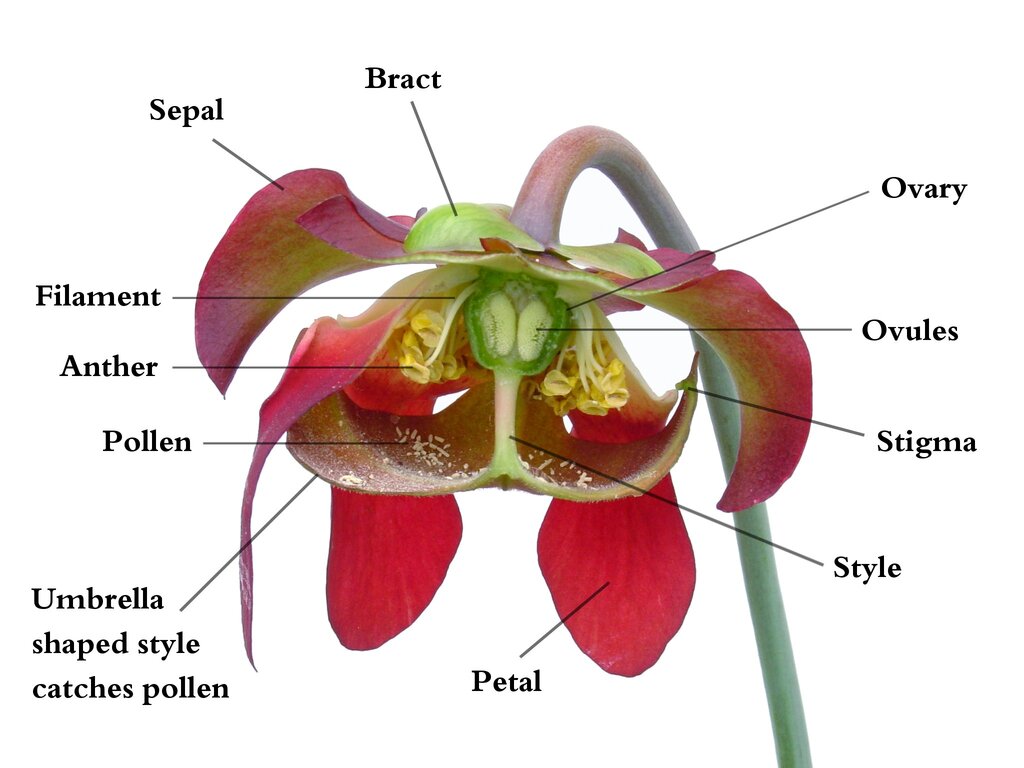
Flowers are the reproductive centers of angiosperms, or flowering plants. Their primary job is to produce seeds for the next generation. A typical flower is organized in four distinct whorls, or layers, of modified leaves. From the outside in, these are the sepals, petals, stamens, and carpels. Each part has a specific role in the complex process of reproduction.
The Outer Layers
The two outermost whorls of a flower are the sepals and petals. Together, they form what's known as the perianth.
Sepal
noun
The leaf-like structures that form the outermost whorl of a flower. They typically enclose and protect the developing bud.
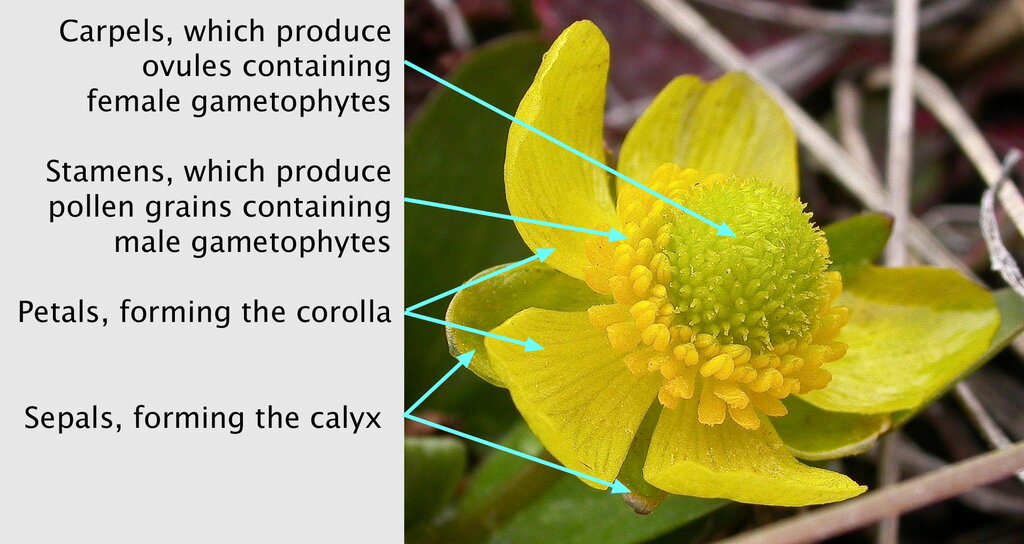
Before a flower opens, it's a vulnerable bud. The sepals act as its protective armor. They are usually green and resemble small leaves. All the sepals of a flower are collectively called the calyx. Once the flower blooms, the sepals can often be seen at the base of the petals.
The primary job of the sepal is protection.
Moving inward, the next layer is made of petals. These are the showy parts of the flower, often brightly colored, large, and sometimes scented. Their main purpose is to attract pollinators like bees, butterflies, and birds. Think of them as a flower's advertisement.
Petal
noun
The often colorful, modified leaves of a flower that are located just inside the sepals. They primarily function to attract pollinators.
The complete set of petals on a flower is called the corolla. The wide variety of petal shapes, colors, and arrangements is what gives different flowers their unique beauty.
The Reproductive Organs
At the center of the flower are the reproductive parts: the stamens and the carpels. These are the structures directly involved in producing seeds.
Stamen
noun
The male reproductive organ of a flower, responsible for producing pollen.
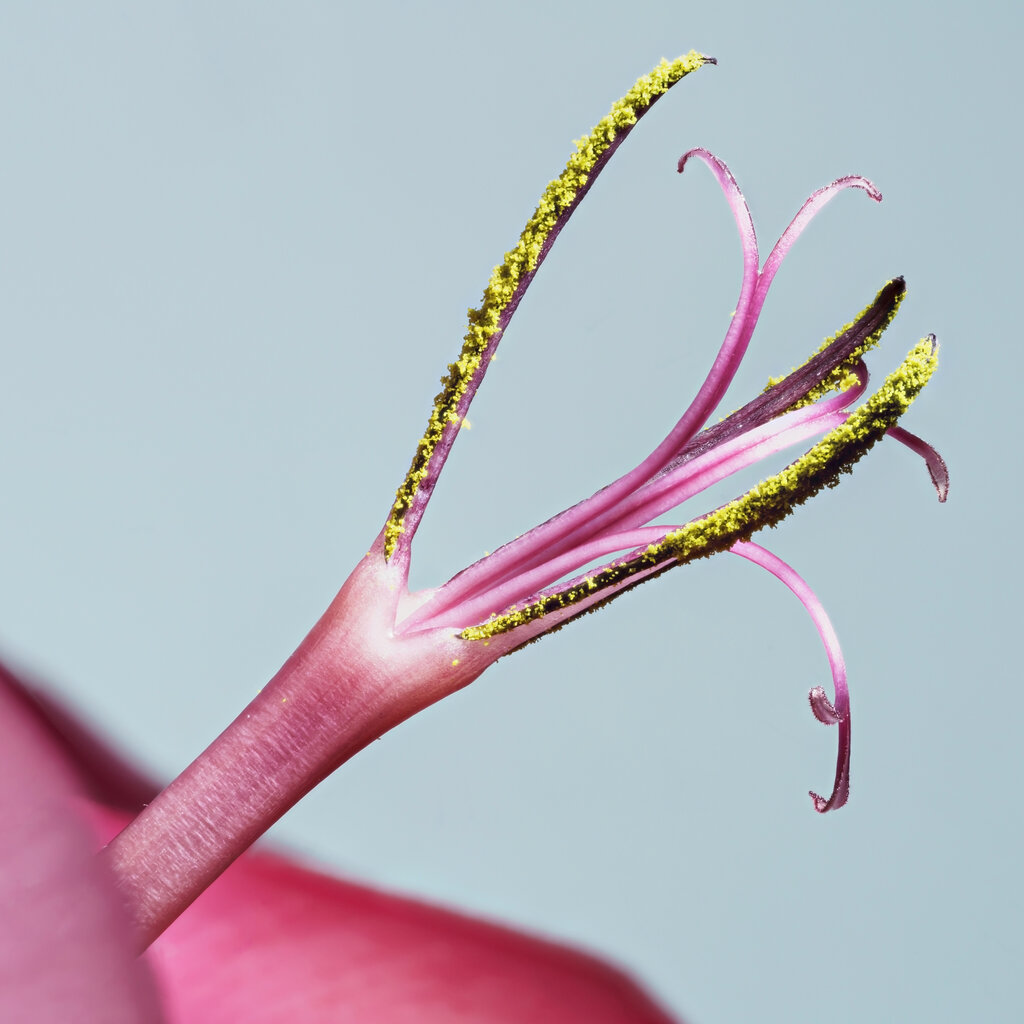
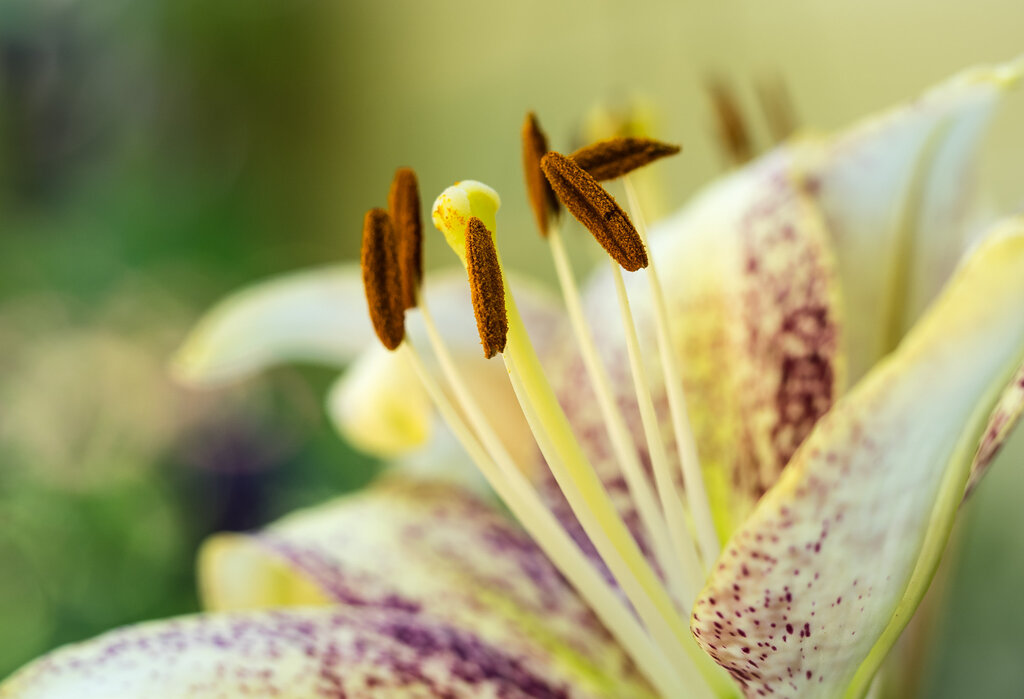
The stamen is the male organ. It's not a single piece, but is made of two parts. The anther is a sac-like structure at the top that produces and holds pollen grains. The anther is held up by a thin stalk called the filament. Together, the anther and filament make up one stamen. A flower can have many stamens, often arranged in a ring.
In the very center of the flower lies the carpel, the female reproductive organ. It is also called the pistil. Like the stamen, it's made of multiple parts.
Carpel
noun
The female reproductive organ of a flower, which comprises the stigma, style, and ovary.
The carpel has three sections:
-
Stigma: Located at the very top, the stigma is often sticky or feathery. Its job is to catch pollen.
-
Style: This is a stalk that connects the stigma to the ovary. It acts as a pathway for the pollen to travel down.
-
Ovary: Situated at the base of the carpel, the ovary is a swollen structure that contains one or more ovules. The ovules are the potential seeds.
These four parts, working together, set the stage for reproduction. Understanding their structure is the first step to understanding how a new plant begins.
Which part of the flower is primarily responsible for attracting pollinators with its bright colors and scents?
The stamen, the male reproductive organ of a flower, is composed of which two parts?