Anesthesiology Mastery
Advanced Airway Management
Spotting Trouble Early
In anesthesia, success often hinges on preparation. This is especially true when it comes to securing a patient's airway. While most intubations are straightforward, some present significant challenges due to a patient's unique anatomy or medical condition. The key is to identify these potential difficulties before you even begin.
Clinicians use several mnemonics to quickly assess a patient's airway. One of the most common is LEMON, a systematic way to look for red flags.
| Letter | Stands For | What It Means |
|---|---|---|
| L | Look Externally | Are there facial trauma, large teeth, a beard, or a large tongue? |
| E | Evaluate 3-3-2 | Can 3 fingers fit between the incisors? 3 between the hyoid bone and chin? 2 between the thyroid notch and floor of the mouth? |
| M | Mallampati Score | How much of the posterior pharynx is visible when the patient opens their mouth? |
| O | Obstruction/Obesity | Is there any condition like a tumor, abscess, or morbid obesity that could block the airway? |
| N | Neck Mobility | Can the patient flex and extend their neck fully? Conditions like rheumatoid arthritis can limit this. |
A low Mallampati score (where you can clearly see the uvula and tonsillar pillars) is reassuring. A high score (where you can only see the hard palate) suggests a more difficult intubation. Similarly, failing the 3-3-2 rule indicates that the anatomical spaces needed to align the airway for a breathing tube are too small. No single factor guarantees a difficult airway, but a combination of them raises the index of suspicion and prompts a change in strategy.
Advanced Tools of the Trade
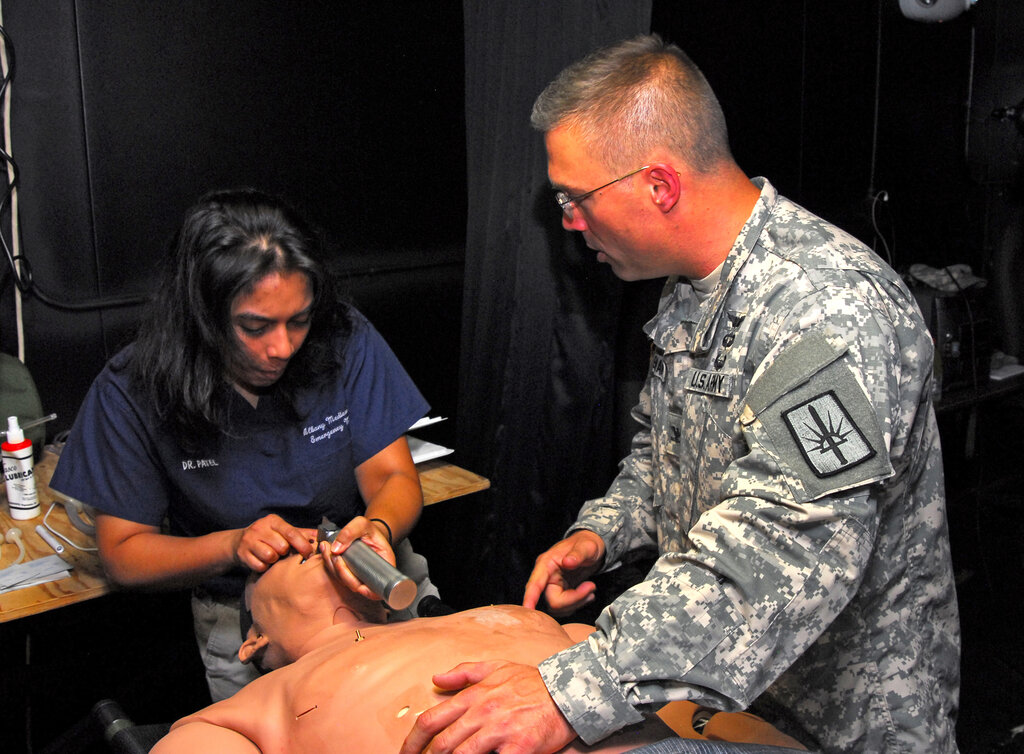
When a difficult airway is anticipated, the standard direct laryngoscope might not be enough. Instead, we turn to more advanced tools that allow us to see what the naked eye can't.
Laryngoscopy
noun
A medical procedure used to obtain a view of the vocal folds and the glottis, which is the space between the cords.
Video Laryngoscopy
Imagine trying to see around a corner. That's the challenge of a difficult airway. A traditional laryngoscope requires a direct line of sight from the provider's eye to the patient's vocal cords. A video laryngoscope (VL) places a tiny camera on the end of the blade. The camera sends an image to a screen, allowing the provider to navigate the airway indirectly. This is a game-changer for patients with anatomical features that obstruct a direct view.
Fiberoptic Bronchoscopy
For the most challenging airways, such as a patient with a jaw wired shut or a severe neck injury, a flexible fiberoptic bronchoscope may be the best option. This is a thin, flexible tube with a light and a camera on the end that can be navigated through the nose or mouth and down into the trachea.
The main advantage is that it can be done while the patient is awake and breathing on their own, using only topical anesthetics and light sedation. This dramatically increases the safety margin. The provider can see the entire path to the trachea on a monitor before advancing the breathing tube over the scope.
High-Stakes Scenarios
Certain clinical situations demand unique airway management strategies. In these cases, the choice of equipment and technique can be the difference between a smooth procedure and a crisis.
In trauma, you must always assume a cervical spine injury until it's proven otherwise. The first rule is to do no further harm.
A trauma patient with a potential neck injury cannot have their head tilted back to open the airway. Instead, a second person must hold the head and neck in a neutral position, a technique called manual in-line stabilization. This makes intubation significantly more difficult. Video laryngoscopy is often the first choice here, as it provides a view of the vocal cords without requiring neck movement.
But what happens when all attempts to place a breathing tube fail? This leads to the most feared airway emergency: the "Can't Intubate, Can't Oxygenate" (CICO) scenario. This is a time-critical situation where the patient cannot be oxygenated by a mask or a breathing tube. Every anesthesiologist has a clear, rehearsed plan for this event.
The algorithm provides a clear path from initial attempts to rescue devices like a laryngeal mask airway (LMA), and finally, to creating a surgical airway in the neck (a cricothyrotomy). While rarely needed, practicing these steps ensures a calm, methodical response in a crisis.
In an airway assessment, what does a high Mallampati score (e.g., Class IV, where only the hard palate is visible) typically suggest?
What is the primary advantage of using a video laryngoscope (VL) compared to a traditional direct laryngoscope, especially in a difficult airway?
Mastering these advanced techniques is a core competency in anesthesiology, ensuring patient safety even in the most complex and unexpected situations.