Ancient Rome Unveiled
Origins of Rome
Myths and Legends
Every great city has a story. Rome’s is a mix of myth, legend, and history, starting long before the city itself. The tale begins with Aeneas, a hero who fled the ashes of Troy. After years of wandering, he and his followers landed in Italy, where his descendants would eventually found the world's greatest empire.
Generations later, the twin brothers Romulus and Remus were born. Their great-uncle, a jealous king, ordered them to be thrown into the Tiber River. But fate had other plans. The basket carrying the infants washed ashore, and they were discovered by a she-wolf who nursed them as her own. A shepherd later found and raised the boys.
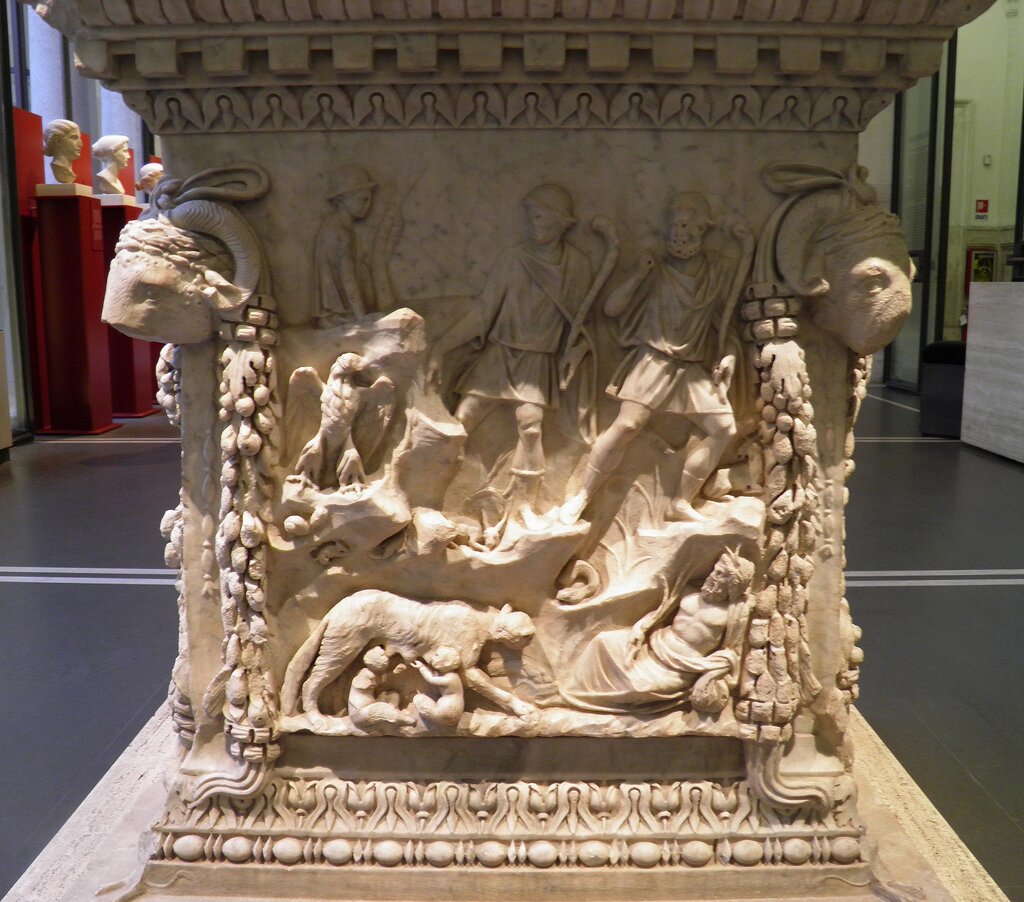
As young men, they decided to build a city on the hills where they were saved. An argument over which hill to build on, and who should rule, ended in tragedy. Romulus killed Remus and became the first king of the new city, which he named after himself: Rome. The traditional founding date is 753 BCE.
The Reality Beneath the Rubble
While the story of the she-wolf is compelling, archaeologists tell a different tale. The origins of Rome were more gradual. Around the 8th century BCE, small villages dotted the tops of the hills overlooking the Tiber River, including the Palatine Hill, where Romulus supposedly founded his city.
These were simple settlements of shepherds and farmers. Over time, they grew and merged, draining the marshy valley between the hills. This central area became a common space for markets and meetings, the heart of the growing city. We know it today as the Roman Forum.
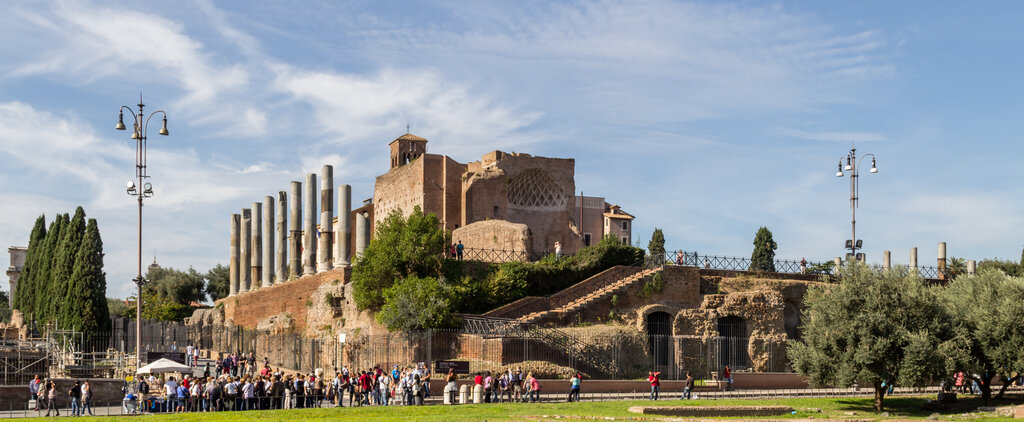
The archaeological evidence doesn't disprove the legends entirely. It simply shows a more organic process of city formation, one where separate communities slowly unified to create a single, powerful entity.
From Kings to Consuls
According to tradition, Rome was ruled by seven kings, starting with Romulus. This period, known as the Roman Monarchy, lasted for over two centuries. The kings weren't all Roman; some were Sabine and others were Etruscan, reflecting the diverse influences on the young city.
The monarchy ended dramatically in 509 BCE with the overthrow of the last king, Lucius Tarquinius Superbus, or Tarquin the Proud. His tyrannical rule led to a rebellion by the Roman aristocrats. They vowed never again to be ruled by a single king.
The Romans replaced the monarchy with a new form of government: a republic. Power would now be shared, not concentrated in one person's hands.
This new system was led by two annually elected officials called consuls. They held equal power, and each could veto the other's decisions, a check designed to prevent any one man from becoming too powerful. This transition marked a fundamental shift in Roman identity and set the stage for centuries of expansion and conquest.
A City of Influences
Rome did not develop in a vacuum. From its earliest days, it was a melting pot of different cultures. Two groups in particular left a lasting mark: the Etruscans and the Greeks.
The Etruscans, who lived to the north of Rome in Etruria, were a sophisticated civilization. Romans adopted many Etruscan customs, including their alphabet (which the Etruscans had adapted from the Greeks), architectural techniques like the arch, and religious rituals such as divination.
To the south, Greek colonies dotted the Italian coast and Sicily. From them, the Romans absorbed foundational ideas about art, literature, philosophy, and mythology. The Roman gods and goddesses, for instance, were heavily modeled on their Greek counterparts.
This ability to absorb and adapt ideas from other cultures was a key strength of early Rome. It created a rich, composite civilization that was uniquely resilient and dynamic, ready to build its own legacy on the foundations laid by its neighbors.
Now, let's test your knowledge on the dawn of Rome.
According to Roman legend, who was the first king of Rome?
What does archaeological evidence suggest about the actual origins of Rome?
Rome's story begins with a blend of epic myths and the quiet growth of villages into a city. This foundation, shaped by both kings and new ideas of shared rule, set the stage for a civilization that would change the world.