Ancient Roman Engineering Systems
Roman Concrete Chemistry
The Enduring Secret of Roman Concrete
Roman concrete, or opus caementicium, is legendary for its durability. Structures like the Pantheon and ancient aqueducts have stood for two millennia, often in harsh marine environments where modern concrete would crumble. The secret isn't just one ingredient but a sophisticated chemical process that creates a material that strengthens over time.
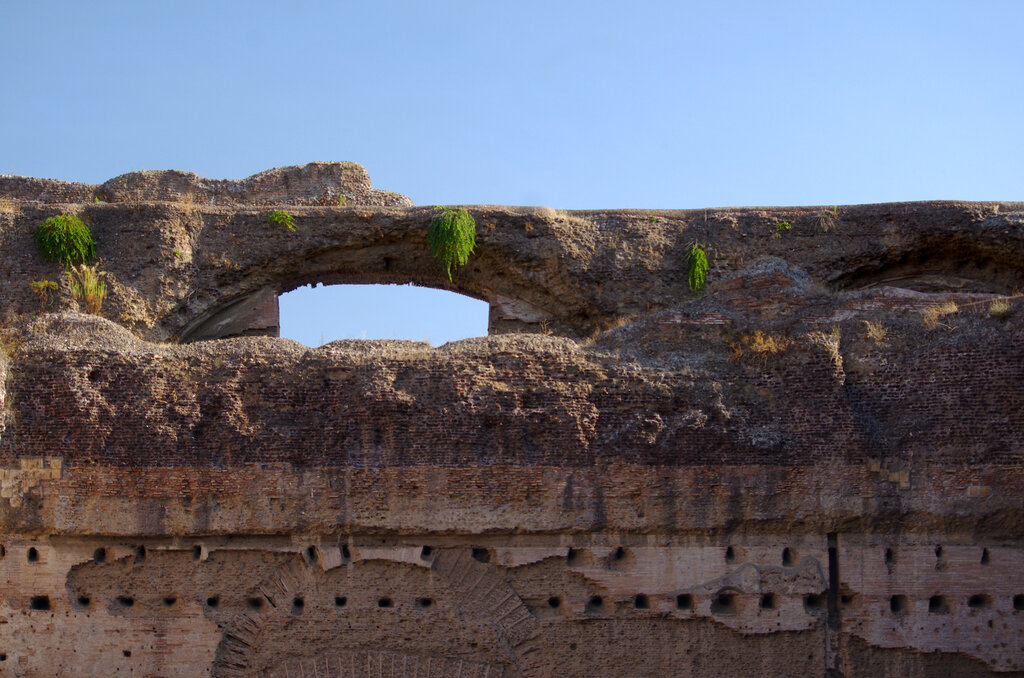
Unlike modern concrete, which relies on a simple hydration reaction with Portland cement, Roman engineering used a combination of quicklime (calcium oxide) and volcanic ash. This ash, known as pozzolana, was abundant in regions near volcanoes like Mount Vesuvius. When mixed with lime and water, it initiated a pozzolanic reaction, forming an incredibly stable and non-corrosive binder.
The key was not just the ingredients, but how they reacted with each other and the environment over centuries.
The Pozzolanic Reaction
When lime is mixed with water, it becomes slaked lime, or calcium hydroxide, Ca(OH)₂. In modern concrete, this is a byproduct that can leach out, weakening the structure. For the Romans, it was a crucial reactant. The volcanic ash they used was rich in silica and alumina. The slaked lime reacted with these compounds to form a calcium-aluminum-silicate-hydrate (C-A-S-H) binder. This binder is far more resilient than the calcium-silicate-hydrate (C-S-H) that forms the basis of modern concrete.
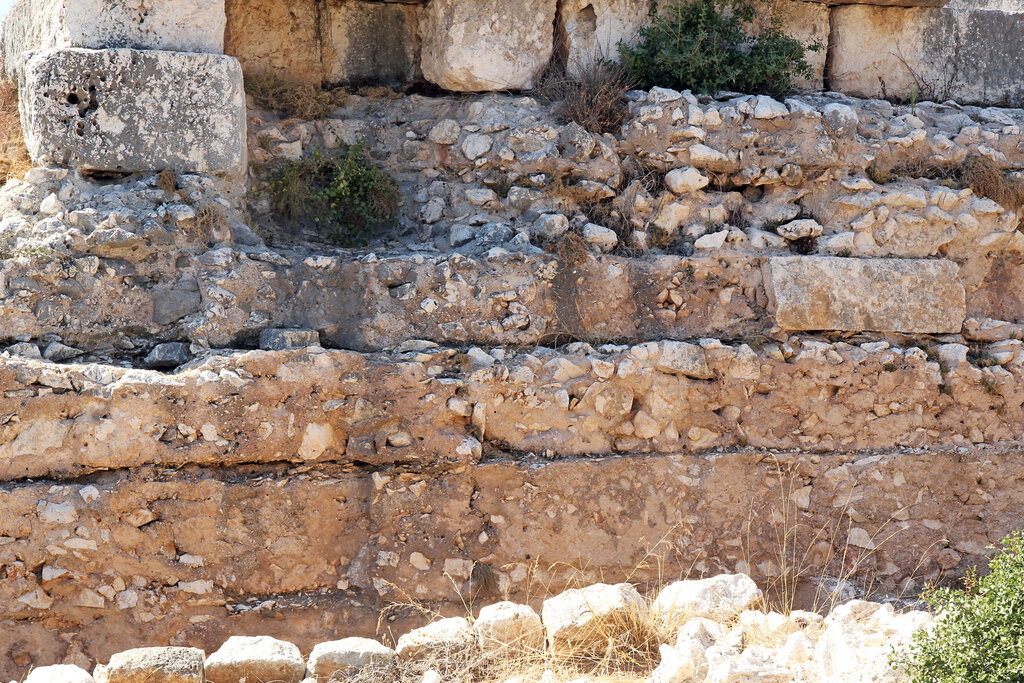
The Romans also varied their aggregate—the stones and rubble mixed into the cement paste. For large, lightweight structures like the Pantheon's dome, they used light, porous volcanic rock called tuff. For high-strength applications like foundations or harbor walls, they used denser stone like travertine. This careful selection of materials optimized the final structure's weight and strength.
The Magic of Seawater
The most remarkable property of Roman marine concrete is its interaction with seawater. For centuries, scientists were baffled by how these structures became stronger, not weaker, when exposed to the corrosive sea. Modern analysis has revealed that seawater percolates through the concrete, triggering a secondary reaction. The fluid dissolves components from the volcanic ash, allowing new, interlocking crystals of and a related mineral, phillipsite, to grow.
Furthermore, the Romans didn't perfectly mix their lime. They left small, millimeter-sized chunks called lime clasts within the mixture. When tiny cracks form in the concrete, water seeps in and reacts with these lime clasts. The reaction produces a calcium-rich fluid that recrystallizes as calcium carbonate, sealing the crack. This 'self-healing' mechanism is a key reason for the material's incredible lifespan.
This brilliant chemistry allowed for architectural marvels. Without reinforcing steel, the Romans built massive structures like the Pantheon's dome, which remains the largest unreinforced concrete dome in the world. Their understanding of these material properties, refined over generations, represents a pinnacle of ancient engineering that modern science is still working to fully understand and replicate.
What is the name for the special volcanic ash that was a crucial ingredient in Roman concrete?
The Pantheon's dome, the largest unreinforced concrete dome in the world, was made lighter by using an aggregate of porous volcanic rock called tuff.