Ancient Roman Engineering Mechanics
Pozzolanic Concrete Chemistry
The Secret of Roman Concrete
Roman engineers faced an enormous challenge: building massive, lasting structures in water. Piers, breakwaters, and harbor foundations needed a material that wouldn't just resist water, but actually harden within it. Their solution was a revolutionary type of concrete called opus caementicium, a substance so durable that structures made from it still stand today, battered by centuries of waves.
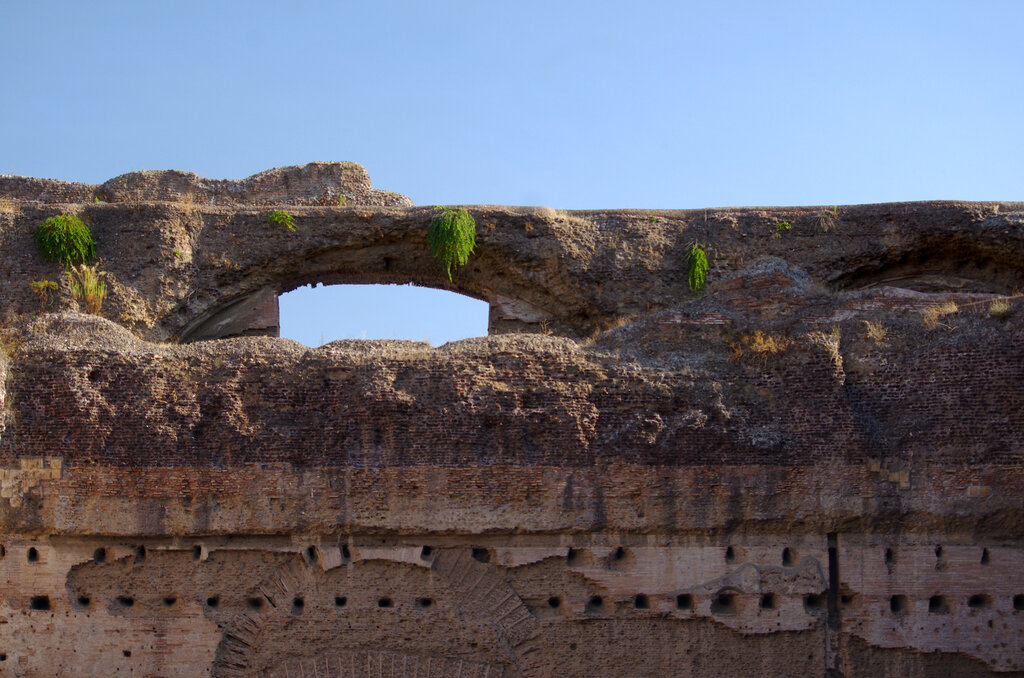
Unlike modern Portland cement which is fired in a kiln, the Roman recipe was simpler and, in some ways, superior. The key was a special volcanic ash found in deposits near the Bay of Naples. The Romans called it pulvis puteolanus, which we now know as pozzolana. This wasn't just inert filler. When mixed with lime (calcium oxide, CaO, or hydrated lime, Ca(OH)₂), a powerful chemical reaction began.
The Hydraulic Reaction
The magic of pozzolanic concrete lies in its ability to set without air, a process known as a hydraulic setting. When pozzolana's silica (SiO₂) and alumina (Al₂O₃) are mixed with lime and water, they form a stable, water-resistant compound. This is the pozzolanic reaction. The primary product is a Calcium-Silicate-Hydrate (C-S-H) gel, which acts as the binding glue holding the concrete together. But in the Roman marine recipe, something even more special happened.
When seawater percolated through the concrete, the alumina in the pozzolanic ash reacted with the lime and salt to form a rare, interlocking mineral called aluminous tobermorite. This crystal structure is incredibly stable and resistant to chemical decay. Instead of eroding, Roman sea walls actually grew stronger over time as these crystals continued to form, knitting the aggregate together into an artificial rock.
The Romans also mastered the use of aggregate. They would pack their forms with large chunks of rock or recycled rubble, called caementa. This wasn't just to save on mortar. The large aggregate provided immense compressive strength, resisting the crushing forces of waves and the structure's own weight. The pozzolanic mortar, which has better tensile strength than modern concrete, would then bind these rocks, preventing the structure from pulling apart. This combination of materials created a composite that was perfectly engineered for the violent coastal environment.
Enduring Legacy
The result of this sophisticated material science was a series of immense maritime projects that transformed the Roman world. Harbors, breakwaters, and piers were built on a scale never before seen. These structures were not just strong; they were self-healing. Minor cracks that formed would slowly fill with new tobermorite crystals as more seawater entered, effectively repairing the damage over time.
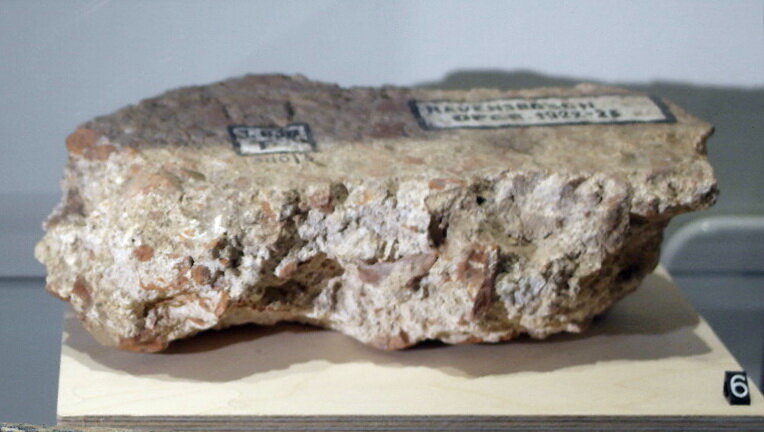
This understanding of pozzolanic chemistry explains why structures like the breakwaters at Caesarea Maritima have survived 2,000 years of Mediterranean storms, while many modern concrete piers crumble in a fraction of that time. The Romans didn't just invent concrete; they perfected a recipe for marine construction that we are only now beginning to fully appreciate.
Let's review the key terms from this section.
Ready to test your knowledge?
What was the key volcanic ash ingredient that gave Roman concrete its unique properties for marine construction?
The ability of Roman pozzolanic concrete to harden underwater is known as a _________ set.
By combining lime, pozzolana, and a smart use of aggregate, Roman engineers created a material that was not only strong but adapted to its environment, leaving a legacy written in artificial stone.