Ancient Mystery Cults Analysis
Eleusinian Initiation Rites
The Path to Initiation
The journey into the Eleusinian Mysteries was a two-step process. Before an individual could witness the sacred rites at Eleusis, they had to undergo the Lesser Mysteries. Held in the spring in Agrae, a suburb of Athens, these were preliminary rites focused on purification. Think of it as a necessary cleansing, both spiritual and ritual, that prepared the candidate for the profound experiences to come. Only after completing this first stage could an initiate, or mystes, hope to participate in the main event: the Greater Mysteries.
The Sanctuary at Eleusis
The Greater Mysteries took place in the autumn at the sanctuary of Demeter and Persephone in Eleusis. The focal point of the entire complex was not a temple in the traditional Greek sense, which were typically houses for a god's statue visited by priests. Instead, it was the Telesterion, a massive, square initiation hall designed to hold thousands of people at once. Its unique architecture served a specific purpose: to manage a collective, immersive ritual experience.
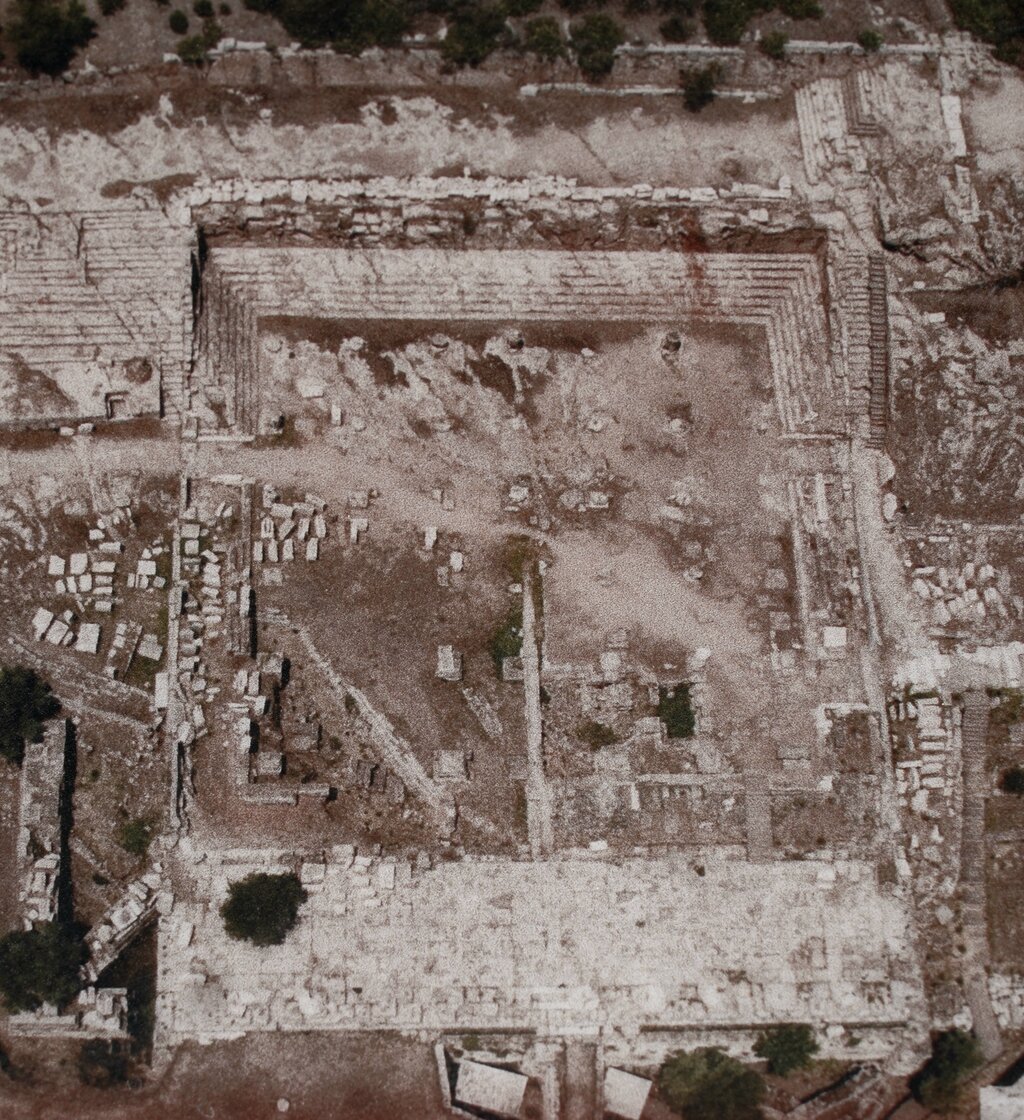
The Telesterion was a dark, hypostyle hall with rows of columns supporting the roof and tiers of seating cut into the rock on all four sides. Unlike an open-air theater, it was an enclosed space, allowing for complete control over light and sound. This design was crucial for the psychological transformation of the initiates. They would gather inside in total darkness, a sensory deprivation that heightened anticipation and anxiety, before the central part of the ceremony.
The Sacred Rites
Inside the Telesterion, the initiation reached its peak. The ritual was a carefully orchestrated performance built on three elements: the dromena ("things done"), the deiknymena ("things shown"), and the legomena ("things said"). The dromena likely involved a dramatic reenactment of Demeter's search for Persephone, heightening the emotional state of the participants. The legomena were short, cryptic phrases chanted in the dark, adding to the mystery.
The climax was the deiknymena. At the crucial moment, the Hierophant, the high priest of the cult, would emerge from a small stone building in the center of the hall called the Anaktoron. He would reveal sacred objects in a sudden, brilliant blaze of light from a great fire. The stark contrast between profound darkness and blinding light was designed to induce a powerful state of awe and revelation in the initiates.
The Mysteries offered a more-personal, less-distant relationship with the divine than did most of the Olympians.
This final stage of the vision was known as the epopteia—the "beholding." The initiate was no longer just a mystes but now an epoptes, one who has seen. The exact nature of what was shown remains a secret, but scholars believe it may have been a single ear of grain harvested in silence. This simple object, symbolizing the cycle of life, death, and rebirth, would have carried immense power in the context of the ritual, promising initiates a better fate in the afterlife.
To prepare for this transformative vision, initiates consumed a special beverage called the kykeon. It was a mix of barley, water, and pennyroyal. While the exact recipe is lost, many researchers believe the potion was psychoactive. It may have contained ergot, a fungus that grows on barley and has hallucinogenic properties similar to LSD. This ritual drink would have altered the initiates' consciousness, making them more receptive to the powerful psychological and spiritual experience of the epopteia.
What was the primary purpose of the Lesser Mysteries, the first step in the Eleusinian initiation?
The central hall for the Greater Mysteries, the Telesterion, was designed as a large, enclosed, dark space. What was the main reason for this specific architectural design?
The Eleusinian Mysteries provided a framework for understanding life and death that public-facing state religion could not. Through a carefully managed ritual progression, it guided individuals from purification to a direct, personal encounter with the divine, securing a promise of a blessed existence after death.