Ancient Indian Texts Beyond History
Introduction to Ancient Indian Texts
A Library Carried in Memory
Ancient India didn't produce history books the way we think of them today. Instead, it created a vast library of texts designed to explore the human condition, explain the cosmos, and guide people in their daily lives. These works—hymns, epic poems, philosophical dialogues, and collections of myths—were composed and preserved for centuries not on paper, but in the minds of scholars and storytellers.
This tradition of memorization and oral recitation shaped the literature itself. Rhythm, meter, and mnemonic devices were essential tools for ensuring that these sacred and cultural treasures could be passed down accurately from one generation to the next. Long before they were ever written down, these texts were a living, breathing part of the culture.
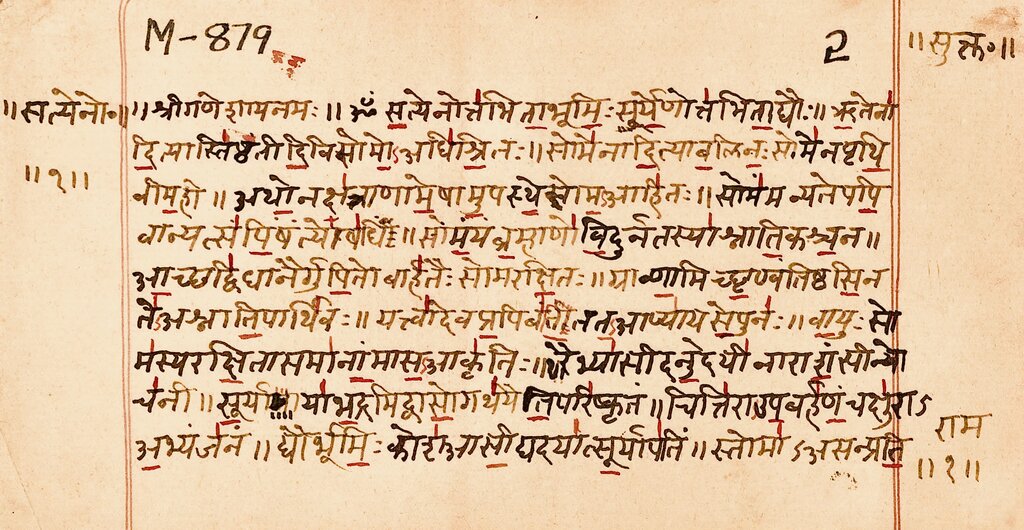
Sacred Knowledge
The foundational texts of Hinduism are the Vedas. They aren't a single book but a large collection of hymns, prayers, and philosophical treatises composed in Vedic Sanskrit. They are considered śruti, meaning "what is heard," believed to be divine revelations heard by ancient sages. The oldest of these, the Rigveda, is a collection of hymns praising various deities.
shruti
noun
A Sanskrit word meaning "what is heard," referring to the body of most authoritative, ancient religious texts in Hinduism, believed to be of divine origin.
Attached to the Vedas are the Upanishads, which delve into philosophy. They explore profound questions about reality, the self, and the nature of consciousness. Rather than focusing on rituals, the Upanishads seek spiritual insight through meditation and self-inquiry, introducing core concepts like Brahman (the ultimate reality) and Atman (the individual soul).
Then there are the Puranas, which literally means "tales of ancient times." These texts use myths, legends, and genealogies of gods and heroes to explain complex philosophical ideas in an accessible, story-driven way. They were instrumental in spreading religious and cultural ideas among the general population.
The Great Epics
Alongside the sacred texts are two monumental epic poems: the Ramayana and the Mahabharata. These are classified as smṛti, or "what is remembered," composed by human authors but revered for their moral and spiritual wisdom.
The Ramayana tells the story of Prince Rama, his wife Sita, and their struggle against the demon king Ravana. It's a tale that explores themes of dharma (duty), loyalty, and the triumph of good over evil.
The Mahabharata is one of the longest poems ever written. It revolves around a dynastic struggle between two groups of cousins for the throne of Hastinapura. Woven into this epic narrative are deep philosophical discussions, including the famous Bhagavad Gita, a conversation between Prince Arjuna and the god Krishna about duty and the meaning of life.
These epics functioned as moral guidebooks and cultural encyclopedias, shaping the values and beliefs of Indian society for millennia. They weren't just stories; they were teachings about how to live.
Time to review what you've learned about these foundational works.
The foundational texts of Hinduism, the Vedas, are considered śruti. What does this classification signify?
Which category of texts, attached to the Vedas, shifts focus from ritual to philosophical questions about reality, the self, and consciousness?
The oral tradition was the primary method for preserving this rich literary heritage, ensuring its survival long before the age of printing. This emphasis on memory and recitation is a key reason why these texts have had such an enduring impact.