Ancient Indian Philosophy and Its Global Echoes
Vedic Upanishadic Roots
From Ritual to Reality
Early Indian thought wasn't born in quiet contemplation, but in the performance of elaborate rituals. The early Vedic people perceived the universe as an ordered system, governed by a cosmic principle called Rta. This wasn't a law enforced by a single god, but an inherent harmony that kept everything—from the rising of the sun to the changing of the seasons—in its proper place.
The primary way to align with and sustain Rta was through Yajnas, or ritual sacrifices. These were not merely offerings to appease deities; they were complex ceremonies seen as microcosmic reenactments of the universe's creation. By performing them correctly, priests believed they were actively participating in and strengthening the cosmic order. The focus was external, on the precise execution of actions and the chanting of hymns to maintain balance in the world.
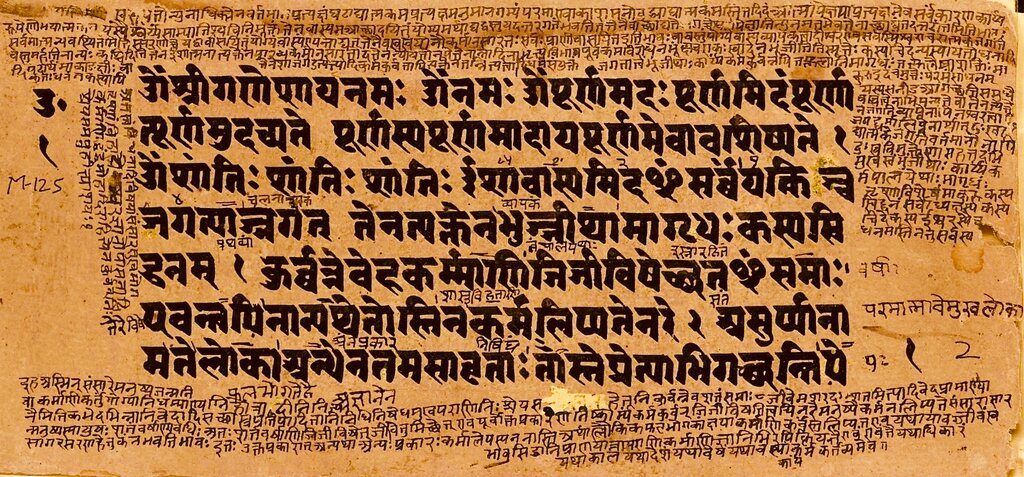
The Great Shift Inward
Over centuries, a profound shift occurred. Thinkers began to question the ultimate efficacy of external rituals. What if the most important forces weren't outside us, but within? This period of intense philosophical speculation gave rise to the , texts that form the concluding portions of the Vedas.
The Upanishads turned the focus from ritual action to introspective knowledge. The new questions were radical: What is the fundamental reality underlying everything? What is the nature of the self? What happens after death? The search for answers moved from the sacrificial fire to the depths of human consciousness.
Unpacking the Universe
The Upanishads proposed several interconnected concepts that became the bedrock of most later Indian philosophies.
Brahman
noun
The ultimate, unchanging, infinite, and impersonal reality that is the divine ground of all matter, energy, time, space, being, and everything beyond in this universe. It is the single, binding unity behind the diversity in all that exists.
Paired with Brahman is the concept of Atman, the individual self or soul. It is the innermost essence of each being. The most profound insight of the Upanishads is that Atman is not separate from Brahman. Your individual consciousness is, at its core, identical to the ultimate cosmic consciousness.
This identity is famously expressed in the phrase Tat Tvam Asi—"That Thou Art." You are that ultimate reality.
If we are all divine, why don't we feel it? The Upanishads introduce the idea of Karma and Samsara to explain this. Karma is the universal law of cause and effect, where every action, thought, and intention has a consequence that ripples through time. These consequences bind the Atman to Samsara, the endless cycle of birth, death, and rebirth.
This cycle is powered by ignorance of our true nature. We perceive a world of separation and multiplicity due to , the illusory power that makes the one ultimate reality appear as many different things. It's like seeing a rope in a dim light and mistaking it for a snake. The snake is an illusion projected onto the reality of the rope. Similarly, the world of individual objects and selves is an illusion projected onto the single reality of Brahman.
The ultimate goal, then, is Moksha—liberation. It is the release from Samsara, achieved not through ritual, but through the direct experiential knowledge of the identity of Atman and Brahman. When Maya is pierced and this truth is realized, the cycle of Karma is broken.
Ready to test your understanding of these foundational ideas?
What term did the early Vedic people use for the cosmic principle of order and harmony that governed everything from the rising of the sun to the changing of seasons?
The primary philosophical shift from the early Vedic period to the era of the Upanishads was from...
These core concepts—Brahman, Atman, Karma, Samsara, and Moksha—form the philosophical soil from which nearly all subsequent schools of Indian thought, both orthodox and heterodox, would grow.