Ancient Greek Mind Body Philosophy
Introduction to Ancient Greek Philosophy
The Dawn of Reason
Before philosophy as we know it, the ancient Greeks explained the world through myths. Stories of gods and goddesses, heroes, and monsters offered reasons for everything from the changing seasons to the mysteries of the cosmos. But around the 6th century BCE in the coastal cities of Ionia, a new way of thinking began to take hold.
From Thales, who is often considered the first Western philosopher, to the Stoics and Skeptics, ancient Greek philosophy opened the doors to a particular way of thinking that provided the roots for the Western intellectual tradition.
Thinkers now known as the Pre-Socratics started asking a radical question: What is the world really made of? Instead of looking to the gods for answers, they looked to nature itself, using observation and reason. They were searching for the archē, a Greek word for the single, fundamental substance or principle from which everything else emerged.
Thales of Miletus, often called the first philosopher, proposed that this primary substance was water. Anaximander, his student, disagreed, suggesting it was something he called the apeiron—an infinite, boundless, and undefined substance. A bit later, Heraclitus argued that the fundamental principle was fire, representing constant change and flux. He famously claimed, "You cannot step into the same river twice." These early philosophers didn't always agree, but they shared a revolutionary commitment to rational inquiry. They were the first to suggest that the universe was understandable, not just a stage for divine drama.
The Socratic Turn
While the Pre-Socratics were busy studying the cosmos, a man in Athens shifted the focus of philosophy inward. Socrates, a stonemason and soldier, was less concerned with what the world was made of and more interested in how we ought to live. For him, the most pressing questions were about ethics, virtue, and knowledge.
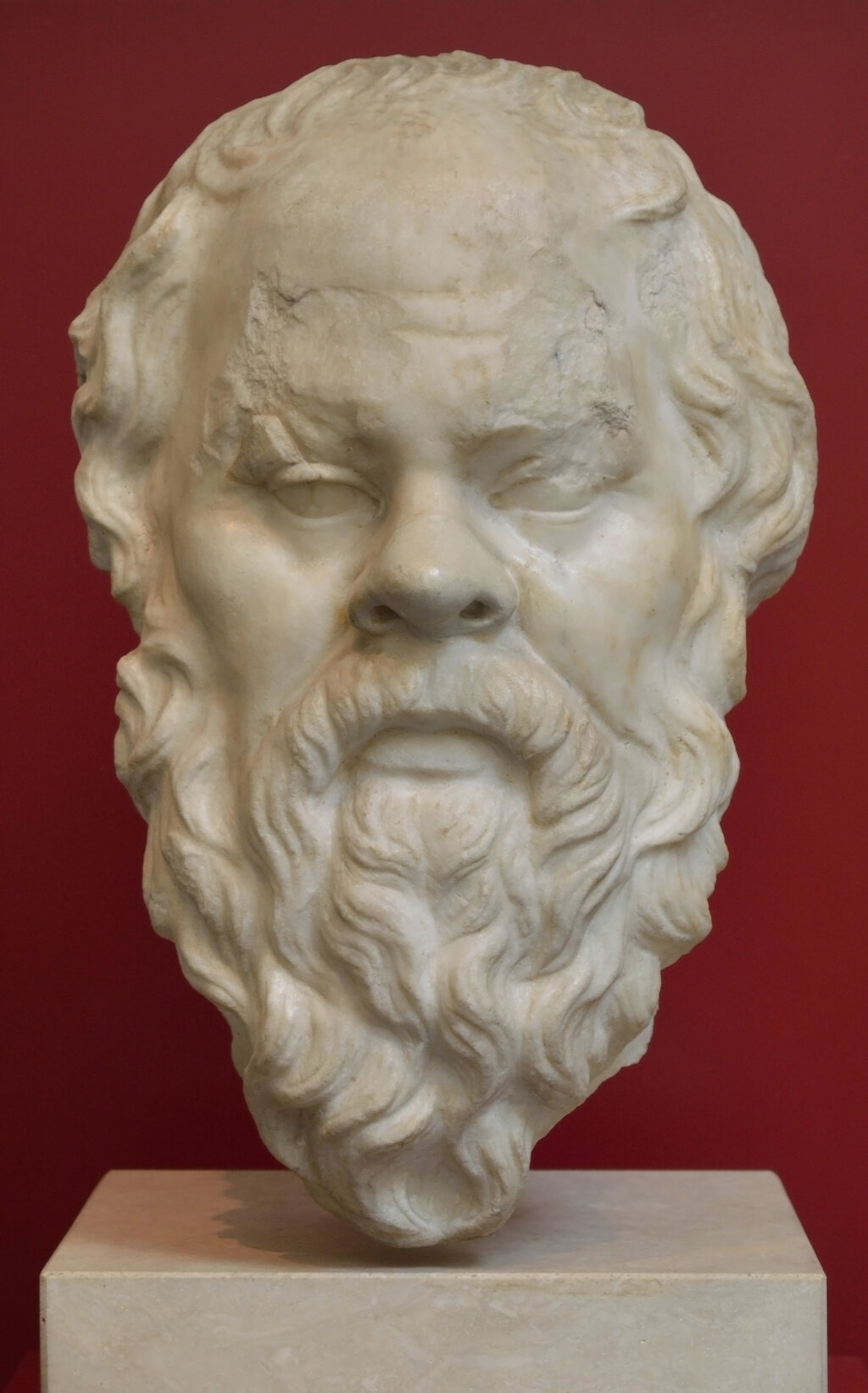
Socrates didn't lecture or write books. Instead, he wandered the public squares of Athens, engaging people in conversation. He developed a unique method of questioning, now called the Socratic method, designed to help people examine their own beliefs and uncover their own ignorance.
It works like this: Socrates would ask someone for a definition of a concept, like justice or courage. The person would offer an answer, and Socrates would then ask a series of questions that revealed contradictions or flaws in their definition. The goal wasn't to win an argument or embarrass his conversation partner, but to guide them toward a more robust understanding. Through this process of collaborative dialogue, he showed that many people who claimed to be wise actually knew very little.
Socrates believed that true wisdom begins with recognizing one's own ignorance. His famous declaration, "The unexamined life is not worth living," captures his conviction that we must constantly question our assumptions to live a virtuous life.
Charting the Good Life
Socrates' focus on ethics kicked off a new era in philosophy. His insistence that virtue is a kind of knowledge—that to know the good is to do the good—laid the groundwork for the first formal ethical theories. His students and their successors took up his questions and developed complex systems to answer them.
Plato, Socrates' most famous student, was deeply influenced by this search for moral truth. He proposed that concepts like justice, beauty, and goodness were not just opinions but had a real existence in a higher, non-physical reality he called the realm of Forms. For Plato, the ultimate goal of life was to gain knowledge of the "Form of the Good," the perfect blueprint for all that is right and virtuous.
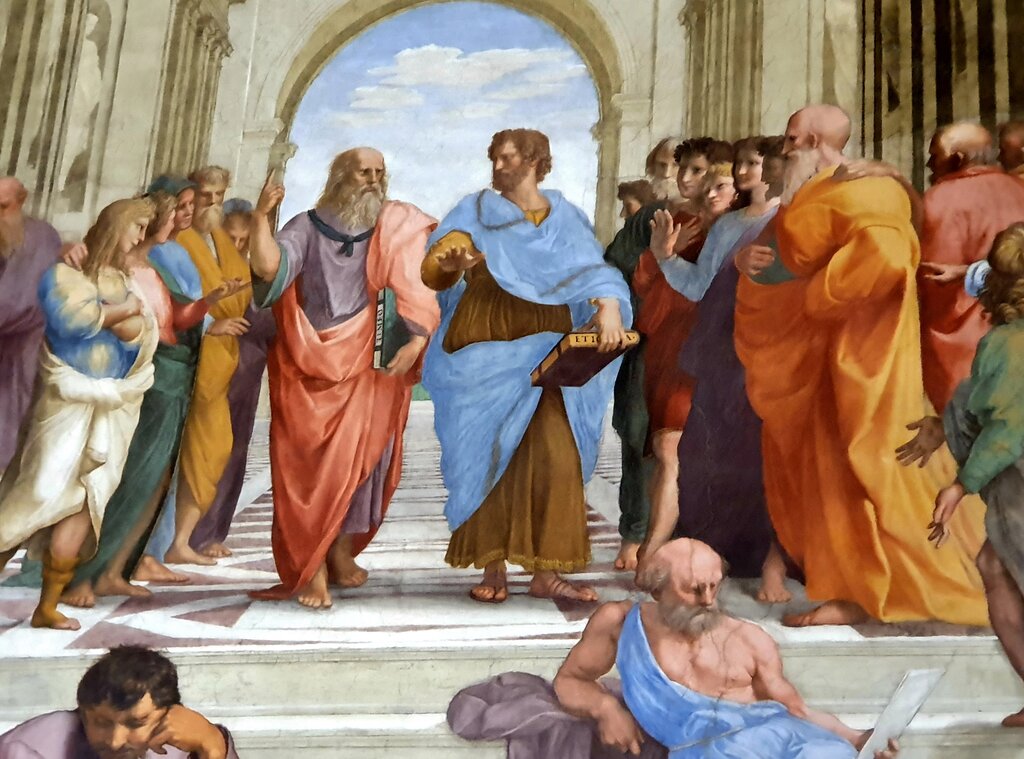
Plato's student, Aristotle, took a more grounded approach. He agreed that the goal of life was to achieve eudaimonia, a state often translated as "happiness" or "human flourishing." But for Aristotle, this wasn't about contemplating a separate realm of Forms. It was about developing excellent character traits, or virtues, through practice and habit. He argued that virtue lies in a "golden mean" between two extremes. For example, courage is the mean between the extremes of cowardice and recklessness. By consistently choosing the moderate, virtuous path, a person could build a good character and live a flourishing life.
These early ethical theories, born from Socrates' simple questions, established the core problems of moral philosophy and continue to influence how we think about the good life today.
Now, let's test your understanding of these foundational ideas.
What was the central question that preoccupied the Pre-Socratic philosophers like Thales and Heraclitus?
What is the primary goal of the Socratic method?
The shift from myth to reason, initiated by the Pre-Socratics and turned toward human ethics by Socrates, marked a pivotal moment in Western thought. These thinkers laid a foundation of rational inquiry that would shape civilization for millennia to come.