Ancient Governance and the Rule of Law
Tyranny
The Rise of the Tyrant
In the ancient Greek world, power could be seized by a single ambitious individual. This person wasn't a king who inherited a throne, but a new kind of leader who took control, often with the support of the people. This form of rule was known as tyranny.
Tyrant
noun
In ancient Greece, a ruler who seized power unconstitutionally or inherited such power. The term did not originally have the negative connotations it has today.
The key characteristic of a tyrant was how they came to power: through their own efforts, not by law or birthright. They often emerged during periods of conflict between the rich aristocrats and the common people. By positioning themselves as champions of the poor and disenfranchised, they could rally enough support to overthrow the existing government.
A Case Study from Athens
Peisistratus of Athens is a classic example. In the 6th century BC, he made three separate attempts to seize power. On one occasion, he famously wounded himself and his mules, then appeared before the people claiming his political enemies had attacked him. The Athenians, moved by his story, granted him a bodyguard, which he then used to capture the Acropolis and take control of the city.
Once in power, Peisistratus didn't rule with an iron fist. He maintained the city's laws, supported the economy, and funded public works and festivals. He improved the water supply and encouraged the arts. By keeping the populace happy and employed, he secured his position. His rule, and that of his sons, showed that tyranny wasn't always brutal, but it always meant the suspension of lawful political processes.
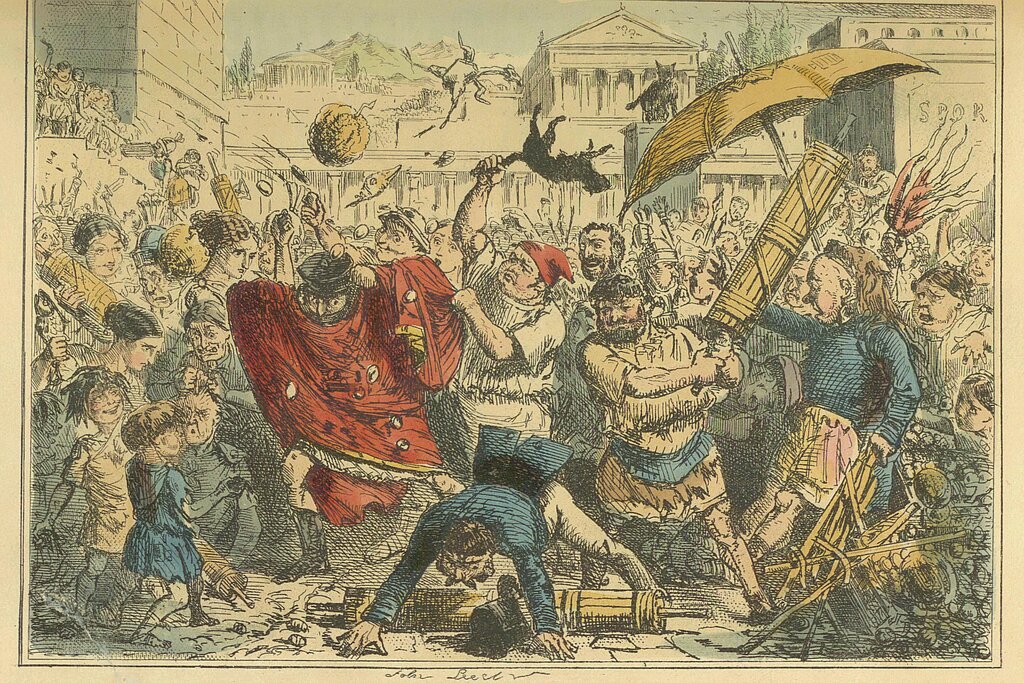
Many tyrants used similar methods to maintain their power. They often relied on mercenary soldiers for protection, as they couldn't trust citizens who might want to restore the old order. They also embarked on ambitious building projects, like temples and public buildings. These projects not only provided jobs for the poor but also served as a constant, visible reminder of the tyrant's power and generosity.
A tyrant's power often rested on two pillars: the loyalty of a paid army and the support of the common people, who benefited from public works and populist policies.
The Impact of Tyranny
While tyranny took away political freedom from the citizens, its impact wasn't entirely negative. In many cases, tyrants broke the power of entrenched aristocratic families, paving the way for more democratic systems later on. They also fostered trade and established colonies, increasing the wealth and influence of their cities. However, the rule of a tyrant was always unstable. Because their power was illegitimate, they lived in constant fear of assassination or rebellion. This could lead to paranoia and oppression, especially under a tyrant's less capable successors.
| Positive Impacts | Negative Impacts |
|---|---|
| Broke aristocratic power | Suppressed political freedom |
| Funded public works and arts | Rule was often unstable and violent |
| Promoted trade and commerce | Power held illegitimately |
| Maintained peace and order | Led to paranoia and oppression |
Ultimately, tyranny was often a transitional phase in the political development of Greek city-states. It served to dismantle old power structures but was rarely a lasting solution. The concentration of power in one person, answerable to no one, was a model that most Greek societies eventually rejected.
What was the primary characteristic that defined an ancient Greek tyrant?
According to the text, Peisistratus of Athens used a bodyguard, granted to him by the people after a staged attack, to capture the Acropolis and take control of the city.