Ancient Egypt Old Kingdom vs New Kingdom
Introduction to Ancient Egypt
The Gift of the Nile
Ancient Egypt was a civilization forged by geography. While we often picture vast deserts, the heart of Egypt was a thin, fertile ribbon of green snaking through the sand. This was the valley of the Nile River. The ancient Egyptians called this lush floodplain the Kemet, or "Black Land," named for the rich, dark silt the river deposited each year. Everything outside this oasis was the Deshret, the "Red Land" of the barren desert.
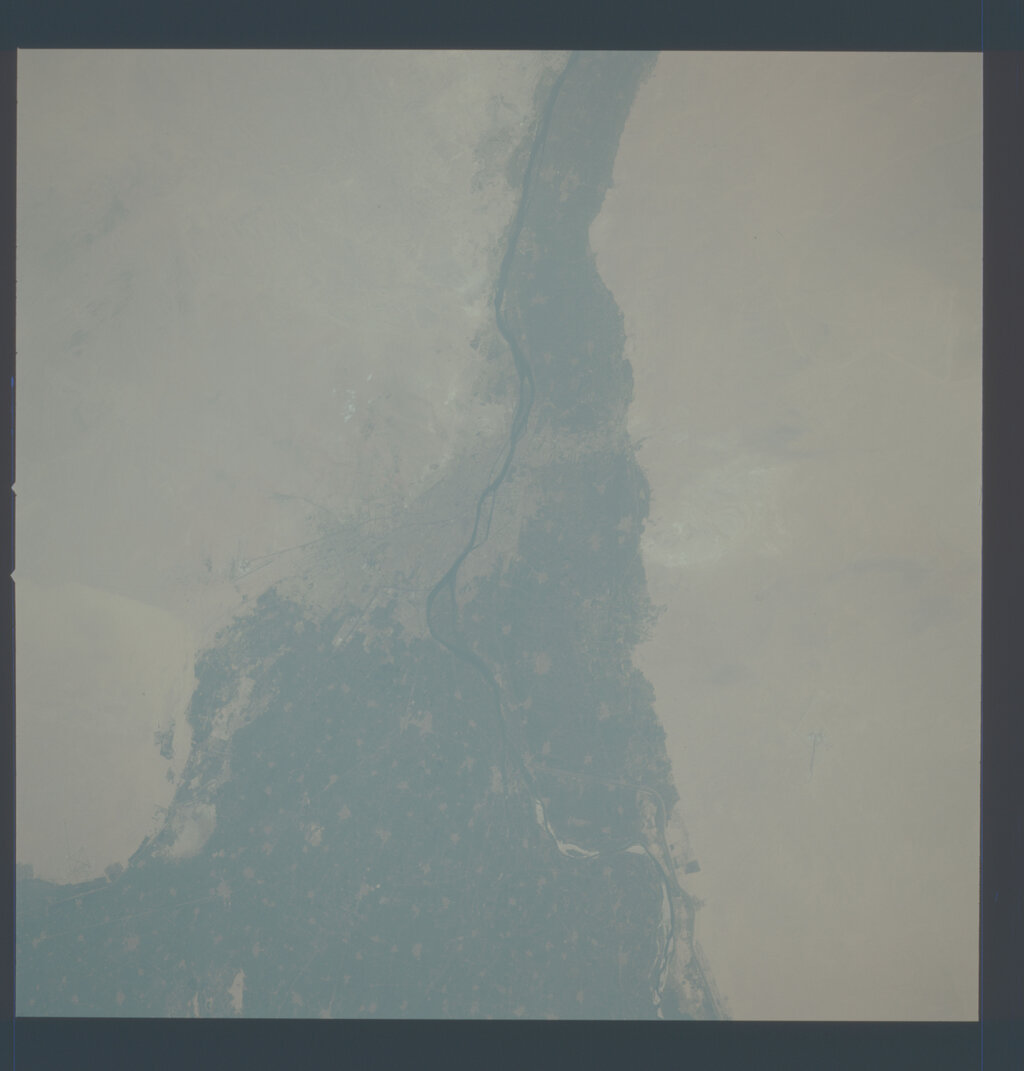
This sharp division between the life-giving river valley and the harsh desert shaped the Egyptian worldview. The Black Land represented order, life, and civilization, while the Red Land symbolized chaos, danger, and death. Living in this narrow corridor, protected by deserts to the east and west, the Mediterranean Sea to the north, and cataracts—rocky rapids—on the Nile to the south, allowed Egyptian culture to develop with a unique sense of stability and continuity for thousands of years.
For nearly 3,000 years, ancient Egypt thrived as the preeminent civilization in the Mediterranean world, largely due to its geographical isolation and the predictable bounty of the Nile.
The geography also created two distinct regions: Upper and Lower Egypt. This can be a bit confusing because their names are based on the flow of the Nile River. The river flows from the highlands of central Africa in the south, down to the Mediterranean Sea in the north. So, Upper Egypt is the southern region, upstream. Lower Egypt is the northern region, where the river fans out into a wide, marshy delta before meeting the sea.
Around 3100 BCE, these two lands were united under a single ruler, an event that marks the beginning of Egyptian dynastic history. This unification created a powerful, centralized state ruled by a king, or pharaoh, who was seen as a living god. To manage this new kingdom, the Egyptians developed complex systems of administration, taxation, and writing.
A Predictable Rhythm
The Nile wasn't just a geographical feature; it was the clock and calendar for all of Egyptian life. Unlike the unpredictable floods of Mesopotamia's Tigris and Euphrates rivers, the Nile's flood was remarkably regular. Every summer, heavy rains in the Ethiopian highlands would swell the river, causing it to overflow its banks in Egypt.
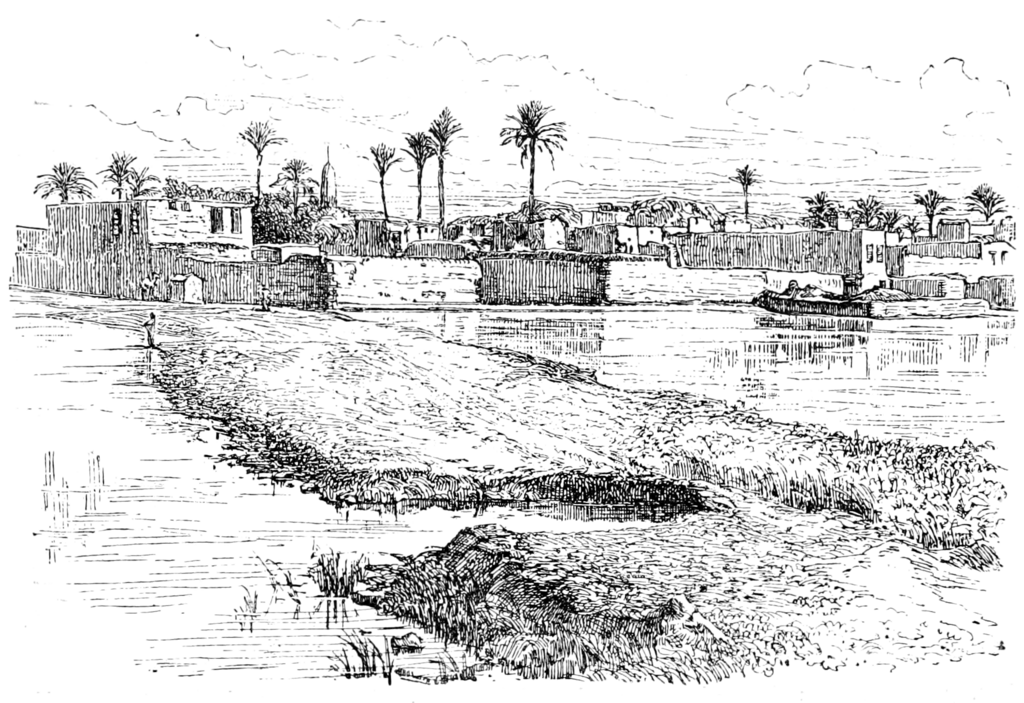
This annual event, called the akhet or inundation, was not a destructive catastrophe but a welcome gift. When the floodwaters receded, they left behind a thick layer of fertile black silt. This soil was so rich that Egyptian farmers could grow abundant crops of wheat, barley, and flax with relative ease. This agricultural surplus was the foundation of Egypt's wealth and power, allowing for the growth of cities, monumental architecture, and a complex society.
The rhythm of the Nile divided the Egyptian year into three seasons: Akhet (inundation), Peret (growing/sowing), and Shemu (harvesting/drought).
The river also served as the primary highway. Boats moved goods and people up and down the Nile, connecting the long, narrow country. Sailing north was easy; you just had to go with the current. To go south, against the current, boats could use sails to catch the prevailing winds that conveniently blew from the north. This efficient transport system helped unify the kingdom and made large-scale construction projects, like the pyramids, possible.
Early Culture and Beliefs
Early Egyptian society was deeply religious. Their gods were often tied to the natural world around them. Ra, the sun god, was one of the most important deities, whose daily journey across the sky represented the cycle of life and rebirth. Osiris was the god of the underworld and resurrection, his story mirroring the annual death and regrowth of vegetation along the Nile.
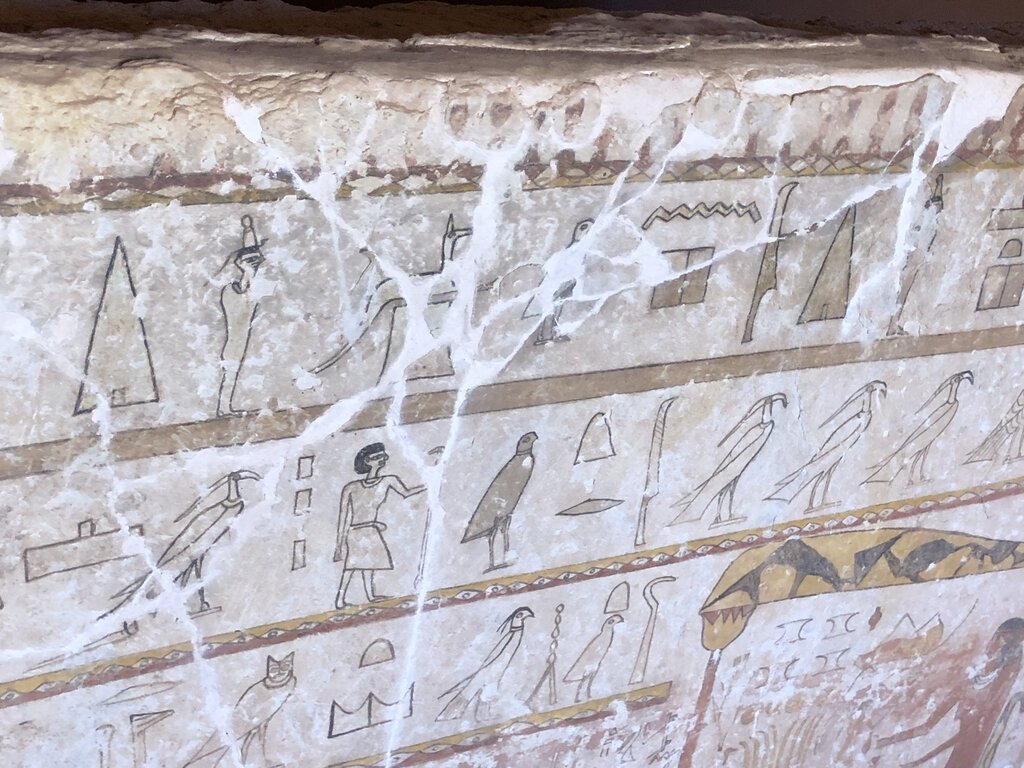
To communicate with the gods and manage the state, the Egyptians created one of the world's first writing systems: hieroglyphs. This elegant script, made up of hundreds of pictorial symbols, was used for religious texts, royal decrees, and tomb inscriptions. A simpler, cursive script called hieratic was developed for everyday use in administration and record-keeping.
This unique combination of a predictable river, geographical protection, and a unifying culture set the stage for one of history's most enduring civilizations. From these early foundations, the great pyramids of the Old Kingdom and the magnificent temples of the New Kingdom would soon rise.
Ready to test your knowledge?
What did the ancient Egyptians call the fertile, life-giving land along the Nile River, named for the rich soil left by the annual flood?
Why is the region known as Upper Egypt located in the south, and Lower Egypt in the north?
This foundation—the river, the land, and the people's beliefs—was the bedrock upon which the entire history of ancient Egypt was built.