Anatomy of an F1 Car
F1 Power Unit
The Heart of the Beast
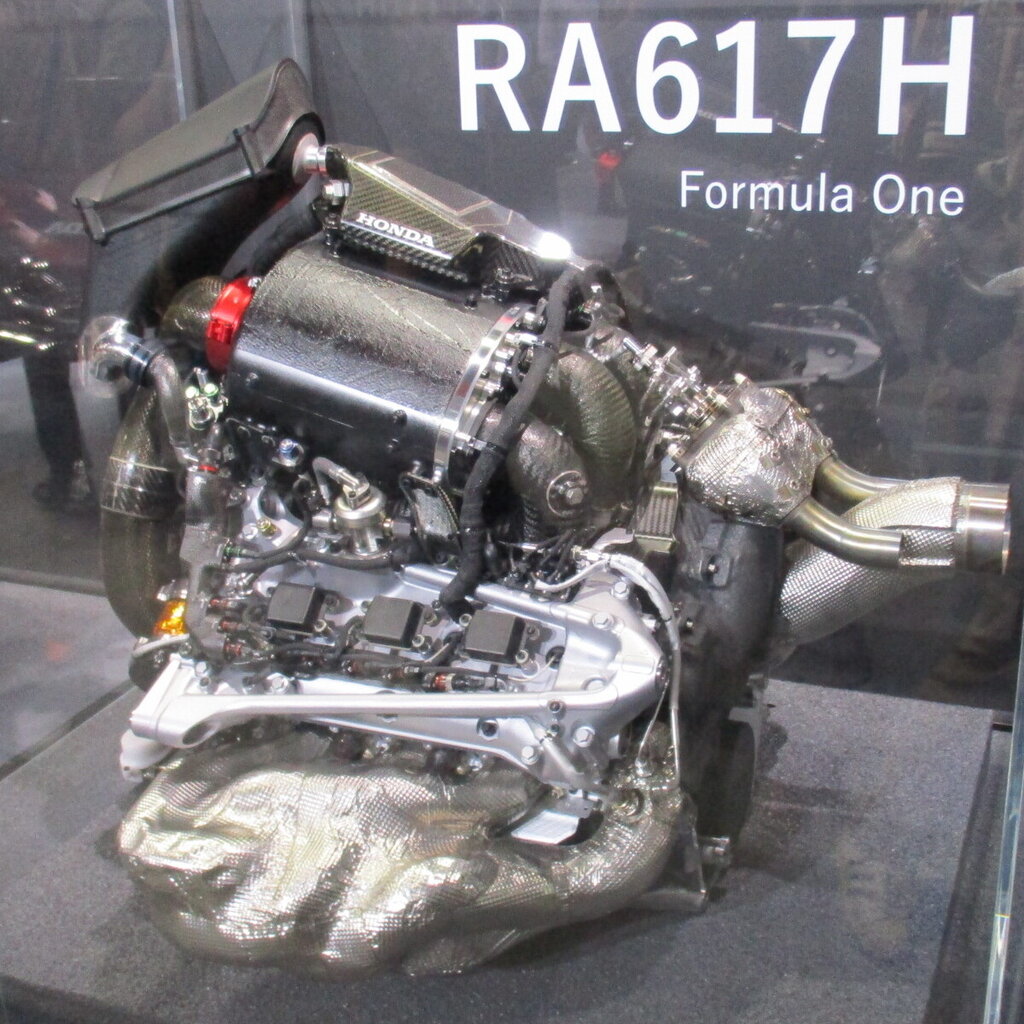
At the core of every Formula 1 car is not just an engine, but a highly sophisticated Power Unit. It’s a marvel of hybrid engineering, designed for maximum power and incredible efficiency. While a typical road car engine focuses solely on burning fuel to create motion, an F1 Power Unit is a complex, integrated system where every component works in harmony.
Think of it as a team of specialists. There's the traditional powerhouse, the Internal Combustion Engine (ICE), but it works alongside an advanced Energy Recovery System (ERS) and a powerful turbocharger. Together, they produce over 1,000 horsepower from a surprisingly small 1.6-liter V6 engine.
The Internal Combustion Core
The primary source of power is the (ICE). It's a 1.6-liter V6, meaning it has six cylinders arranged in a 'V' shape. This engine is a masterpiece of lightweight materials and precision engineering, capable of revving up to 15,000 RPM—about double that of a high-performance sports car.
A crucial partner to the ICE is the turbocharger. It uses exhaust gases to spin a turbine, which in turn forces more air into the engine. More air means more fuel can be burned, resulting in a massive power boost. But in F1, the turbo does much more than just boost power; it's a key player in energy recovery.
Capturing Wasted Energy
The real genius of the modern F1 Power Unit lies in its Energy Recovery System (ERS). This system captures energy that would normally be wasted and converts it into electricity. This electricity is then stored in a high-tech battery, known as the Energy Store, and can be deployed for a significant performance boost.
The ERS has two main components, which are essentially electric motors that can also act as generators.
First is the (Motor Generator Unit - Kinetic). When the driver hits the brakes, the MGU-K, connected to the crankshaft, resists the rotation and acts as a generator. This process helps slow the car down while simultaneously converting kinetic energy into electrical energy to charge the battery. It’s like the regenerative braking in an electric or hybrid road car, but far more powerful.
The second component is the (Motor Generator Unit - Heat). This is the truly unique part of an F1 Power Unit. It's connected to the turbocharger, sitting between the turbine and the compressor. The MGU-H recovers heat energy from the exhaust gases as they spin the turbine. This electrical energy can be sent to the battery or directly to the MGU-K.
Crucially, the MGU-H can also work as a motor. It can use energy from the battery to spin up the turbocharger's compressor before the exhaust gases get there. This completely eliminates turbo lag—the delay you feel in some road cars between pressing the accelerator and feeling the turbo kick in. This gives the driver instant power on demand, which is vital when exiting a corner.
Putting It All Together
The integration of these systems is seamless. On a straight, the driver uses power from both the ICE and the electrical energy deployed from the Energy Store via the MGU-K for maximum acceleration. As they approach a corner, they brake hard. The MGU-K harvests kinetic energy, while the MGU-H continues to manage the turbo speed.
As the driver accelerates out of the corner, the MGU-H instantly spins the turbo to provide immediate boost, while the MGU-K can provide an extra electrical push. All the while, the car's complex electronics are managing the flow of energy between all these components, ensuring the car is always using its power in the most efficient and powerful way possible.
This constant harvesting and deploying of energy is a delicate balancing act. Drivers have modes they can switch between to control how aggressively the car harvests or deploys energy, which is a key part of race strategy. Using too much electrical power early in a lap could leave them vulnerable on a long straight later on.
What is the primary role of the MGU-H (Motor Generator Unit - Heat) in a Formula 1 Power Unit?
What is the specified engine configuration for the Internal Combustion Engine (ICE) in a modern F1 car?
The F1 Power Unit is a testament to the pursuit of performance and efficiency. It pushes the boundaries of what's possible with hybrid technology, combining raw combustion power with intelligent energy recovery.