Anatomy and Mechanics of the Anterior Thigh
Quadriceps Functional Anatomy
Architecture and Force
The quadriceps aren't just a single slab of muscle; they're a group of four distinct muscles with different internal architectures. This structure is key to their power. The rectus femoris has a bipennate fiber arrangement, while the vasti muscles are largely unipennate. This means their fibers attach to a central tendon at an angle, like the barbs of a feather.
Pennate
adjective
A type of muscle fiber arrangement where the fascicles (bundles of fibers) attach obliquely to its tendon. This design allows for a higher density of muscle fibers and greater force production compared to muscles with parallel fibers.
This angled arrangement, or pennation angle, allows more muscle fibers to be packed into a given volume. This increases the muscle's physiological cross-sectional area (PCSA), which is directly proportional to the maximum force it can generate. The trade-off is a slightly reduced range of motion and contraction velocity compared to a muscle with parallel fibers of the same length.
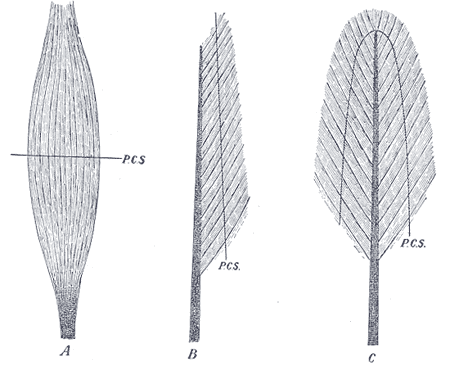
Think of it like packing a suitcase. You can fit more clothes in if you roll them tightly and arrange them at angles, rather than just laying them flat. Pennate muscles use a similar principle to pack in more force-producing fibers.
A Tale of Two Joints
What truly sets the rectus femoris apart from its three vasti siblings is its origin point. While all four muscles converge into the single quadriceps tendon to extend the knee, they don't all start in the same place.
| Muscle | Proximal Attachment (Origin) |
|---|---|
| Rectus Femoris | Anterior Inferior Iliac Spine (AIIS) & groove above the acetabulum |
| Vastus Lateralis | Greater trochanter & linea aspera of the femur |
| Vastus Medialis | Intertrochanteric line & linea aspera of the femur |
| Vastus Intermedius | Anterolateral surface of the femur |
Notice that the three vasti muscles all originate on the femur. This makes them mono-articular; they only cross one joint (the knee). Their sole action is to extend the knee.
The rectus femoris, however, is bi-articular. Because it originates on the pelvis, it crosses both the hip and the knee joint. This gives it a dual role: it's a primary knee extensor, but it also acts as a hip flexor, helping to lift your thigh towards your torso. This is why exercises that involve both hip flexion and knee extension, like certain types of leg raises, heavily engage the rectus femoris.
The bi-articular nature of the rectus femoris makes it uniquely susceptible to a phenomenon called active insufficiency. When the hip is fully flexed, the rectus femoris is shortened, making it less effective at extending the knee. Conversely, when the knee is fully extended, it's a less powerful hip flexor.
Patellar Stability and Teamwork
Knee extension isn't just about raw power; it's about controlled, stable movement. A key player in this is the patella (kneecap), which acts as a fulcrum to increase the leverage of the quadriceps. Keeping the patella tracking smoothly within its groove on the femur (the trochlear groove) is critical.
This is where a specific part of the vastus medialis comes in: the vastus medialis obliquus, or VMO.
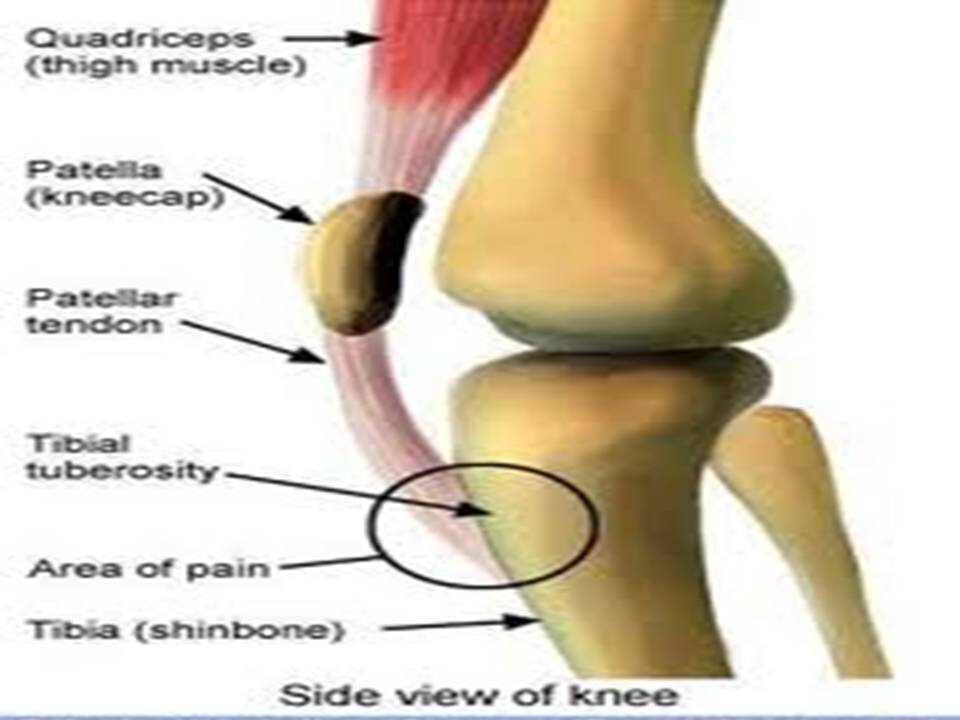
The fibers of the VMO are oriented at a more oblique angle (around 50-55 degrees) compared to the rest of the vastus medialis. This alignment gives it a crucial line of pull. As the knee approaches full extension (the last 15-20 degrees), the VMO contracts forcefully to provide medial stability, preventing the patella from being pulled laterally (outwards) by the stronger vastus lateralis.
Imbalances between the VMO and the vastus lateralis are a common contributor to patellofemoral pain syndrome, as a weak VMO can lead to improper patellar tracking.
Ultimately, the quadriceps function as a synergistic unit. While each muscle has its own unique architecture and attachments, they work in concert. During activities like walking, squatting, or jumping, the nervous system recruits the four heads in a coordinated sequence to produce smooth, powerful, and stable knee extension. Understanding their individual contributions helps us appreciate the intricate design behind this fundamental human movement.
What is the primary advantage of the pennate fiber arrangement found in muscles like the quadriceps?
Which of the following quadriceps muscles is 'bi-articular', meaning it crosses two joints?