Analyzing Guy de Maupassant's Aux Champs
Introduction to Maupassant
The Man Behind the Stories
Guy de Maupassant (1850-1893) is one of France's most celebrated writers, known for his sharp, realistic, and often pessimistic short stories. Born into a family of minor nobility in Normandy, his early life was shaped by his parents' separation and his close relationship with his mother, a well-read woman who was friends with the famous novelist Gustave Flaubert.
Flaubert became a mentor to the young Maupassant, teaching him the craft of writing with painstaking precision. He insisted on finding le mot juste—the exact right word—and developing a clear, objective style. This apprenticeship was invaluable, shaping Maupassant's entire literary career.
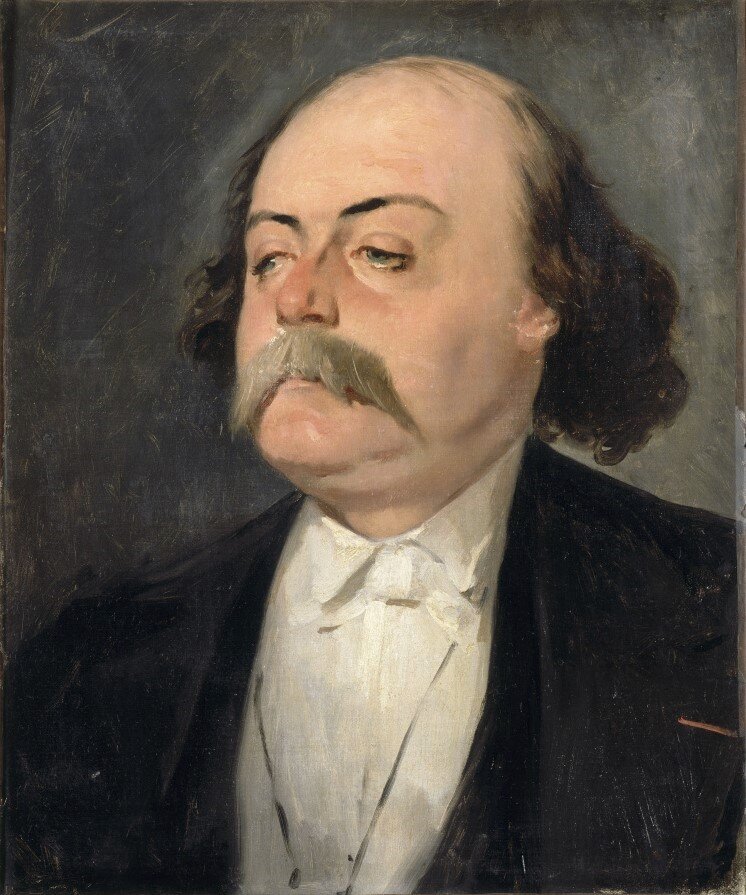
Maupassant's life wasn't confined to literary circles. He served in the Franco-Prussian War of 1870-71, an experience that exposed him to the brutality of conflict and the cowardice of ordinary people under pressure. Afterwards, he worked as a government clerk in Paris for nearly a decade. These experiences—observing the bureaucracy, the lives of common soldiers, and the rural folk of his native Normandy—provided the raw material for his hundreds of short stories.
He achieved sudden fame in 1880 with the story "Boule de Suif" ("Ball of Fat"). Over the next decade, he wrote prolifically, publishing over 300 short stories, six novels, and several travel books. Sadly, his success was short-lived. He contracted syphilis in his youth, and the disease led to increasing paranoia and health problems, culminating in a suicide attempt in 1892. He was committed to an asylum, where he died a year later at the age of 42.
A Clear Window on the World
Maupassant was a master of literary Realism and Naturalism. Think of these styles as an attempt to portray life as it truly is, without romanticizing it. Realist writers focused on everyday characters and plausible events. Naturalists took it a step further, often viewing characters as products of their heredity and environment, their fates determined by forces beyond their control.
His writing is known for its clarity, simplicity, and objectivity. He rarely tells you what to think or feel. Instead, he presents a scene with vivid detail and lets the characters' actions and words speak for themselves. He had a keen eye for the small, telling details that reveal a person's true nature.
Maupassant's stories often reveal a deep-seated pessimism about human nature, exposing the greed, hypocrisy, and vanity lurking beneath the surface of society.
Irony is another key feature of his work. He frequently creates situations where the outcome is tragically or comically different from what the characters expect. His stories are not grand tales of heroes, but small, sharp glimpses into the lives of peasants, clerks, soldiers, and the bourgeoisie—ordinary people facing moral dilemmas or grappling with the harsh realities of their existence.
France in Transition
To understand Maupassant, you need to understand the world he wrote about: late 19th-century France. This was a period of immense social and economic change. The country was still largely rural, but industrialization was gaining speed, creating new wealth and new social tensions. It was the era of the Third Republic, a government born from the ashes of the Franco-Prussian War, marked by political instability and a growing middle class, or bourgeoisie.
His stories often capture the clash between old and new values. He frequently writes about the Norman peasantry, people tied to the land and ancient traditions, as they confront the pressures of poverty and the lure of money. He also dissects the Parisian middle class, with its social climbing, obsession with appearances, and moral compromises.
The characters in his stories are products of this specific time and place. Their decisions about family, money, and honor are shaped by the social realities of a nation caught between its agricultural past and its industrial future. Maupassant's genius was in capturing these broad historical forces through the intimate, personal dramas of his characters.
Let's check your understanding of this introduction to Maupassant and his world.
Which famous novelist served as a mentor to Guy de Maupassant, teaching him the importance of finding le mot juste (the exact right word)?
Maupassant's literary style is most closely associated with which two movements, known for portraying life without romanticism and focusing on everyday characters?
With this background on Maupassant's life, style, and times, we can now turn to one of his most powerful stories, "Aux champs."