Analyzing DNA Methylation Profiles
Quantitative CpG Analysis
Beyond the Basics of CpG Islands
You know that DNA methylation is a key regulator of gene expression. But the story gets more specific. The action often happens in distinct regions of the genome called CpG islands (CGIs). These aren't random occurrences; they have specific structural features that make them stand out.
For a DNA sequence to be classified as a CpG island, it must meet two criteria:
- High G+C Content: More than 50% of its bases must be guanine (G) or cytosine (C).
- High CpG Ratio: The observed frequency of CpG dinucleotides must be at least 60% of the expected frequency.
Think of CGIs as docking stations for the cell's gene-regulating machinery. Their presence near a gene's start site makes them prime targets for controlling whether that gene is turned on or off.
How Methylation Silences Genes
An unmethylated CpG island in a gene's promoter is like an open door, inviting transcription machinery to come in and read the gene. But when these CGIs become densely methylated, the door slams shut. This isn't just a passive blockage; it's an active silencing process involving a cast of specialized proteins.
High-density methylation on a CGI acts as a beacon, attracting proteins known as methyl-CpG binding domain proteins (MBDs). These MBDs don't work alone. Once bound to the methylated DNA, they recruit other complexes, including chromatin remodelers. This molecular team works together to physically condense the chromatin into a tightly packed structure.
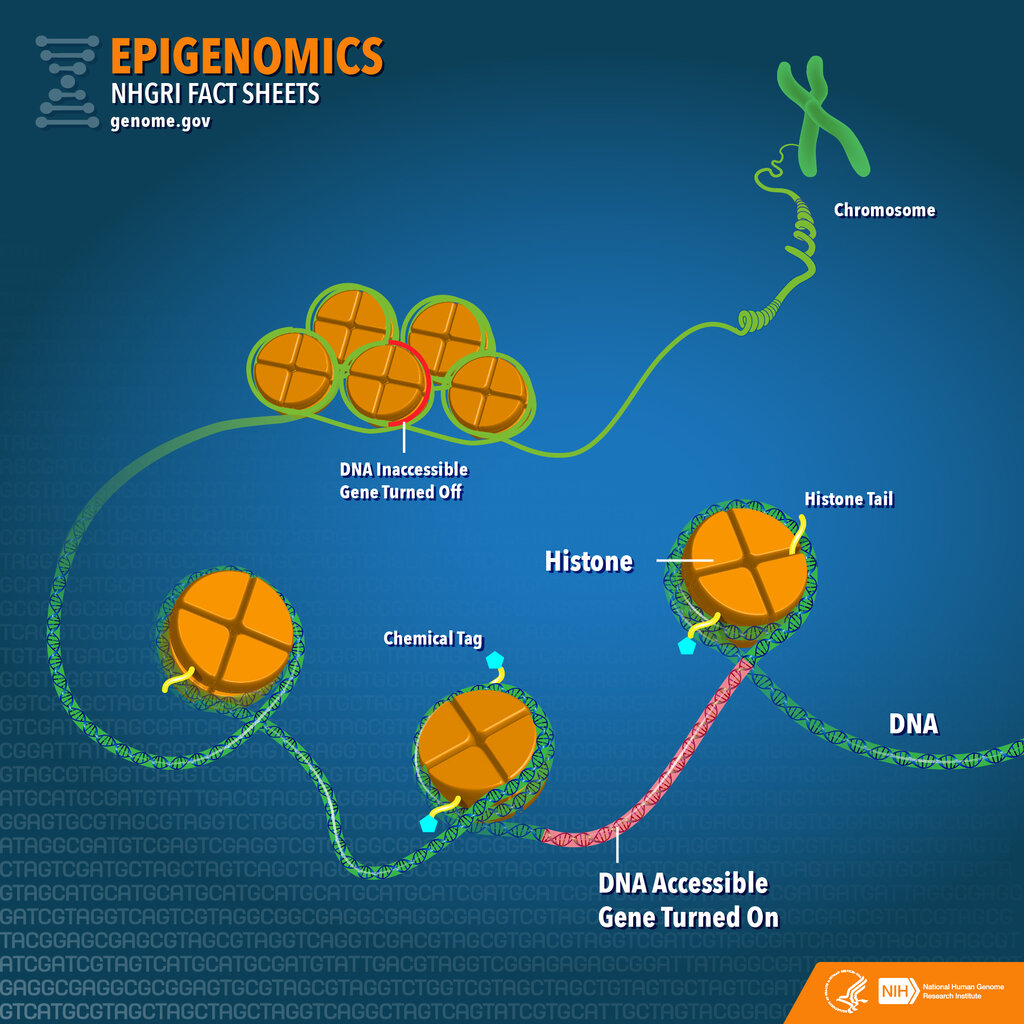
This compacted state, called heterochromatin, makes the gene physically inaccessible to RNA polymerase, the enzyme that initiates transcription. The gene is effectively silenced, not because its sequence has changed, but because the machinery can no longer access it.
Global vs. Site-Specific Patterns
It's important to distinguish between two scales of methylation. On a global level, about 70-80% of all CpGs in the genome are methylated. This widespread methylation typically occurs in repetitive DNA sequences, helping to maintain genomic stability and prevent these elements from moving around.
However, the most dynamic regulation happens at the site-specific level. While most of the genome is methylated by default, the CpG islands in the promoters of active, essential genes are deliberately kept free of methylation. When a cell needs to silence a specific gene, it targets that gene's CGI for methylation. This site-specific control allows for the vast diversity of cell types in our bodies, all arising from the same genetic code.
To quantify this, scientists use two main metrics:
While Beta-values are easier to interpret biologically, M-values are often preferred for statistical analysis due to their more favorable distribution properties.
A Blueprint for Development
Tissue-specific methylation is fundamental to development. Consider the HOX genes, a family of master regulators that orchestrate the body plan during embryonic development. They determine where your head, limbs, and organs should form. In an embryonic stem cell, the HOX gene promoters are typically unmethylated, keeping them poised for activation.
As cells differentiate, say into a liver cell, the HOX genes that specify limb development are no longer needed. The CpG islands in their promoters become heavily methylated, permanently silencing them in that cell lineage. Conversely, in a developing neuron, different sets of genes are silenced. This selective methylation locks in cellular identity, ensuring a liver cell doesn't suddenly try to behave like a brain cell. This precise regulation is why studying methylation patterns, or 'epiphenotypes', is crucial for understanding both normal development and diseases like cancer, where these carefully controlled patterns go awry.
For a DNA sequence to be classified as a CpG island, it must have a G+C content greater than 50% and an observed-to-expected CpG ratio greater than 60%.
When a CpG island in a gene's promoter becomes heavily methylated, what is the direct consequence that leads to gene silencing?