Analytical Psychology Explained
Introduction to Analytical Psychology
The Mind's Two Layers
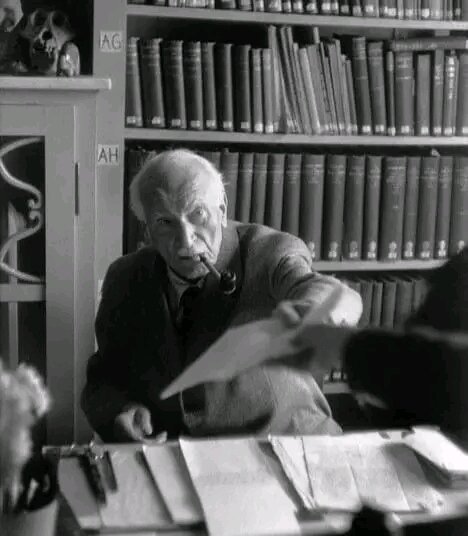
Swiss psychiatrist Carl Jung saw the human mind, or psyche, as having two main parts: the conscious and the unconscious. Think of it like an iceberg. The small tip above the water is your conscious mind. It's everything you are aware of right now—your thoughts, feelings, and memories that you can easily access.
The vast, hidden bulk of the iceberg beneath the surface is the unconscious. This part of the mind contains all the things we aren't actively thinking about. Jung believed it holds forgotten experiences, repressed feelings, and deeper instincts that influence our behavior without us even realizing it.
Personal and Collective Depths
Jung didn't see the unconscious as one big, messy storage unit. He divided it into two distinct layers. The first is the personal unconscious. This layer is unique to you. It contains memories that have been forgotten or experiences that were once conscious but have since been suppressed. It’s your own personal history, stored just out of sight.
Below this lies the collective unconscious, Jung's most famous and controversial idea. This isn't personal at all. Instead, it's a deeper, shared layer of the psyche that connects all human beings across time and culture. It's a kind of psychological inheritance, filled with the experiences and memories of our ancestors.
The collective unconscious is a unique component in that Jung believed that this part of the psyche served as a form of psychological inheritance.
This shared reservoir explains why people from different parts of the world have similar myths, symbols, and religious beliefs. They are drawing from the same deep well of human experience.
Archetypes: The Mind's Blueprints
So, what exactly is inside the collective unconscious? Jung called its contents archetypes. These are universal, inherited patterns and images that act as blueprints for our experiences and behaviors. They aren't fully formed ideas, but rather tendencies to perceive and act in certain ways.
Think of archetypes as the original models for people, behaviors, and personalities. We see them repeated in stories and myths everywhere: the hero, the wise old man, the great mother, the trickster. These characters feel familiar because their patterns are pre-programmed into our collective unconscious.
According to Swiss psychologist Carl Jung, archetypes are innate universal psychic dispositions that form the substrate from which the basic themes of human life emerge.
These concepts—the conscious, the personal unconscious, the collective unconscious, and archetypes—are the foundation of Jung's analytical psychology. Understanding them helps explain the deep forces that shape who we are.