An Introduction to Occultism
Introduction to Occultism
What Is Occultism?
The world is full of knowledge that's easy to find. It's in books, on the internet, and taught in schools. But some knowledge is considered hidden, secret, or concealed from the mainstream. This is the realm of the occult.
occult
adjective
Relating to supernatural, mystical, or magical beliefs, practices, or phenomena. Kept secret or communicated only to the initiated.
The word itself comes from the Latin occultus, which means "hidden" or "secret." For centuries, it referred to things that were hard to understand, like the workings of nature. Think of practices like astrology, which studies the hidden influence of stars, or alchemy, the quest to understand the secret properties of matter.
The term "occultism" is more recent. It was coined in 19th-century France to describe the study of these hidden traditions as a unified system. A French author and magician named Éliphas Lévi was a key figure in popularizing this idea. Later, writers like Helena Blavatsky helped introduce the concept to the English-speaking world, blending Western esoteric ideas with Eastern mysticism.
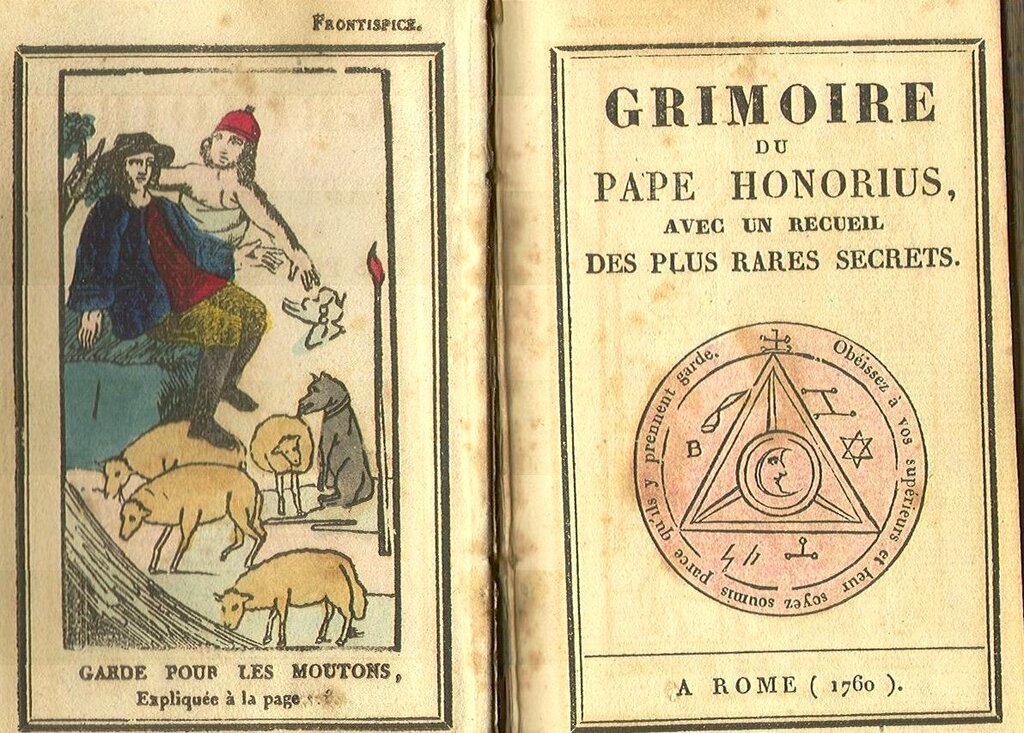
Occultism, Religion, and Science
It’s easy to confuse occultism with religion or even with pseudoscience, but they are distinct. Mainstream religions are typically organized systems of belief and worship, with public scriptures and communal practices. They offer a shared path to salvation or enlightenment.
Occultism, on the other hand, often emphasizes a personal, individual quest for knowledge. Its traditions are esoteric, meaning they are intended for a small group of initiates rather than the general public. The focus is less on faith and more on direct experience and the mastery of hidden principles.
Pseudoscience is another category entirely. A pseudoscience is a belief or practice that is presented as scientific but does not adhere to the scientific method. While some occult practices, like astrology, are often labeled pseudoscientific, occultism as a whole doesn't usually claim to be science. It operates in a metaphysical or spiritual framework, outside the scope of empirical testing.
| Feature | Occultism | Mainstream Religion | Pseudoscience |
|---|---|---|---|
| Basis | Hidden knowledge, personal experience | Shared faith, sacred texts | Claims of scientific evidence |
| Community | Small, initiated groups or individuals | Large, public congregations | Proponents and followers |
| Goal | Personal power, spiritual insight | Salvation, enlightenment, communion | Proving a specific, often untestable, theory |
| Accessibility | Esoteric, often secret | Exoteric, open to all | Presented as public knowledge |
Cultural Significance
Why do esoteric beliefs continue to capture our imagination? For many, occultism offers an alternative way of understanding the world. It provides frameworks for finding meaning and agency in a universe that can seem random or chaotic.
These ideas aren't just confined to dusty old books. They have left a significant mark on culture, influencing art, literature, music, and film. From the symbolism in Renaissance paintings to the plots of modern fantasy novels, esoteric themes provide a rich source of inspiration. They speak to a deep-seated human desire to look beyond the visible world and explore its hidden dimensions.
Generally speaking occultism is said to be the field of those areas metaphysical, spiritual, or esoteric that one may study.
This foundational understanding of what occultism is, and what it is not, sets the stage for exploring its many fascinating branches.